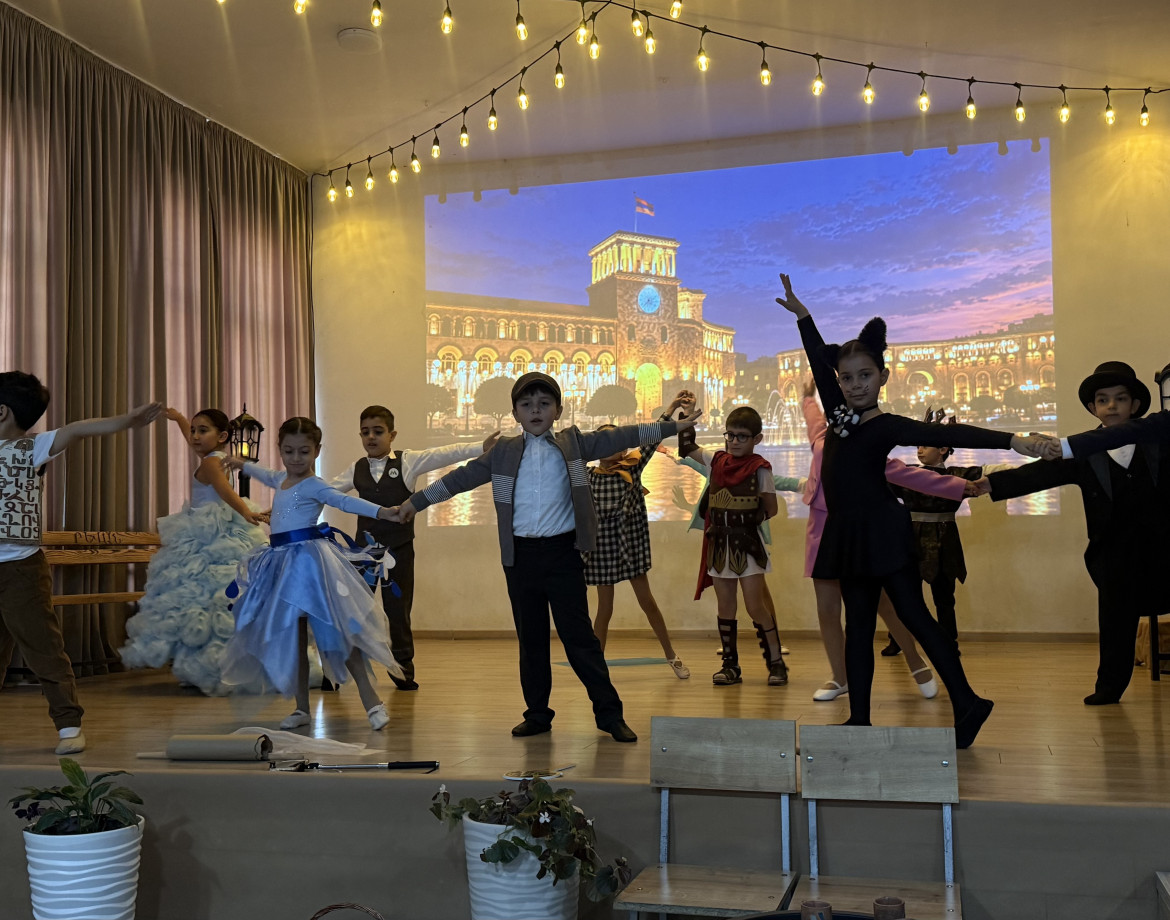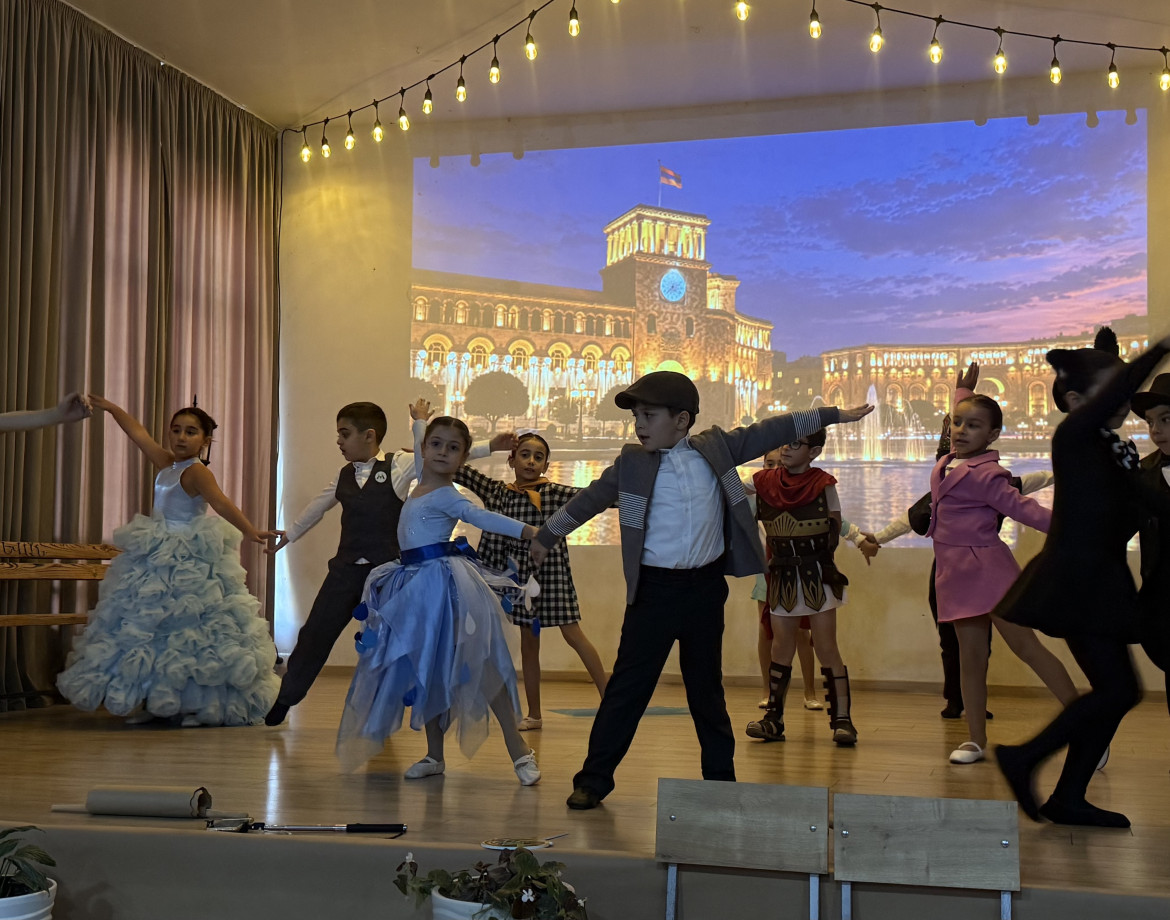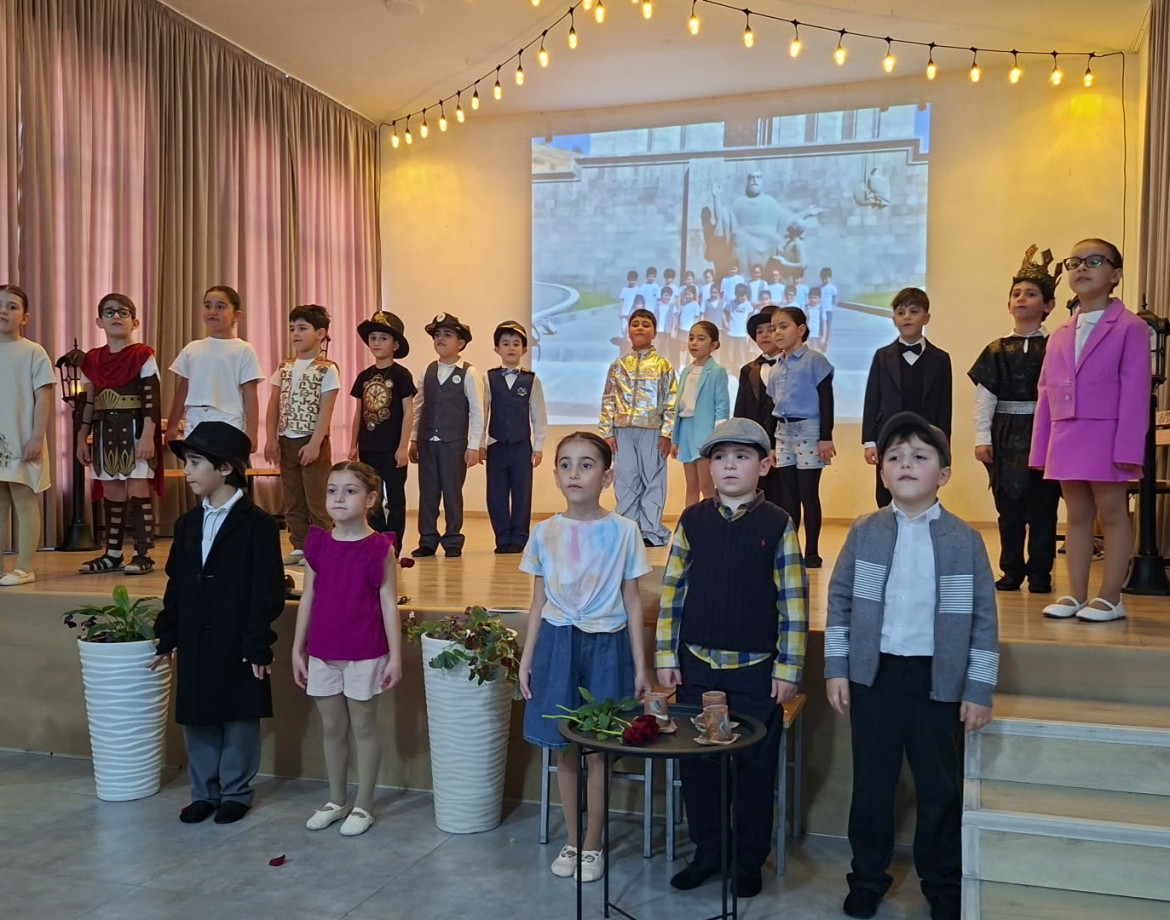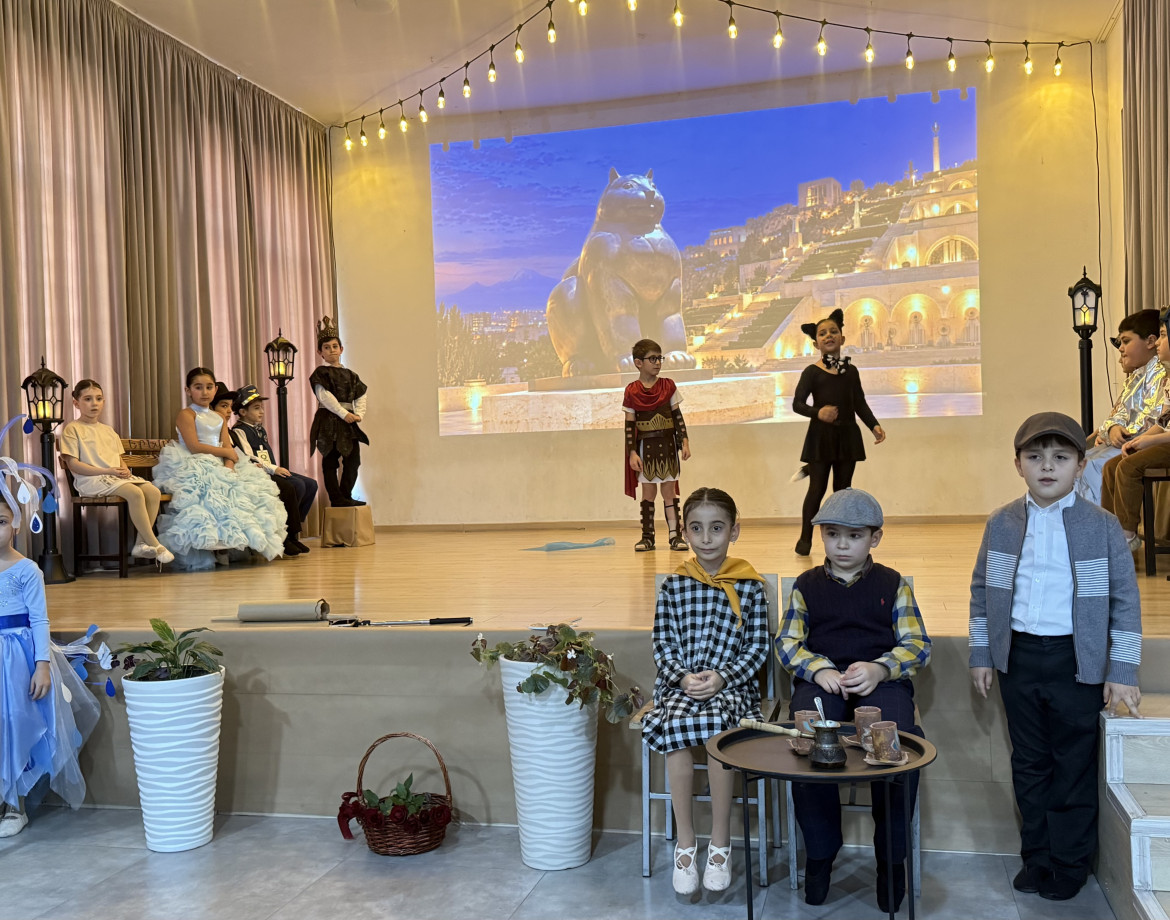

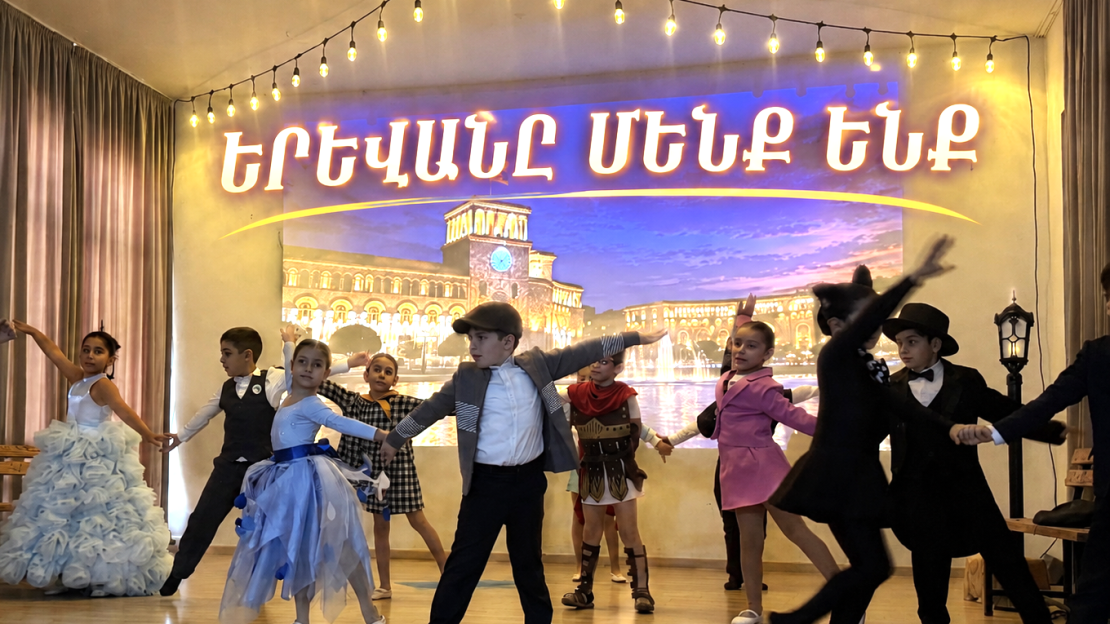
What makes Yerevan the city it is? Is it its old streets, pink tuff stone, iconic buildings and landmarks, or the character, smiles, and warmth of the people who live here? And what happens when a city continues to develop, while its residents gradually become less aware of one another?
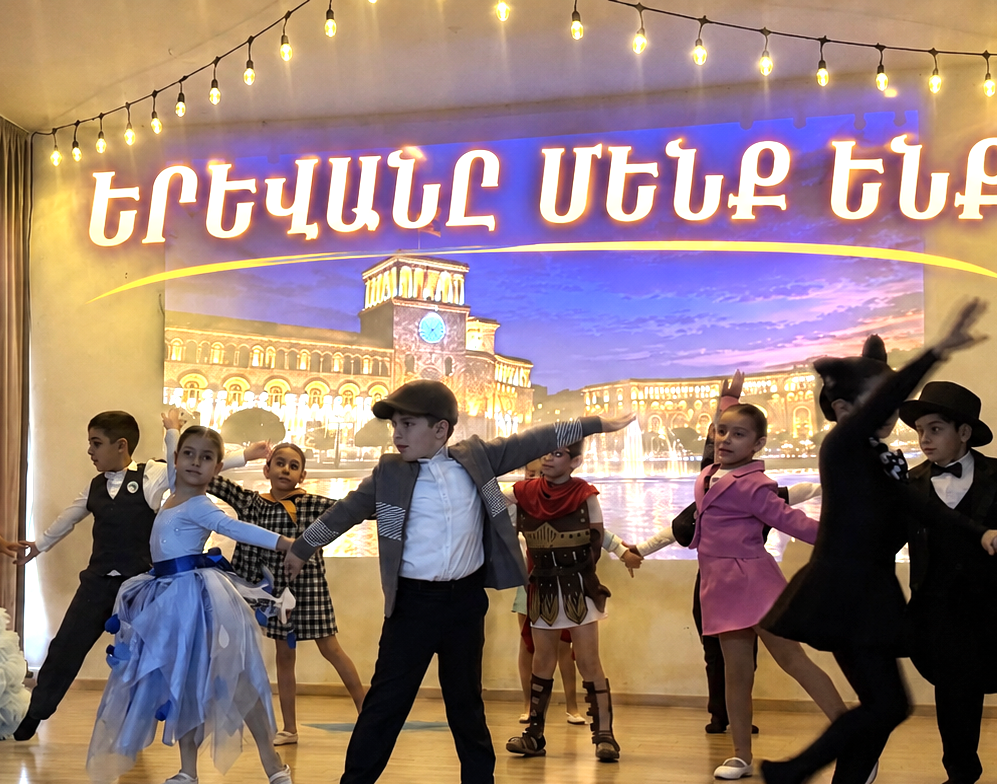
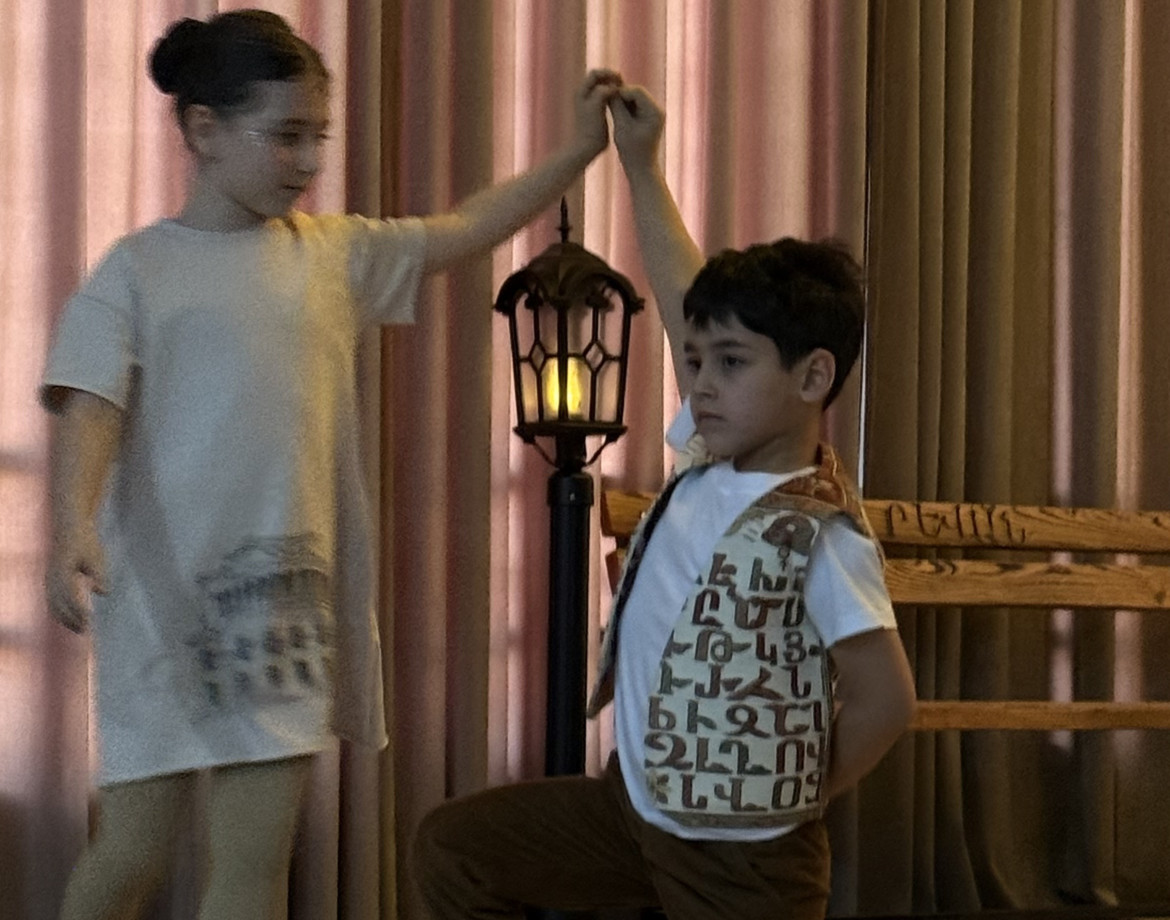
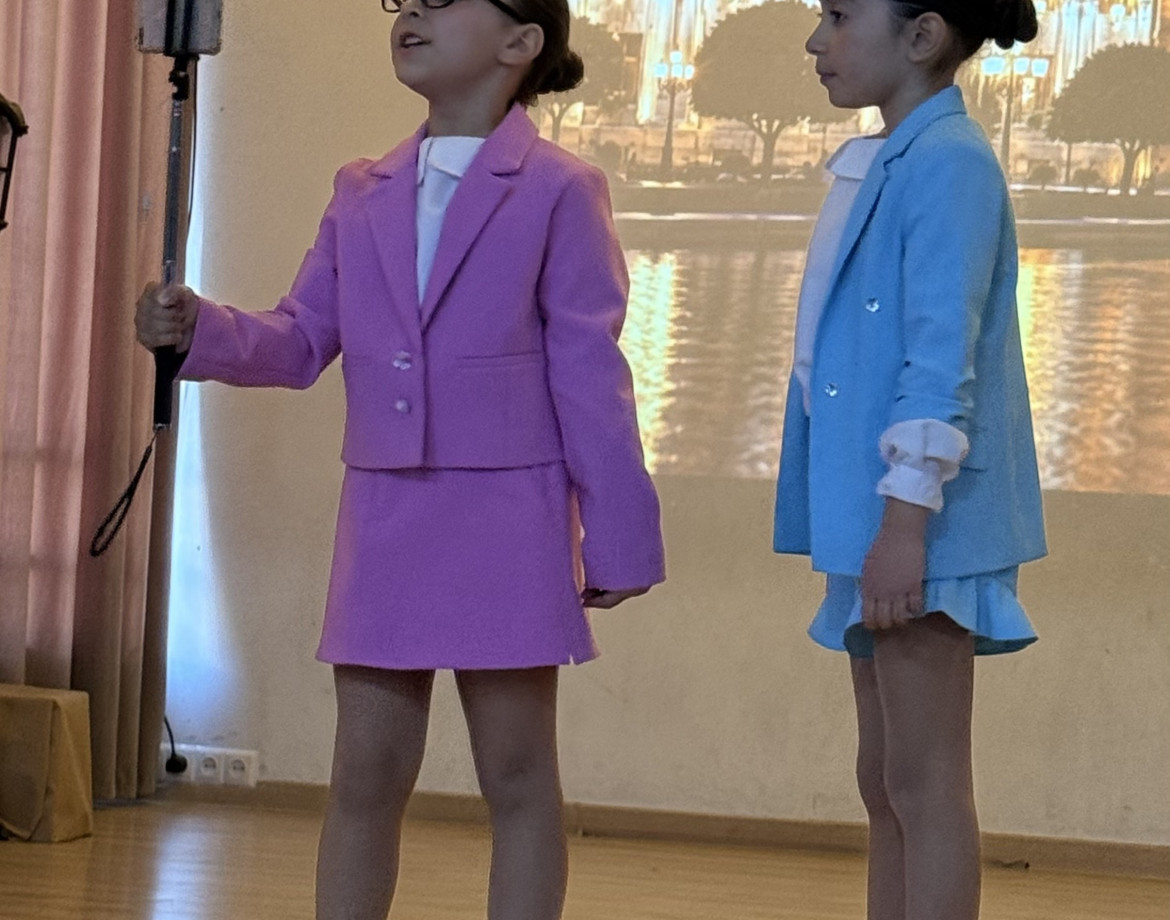
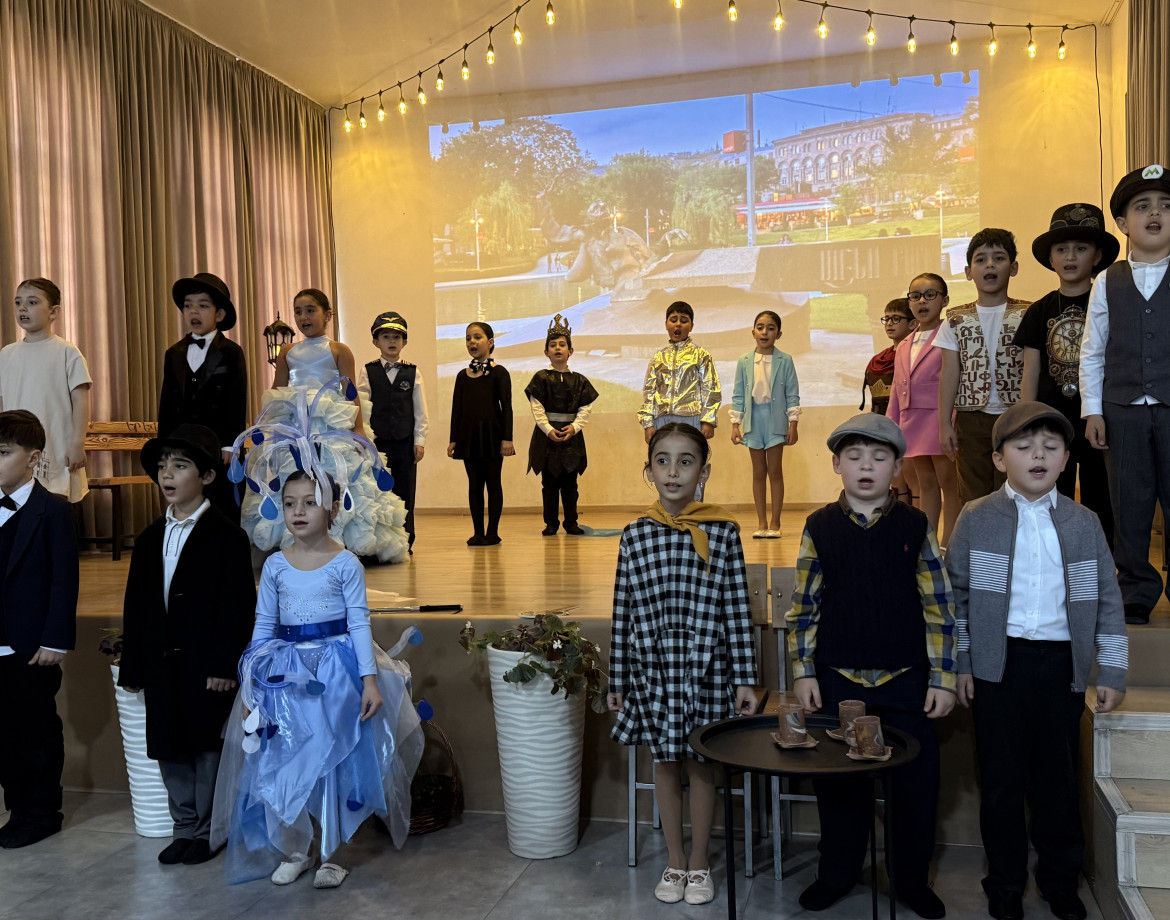
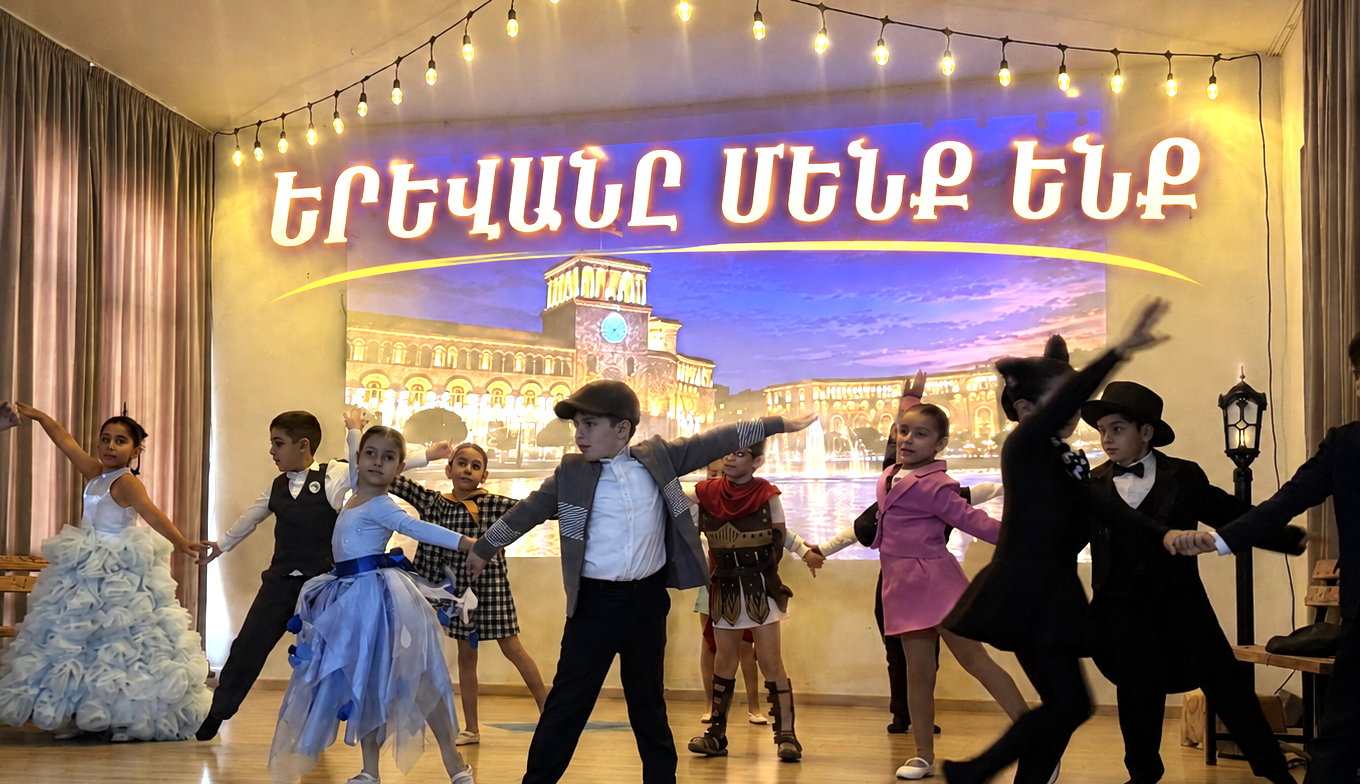
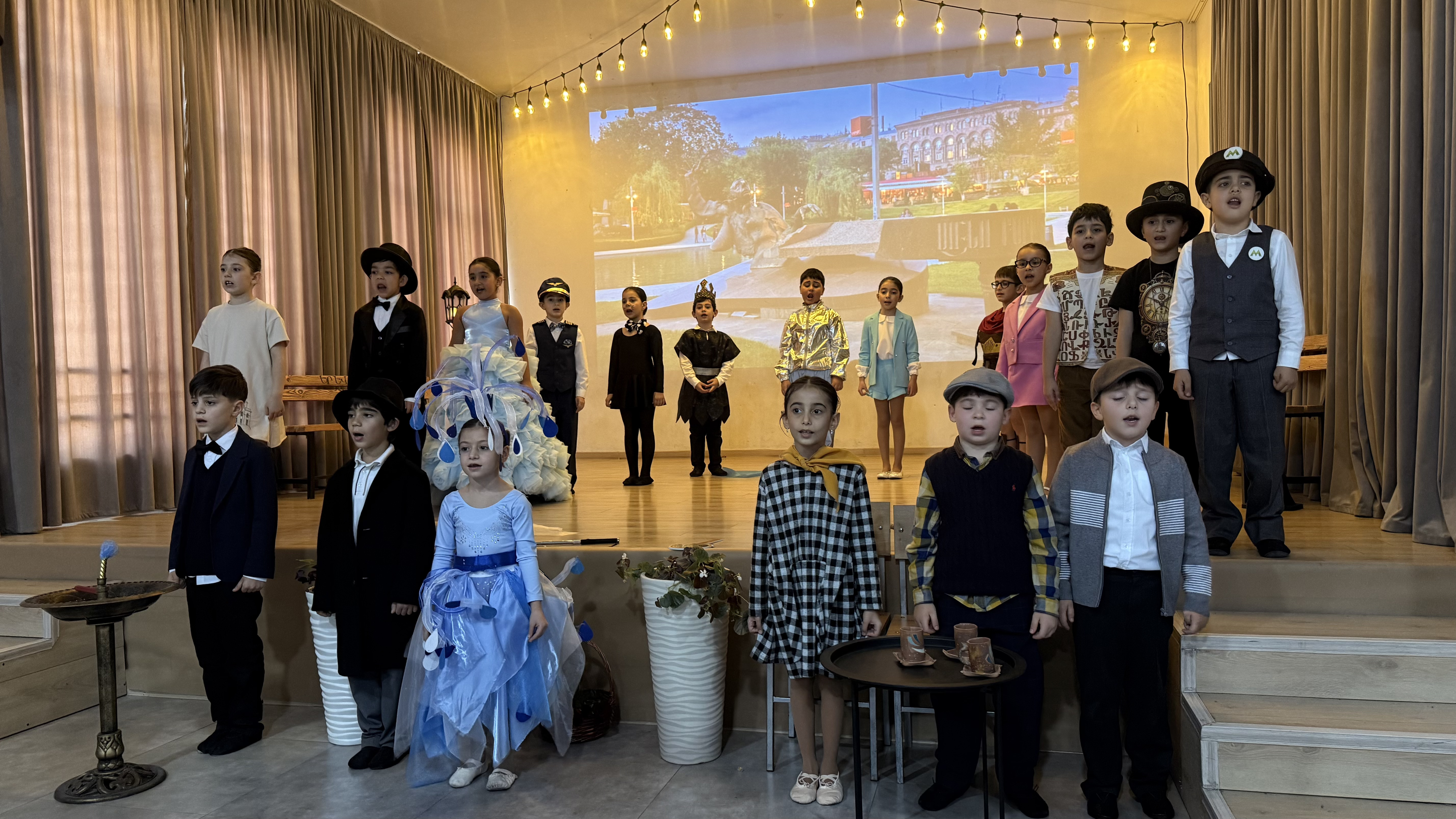
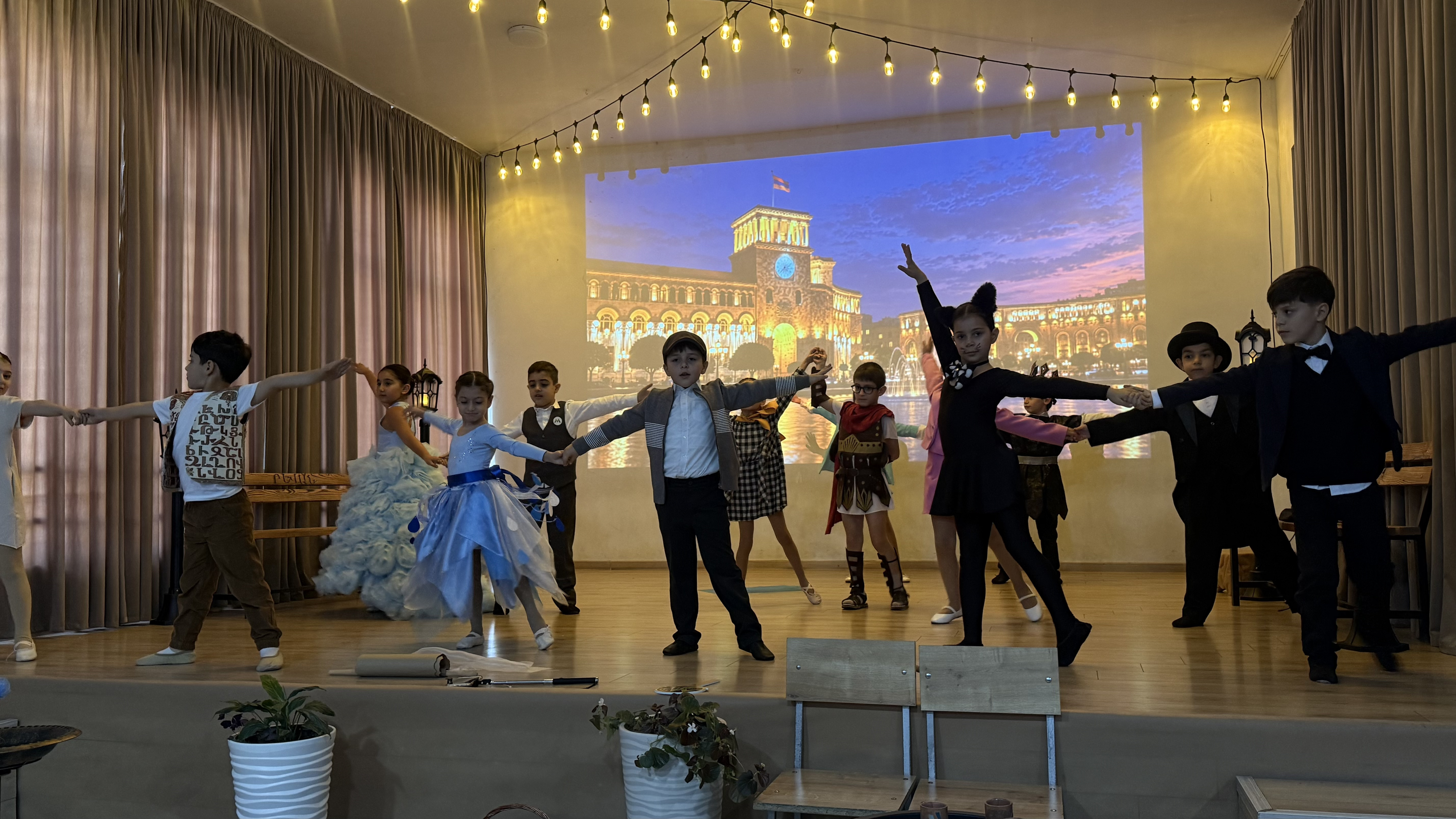
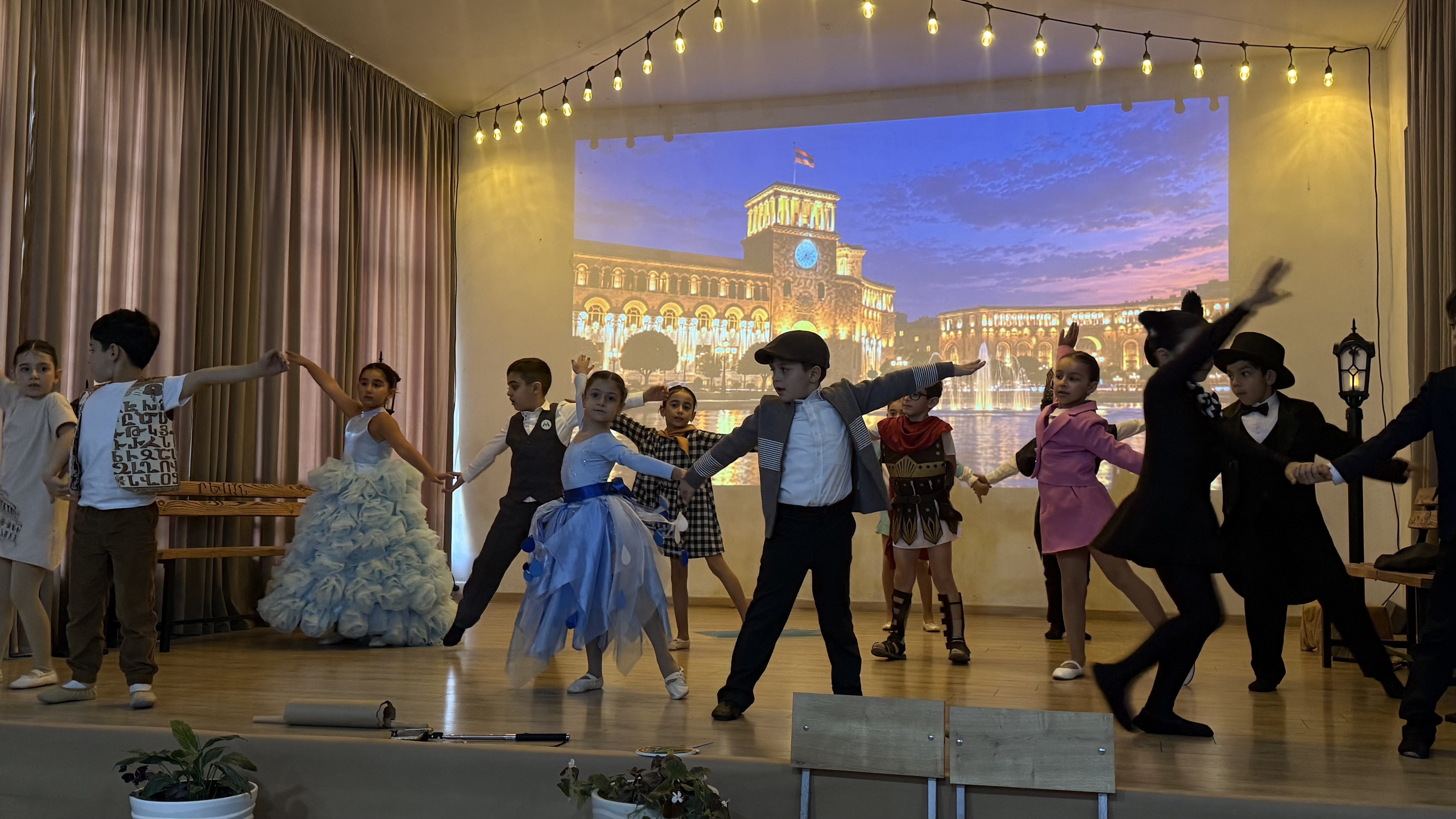
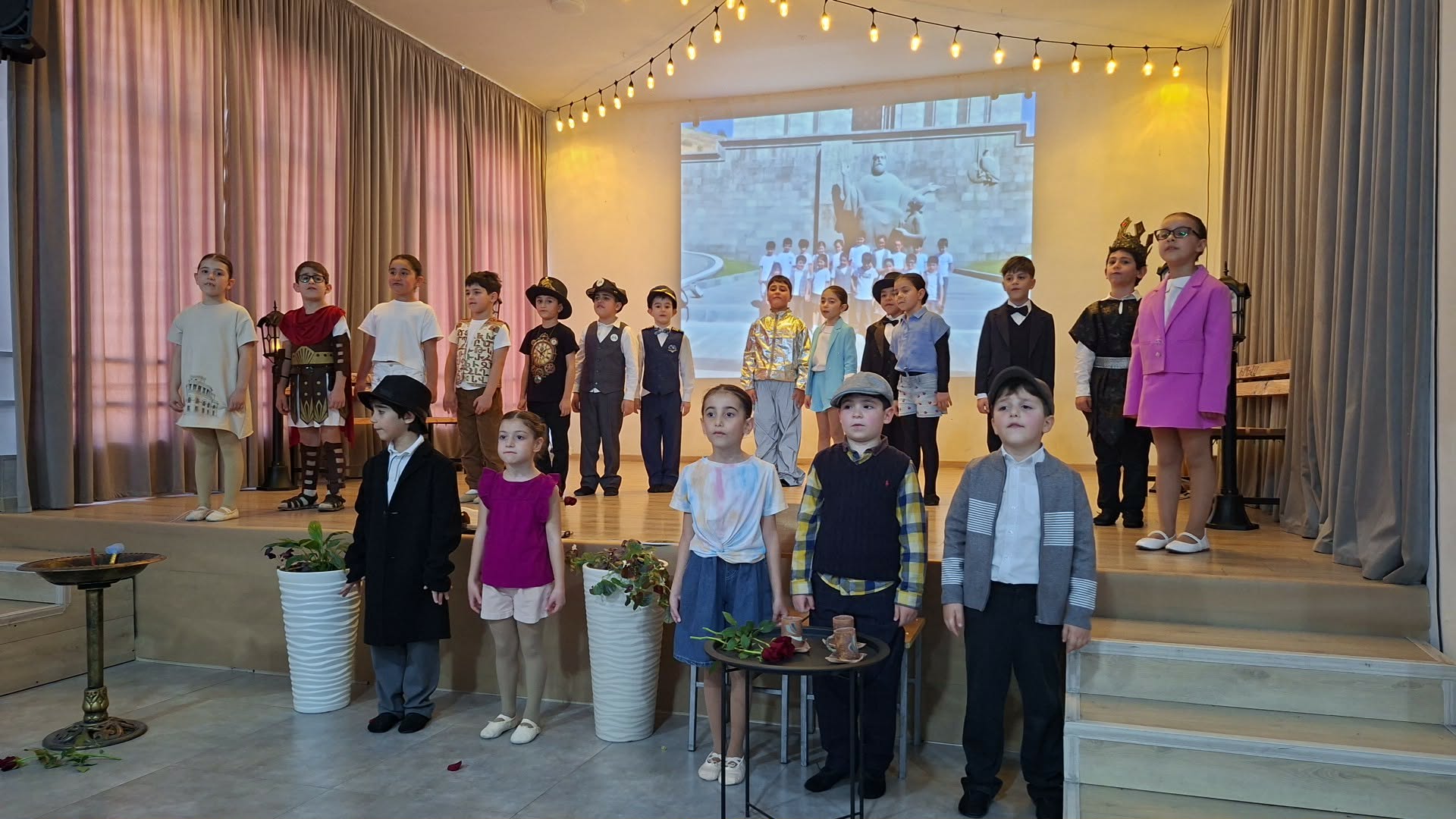
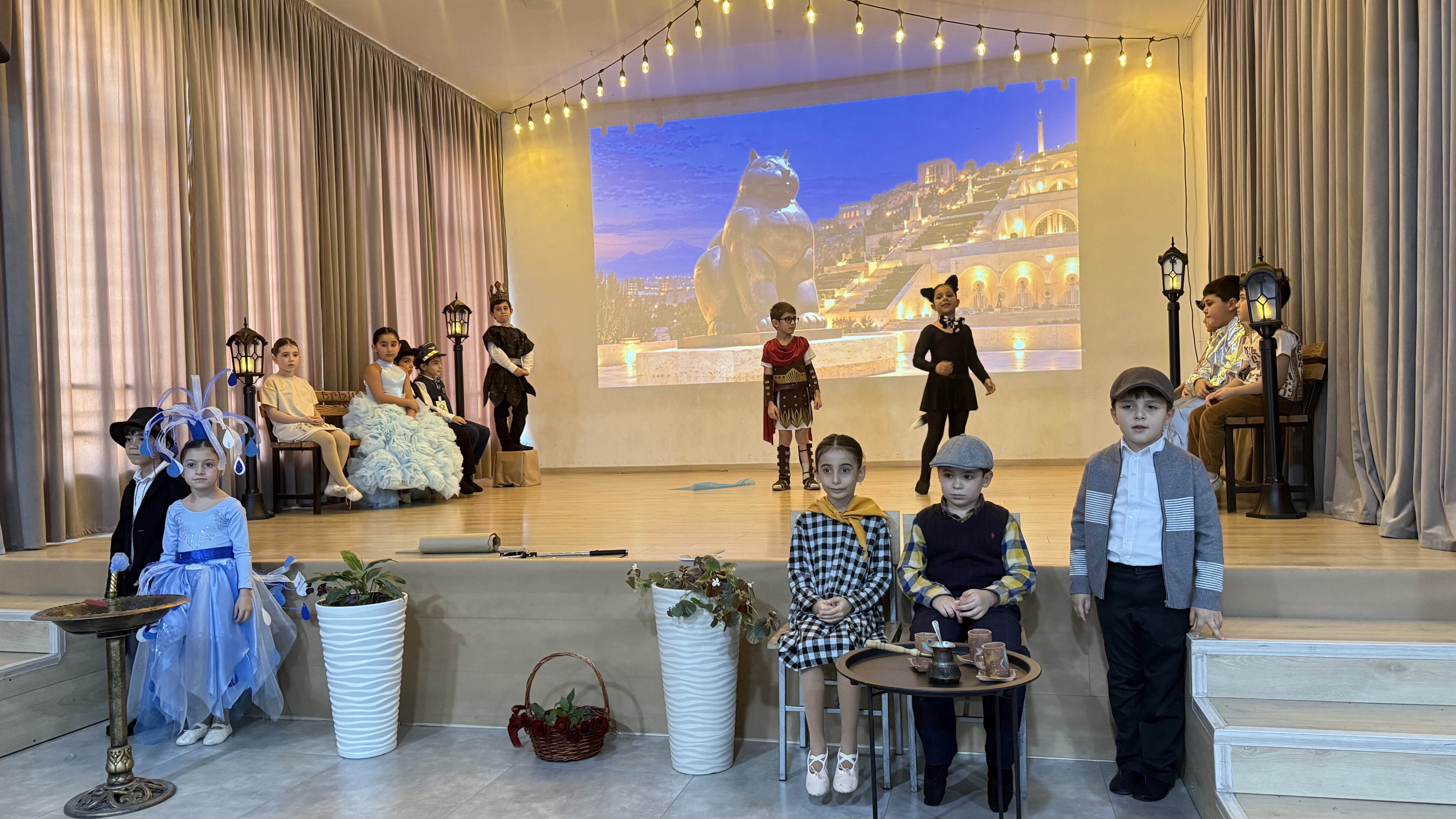
These were the questions explored by the second-graders of USUM School through their original theatrical performance dedicated to Yerevan. The young performers gave the city's landmarks and symbols a voice, creating a story in which different historical periods, architectural figures, cultural icons, and modern-day Yerevanians come together.
The story begins with a midnight broadcast on Radio Yerevan. The city's main clock calls an extraordinary secret meeting to discover why the heart of Yerevan seems to be beating more slowly. Although the participants come from different eras, they share the same concern: where has the city's warmth disappeared?
The first to speak about the city he founded is King Argishti. Proudly recalling the founding of Erebuni, he looks at modern Yerevan with a mixture of admiration and concern. The city has grown, high-rise buildings and wide avenues have multiplied, yet people seem to have forgotten how to smile. The Matenadaran Manuscript then recalls the many challenges Yerevan has endured throughout the centuries, rising again each time thanks to the unity and mutual support of its people.
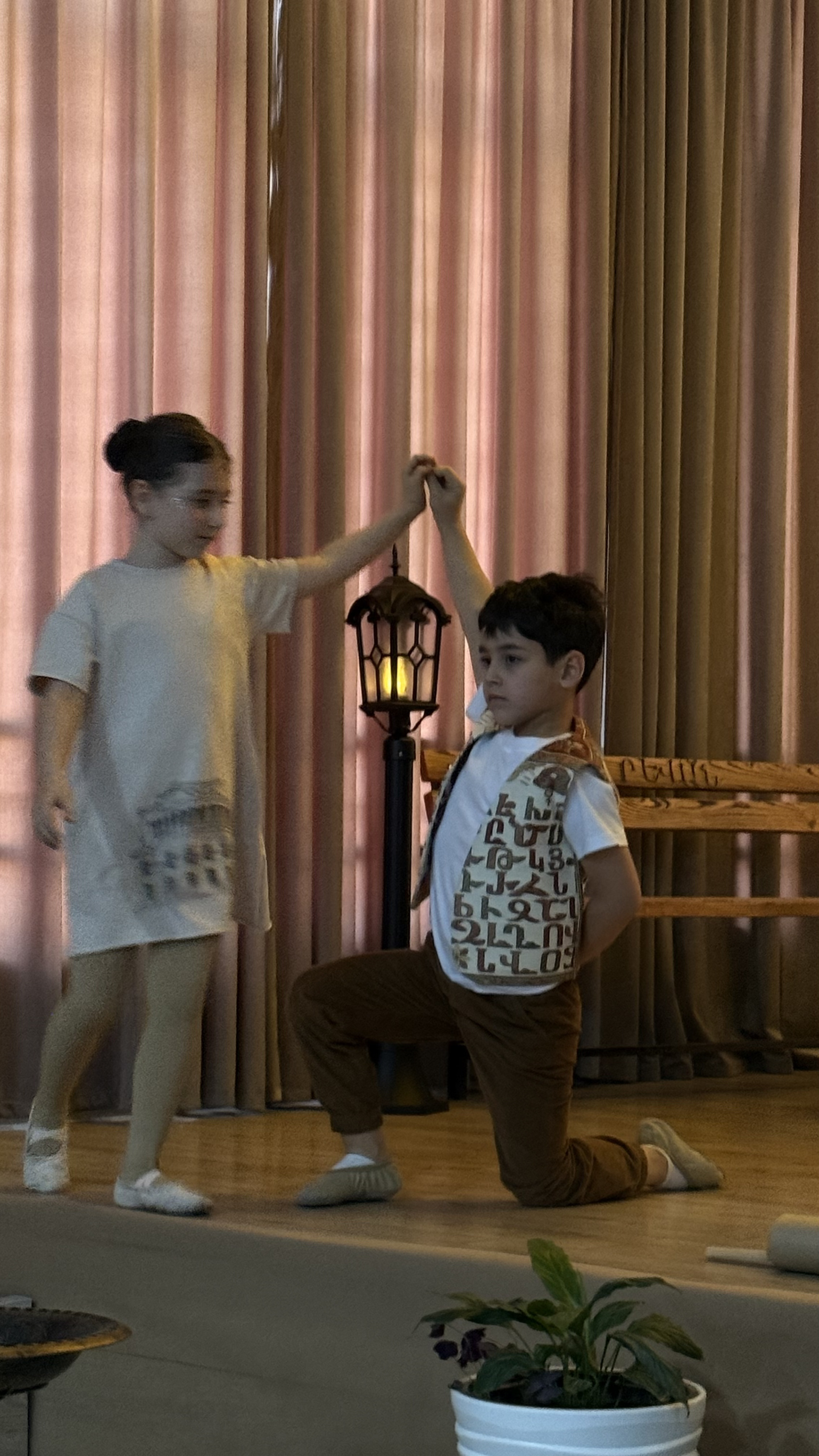
The relationship between old and modern Yerevan takes center stage in the dialogue between Grandfather and Grandmother Kond and a contemporary skyscraper. The skyscraper boasts of its height, glass walls, and modern comforts, while the residents of Kond remind everyone that a city's value cannot be measured by its appearance alone. The narrow streets, open courtyards, and close relationships between neighbors preserve an entire way of life and a rich history.
However, the performance does not portray the old and the new as opposing worlds. By the end of their conversation, even the skyscraper understands that modern Yerevan needs both contemporary architecture and its historical heritage. A city must develop without losing its identity. And preserving old neighborhoods requires more than admiration; it also demands care, attention, and decent living conditions.
Those searching for Yerevan's warmth also discover the everyday wonders of the city. The personified Zvartnots Airport and Metro Station draw attention to one of the contradictions of modern life: people stand side by side every day, yet are often so absorbed in their phones and personal routines that they fail to notice one another. Karabala, the symbol of kindness in Yerevan's streets, offers an answer to this concern. His roses remind us that sometimes a sincere smile is worth more than the most expensive gift.
Yerevan's cultural identity is also brought to life through the figures of Arno Babajanyan, Yeghishe Charents, and Alexander Tamanyan. Music, poetry, and architecture come together in a shared expression of love for the city. Tamanyan reminds us that although he gave Yerevan a new appearance, its soul belongs to its people. The Opera House and Swan Lake, in turn, emphasize that the city's beauty must not only be created but also preserved.
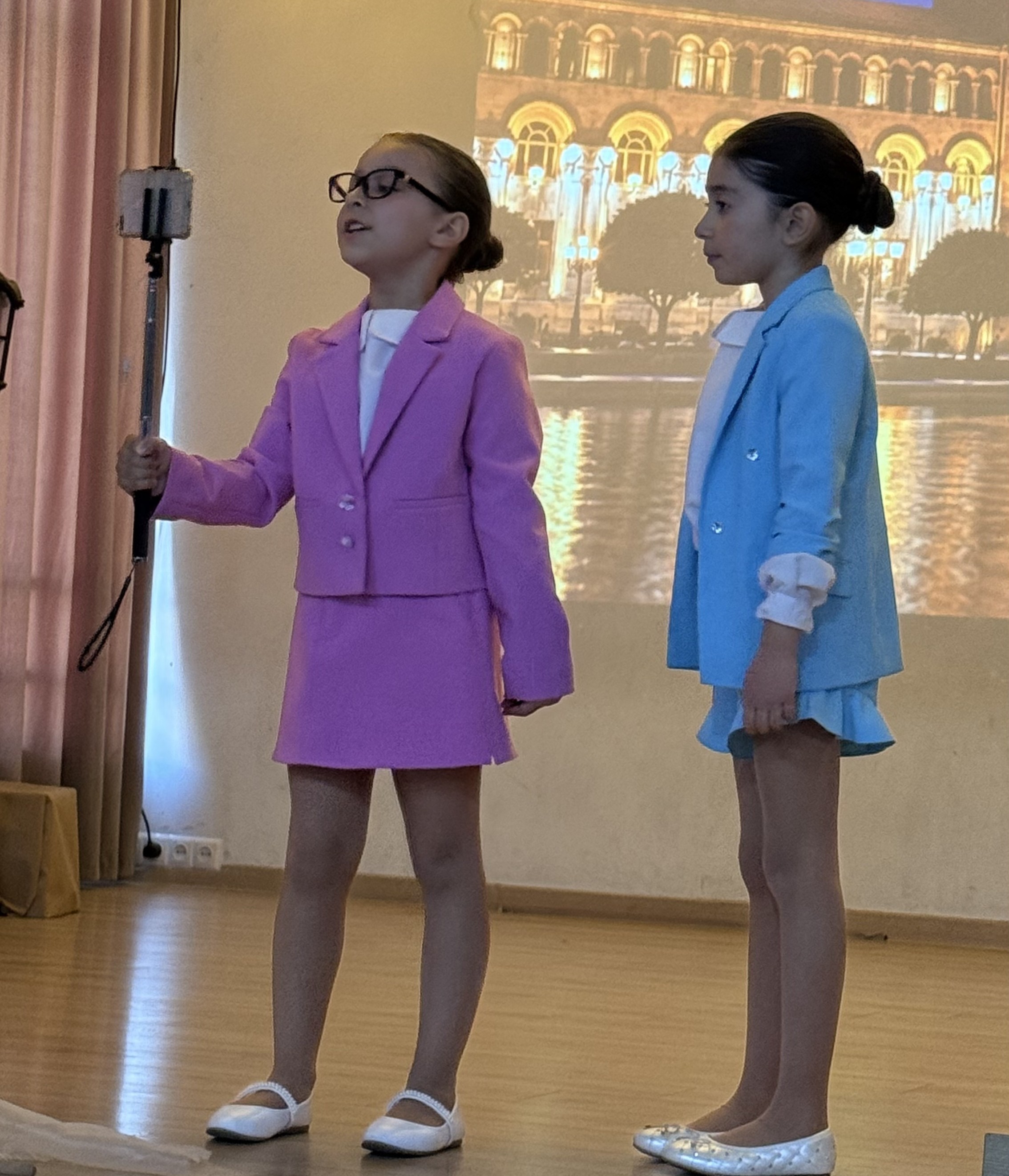
The appearance of modern-day bloggers brings a fresh perspective to the story. They present Yerevan through the eyes of the younger generation, speaking to the camera about its streets, history, and unique atmosphere. Yet even the most beautiful footage cannot fully capture the feeling of living in this city. Yerevan is not simply a place to film or showcase; it is a city to discover, understand, and experience.
After all these encounters, the participants of the secret meeting realize that the warmth they have been searching for has never disappeared. It lives within people—in their kindness, care, willingness to help one another, and sense of responsibility toward their city.
Notably, the young performers convey this message not through direct moral lessons, but through storytelling, music, humor, and dialogue between characters. They address the challenges facing the city while showing that everyone has a role to play in overcoming them: preserving historical heritage, keeping the environment clean, caring for public spaces, and, above all, maintaining human warmth.
The words "We Are Yerevan," heard at the end of the performance, become the central message of the entire story. The city's past has been passed down to us through the efforts of previous generations, while its future depends on how we treat it today.
And when Radio Yerevan returns to the air at dawn to welcome a new day, one thing becomes clear: the city's heart is still beating. We simply need to know how to listen.
To not think freely is to not think at all!