
Model United Nations (MUN) is one of the world's most widespread and influential youth educational platforms, offering schoolchildren and university students an opportunity to explore the world of international diplomacy, politics, and global problem-solving.
As USUM approaches its 30th anniversary, our school is about to bring its own adaptation of a Model United Nations conference to life in just a few days. With more than 80 applications received for the very first edition, calling this a great success would be an understatement.
Over the course of three days, participants, known as delegates, will represent the interests and official positions of different countries in various UN committees, such as the Security Council, the General Assembly, UNESCO, and ECOSOC.
During MUN conferences, young delegates typically address real-world global challenges, ranging from international security and human rights protection to climate change and digital security.
But first, let's explore how an MUN conference works.
Every Model United Nations conference follows a specific set of international diplomatic rules known as the Rules of Procedure. Before the conference, participants receive a Background Guide outlining their assigned country's position and the topic under discussion. They then prepare an official Position Paper, which serves as the basis for an extensive round of debate and negotiations, ultimately leading to the adoption of a final resolution.
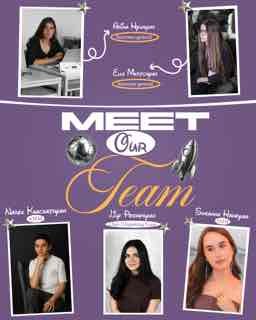
"The youth MUN movement in Armenia is actively developing, and by organizing this conference, our school will undoubtedly establish its own distinctive place among the schools, universities, and youth organizations that have joined this movement," Ella Mkrtchyan, a 12th-grade student at our school, told usumschool.am. Ella, who coordinates the conference's activities, has herself gained extensive experience in Armenian MUN conferences.
According to Ella, these conferences provide students and young people aged 14–22 with an opportunity to engage in one of the world's most widespread debate formats, addressing issues at the heart of global politics. She believes that Armenia, including USUM, is home to many talented young people who are passionate about civic and public engagement. However, amid today's overwhelming flow of information, they need accurate guidance and direction. This platform is designed to address precisely that need as one of its primary objectives.
Participation in Model United Nations offers students invaluable opportunities for personal and academic growth, which can be outlined through the following key areas:
Public Speaking and Self-Confidence: Students learn to address large audiences and present their ideas clearly, confidently, and persuasively.
Critical Thinking and Research: Before the conference, delegates explore international law, the geopolitical landscape of their assigned countries, and relevant historical contexts.
Negotiation and Consensus Building: Participants develop the ability to communicate with delegates holding different viewpoints, find common ground, and work together to draft a shared resolution.
Multilingual Communication: Many international and local MUN conferences are conducted in English or French, providing participants with an opportunity to strengthen their foreign-language skills in a professional context.
Turning to our school's adaptation of Model United Nations, it is worth noting that the conference will feature five committees, each addressing an issue that has received relatively little attention and research. The role-play modules will also incorporate carefully designed scenario-based developments aimed at encouraging research, analytical thinking, and active problem-solving.
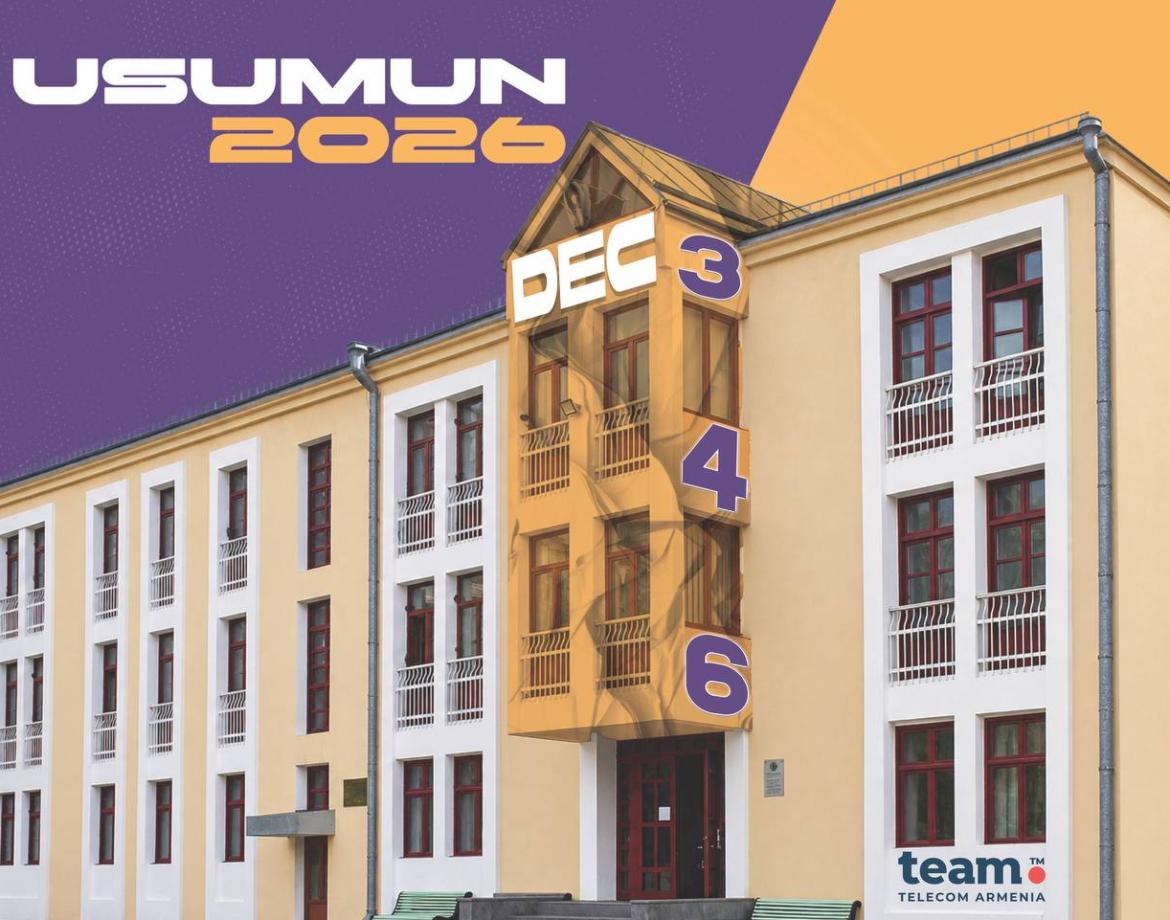
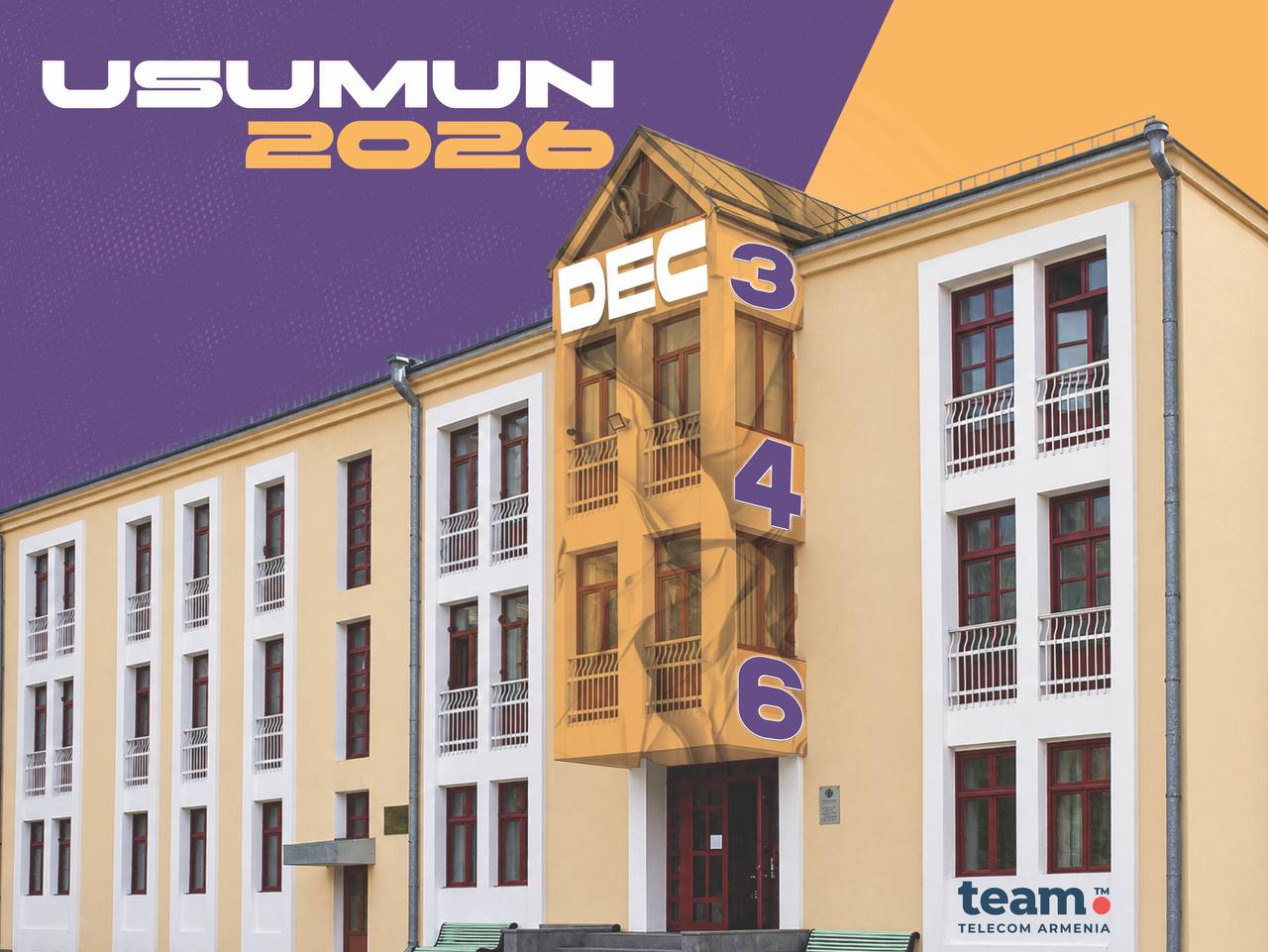
Finally, USUMUN vol. 1, taking place on December 3, 4, and 6, will bring together more than seventy school and university students on one platform, representing the capital, Armenia's regions, and even participants from abroad.
A new platform for dialogue, diplomacy, and young voices is about to begin!
To not think freely is to not think at all!