
Armenian literature is rich with great names, yet there are authors whose creative legacy becomes a timeless value. Such a figure is Hovhannes Tumanyan — a poet, storyteller, thinker, and a profound interpreter of the national psyche.
Tumanyan is not merely a writer; he is an entire world — with his own language, music, and moral standards. In his works one can hear the breath of the Armenian village, the gentleness of mountain winds, the murmur of a flowing stream, and at the same time the deep emotions, doubts, and hopes of the human soul. He succeeded in placing great truths of life — about kindness, justice, harmony, and conscience — into the simple form of a fairy tale.
Tumanyan’s characters are ordinary people — sometimes naïve, sometimes cunning, sometimes unfortunate or humorous. Yet through each character, the author speaks about human nature, mistakes, and the possibility of transformation. His tales are not merely children’s reading; they are a school of national self-awareness, where generations learn to distinguish black from white, to value wisdom, to love justice, and to believe in the triumph of goodness.
It is noteworthy that Tumanyan’s influence extends beyond literature. His words have become part of popular thinking, his expressions have turned into proverbs, and his characters live on in our cultural memory. Therefore, staging Tumanyan means not only creating a performance, but also breathing new life into our national heritage.
This theatrical production has precisely that purpose — to open the world of Tumanyan through the eyes of children, to revive his heroes, and to show that a fairy tale lives as long as it is told with love.
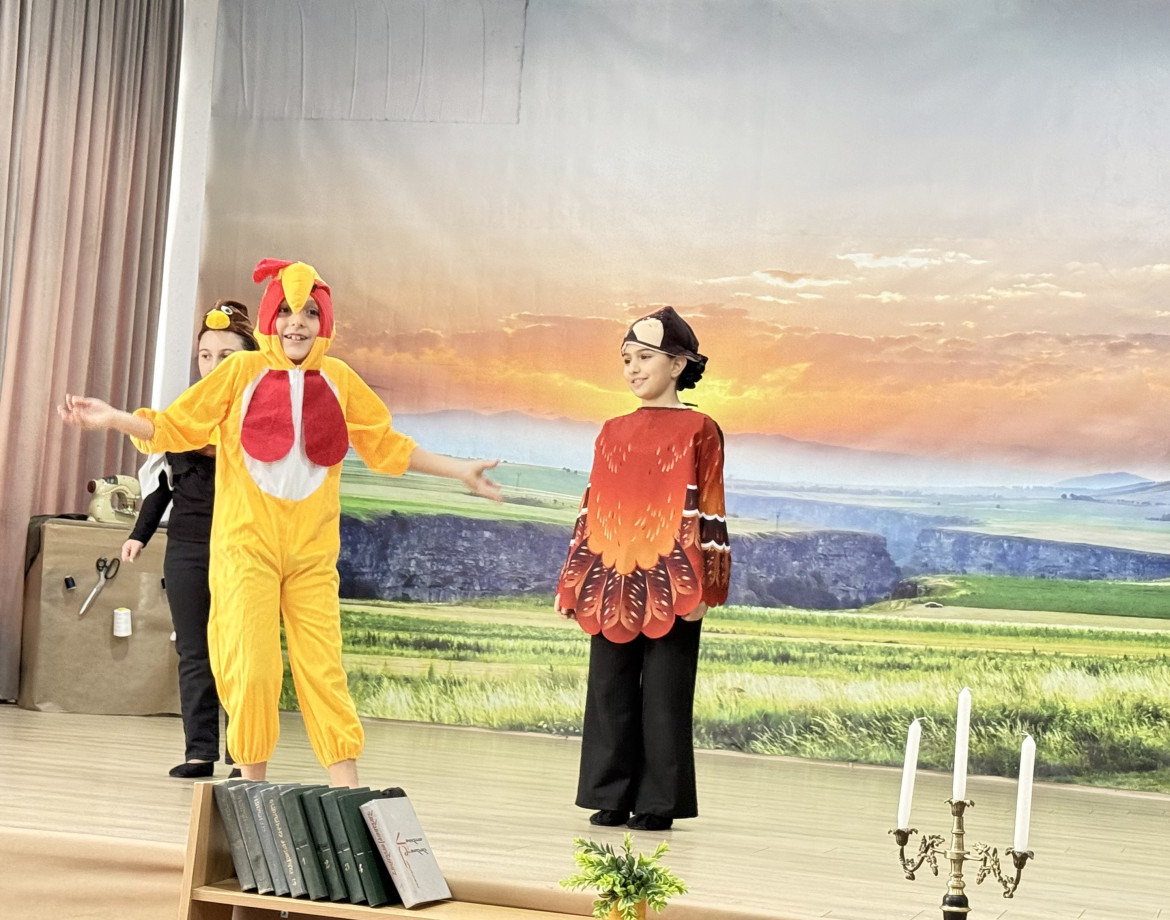
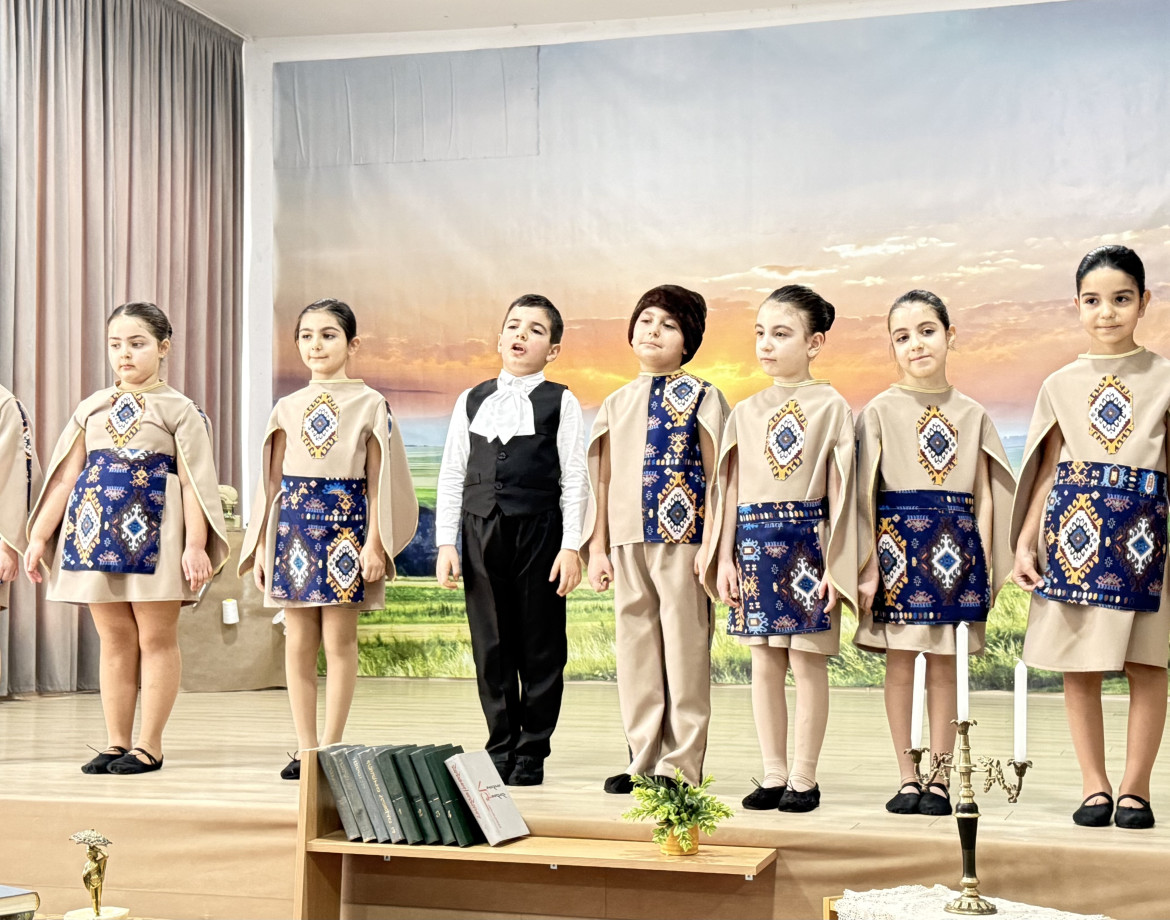
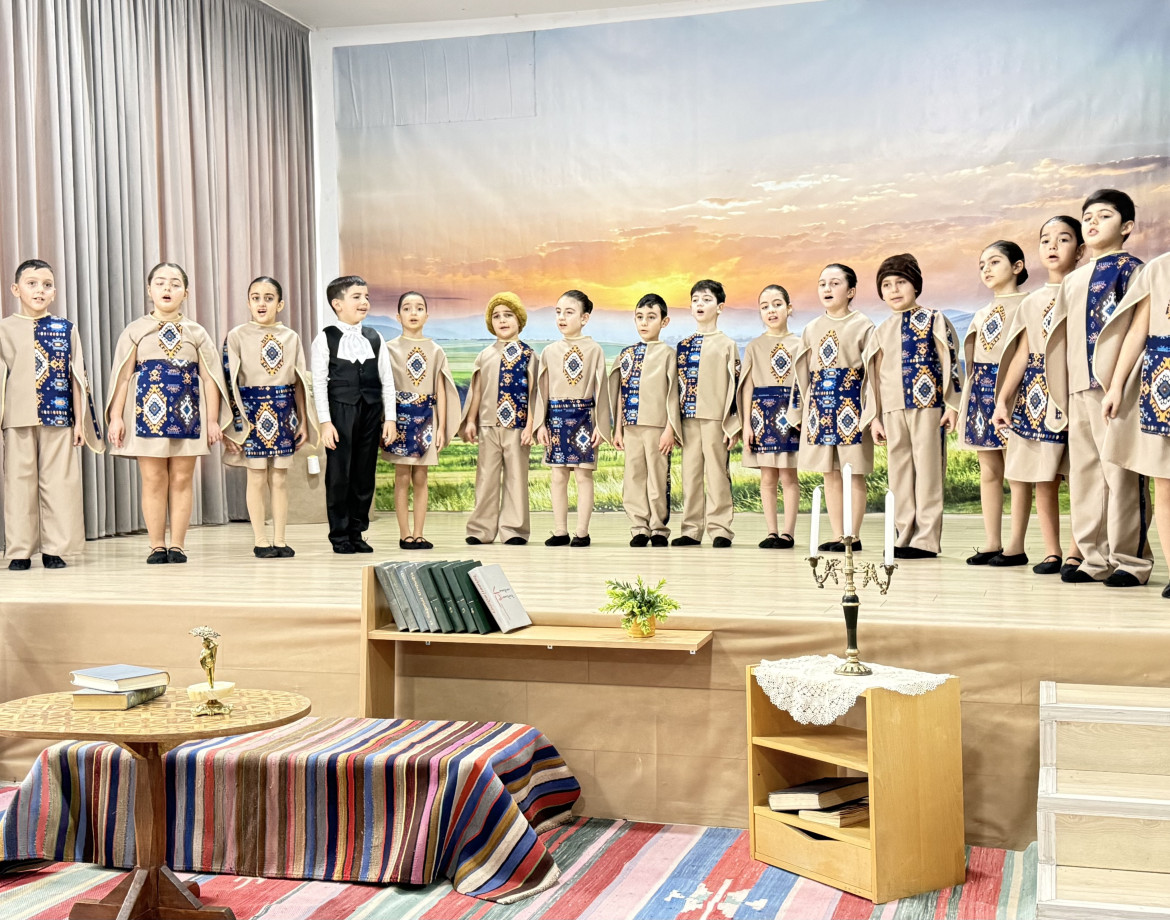
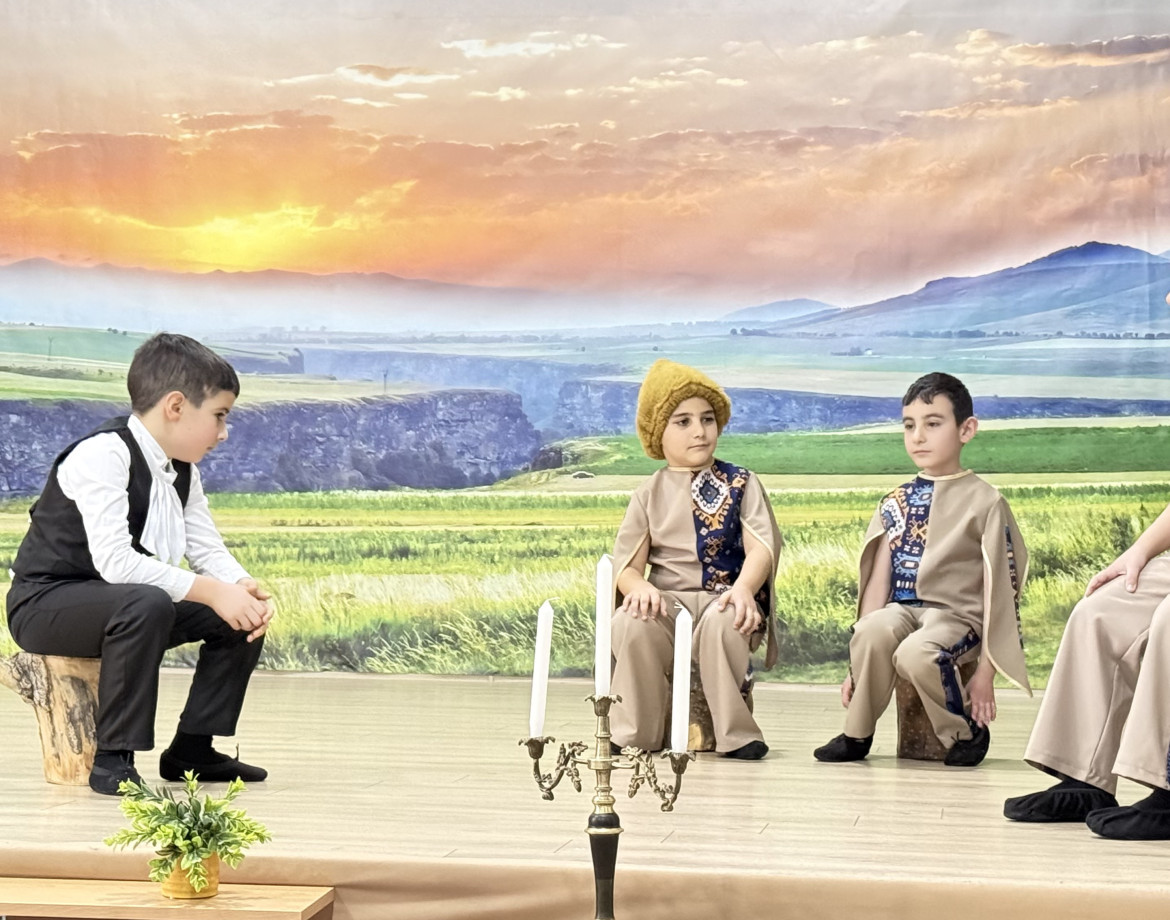
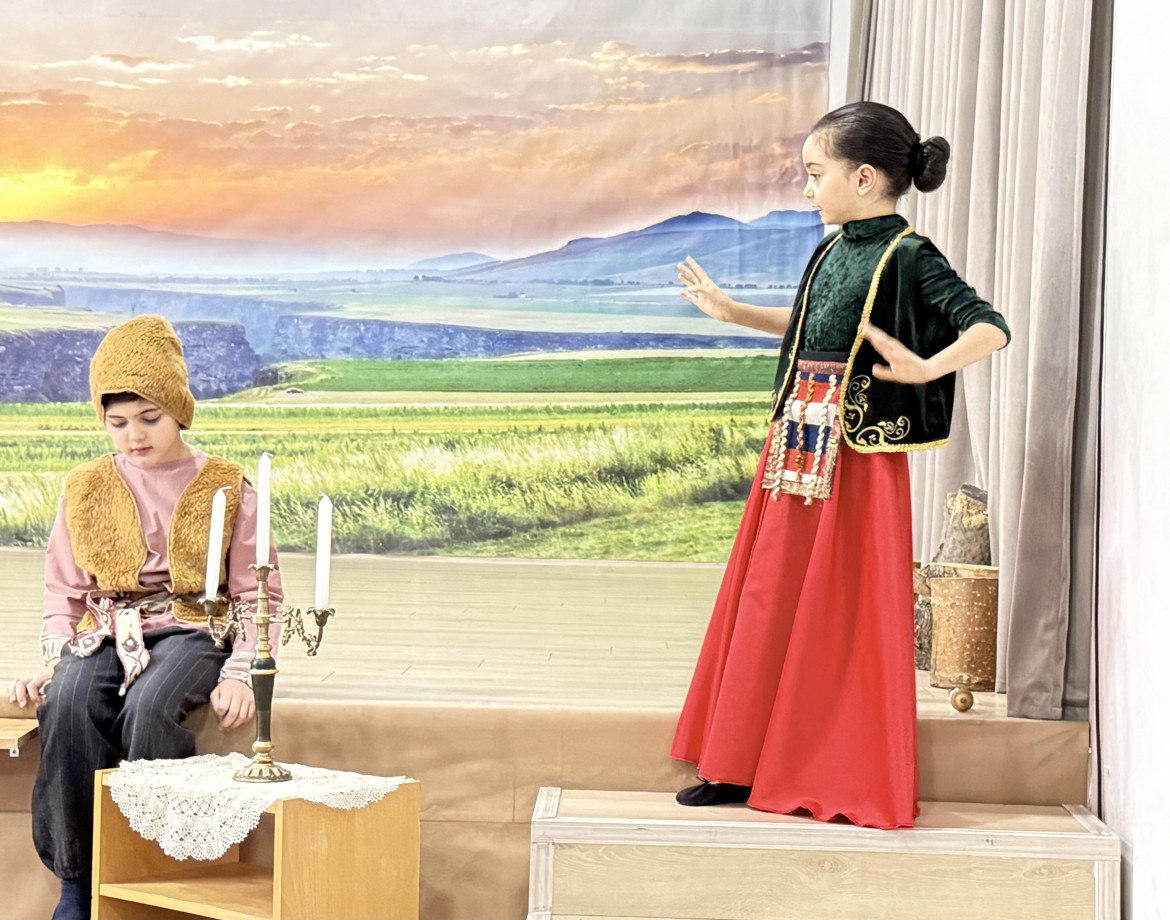
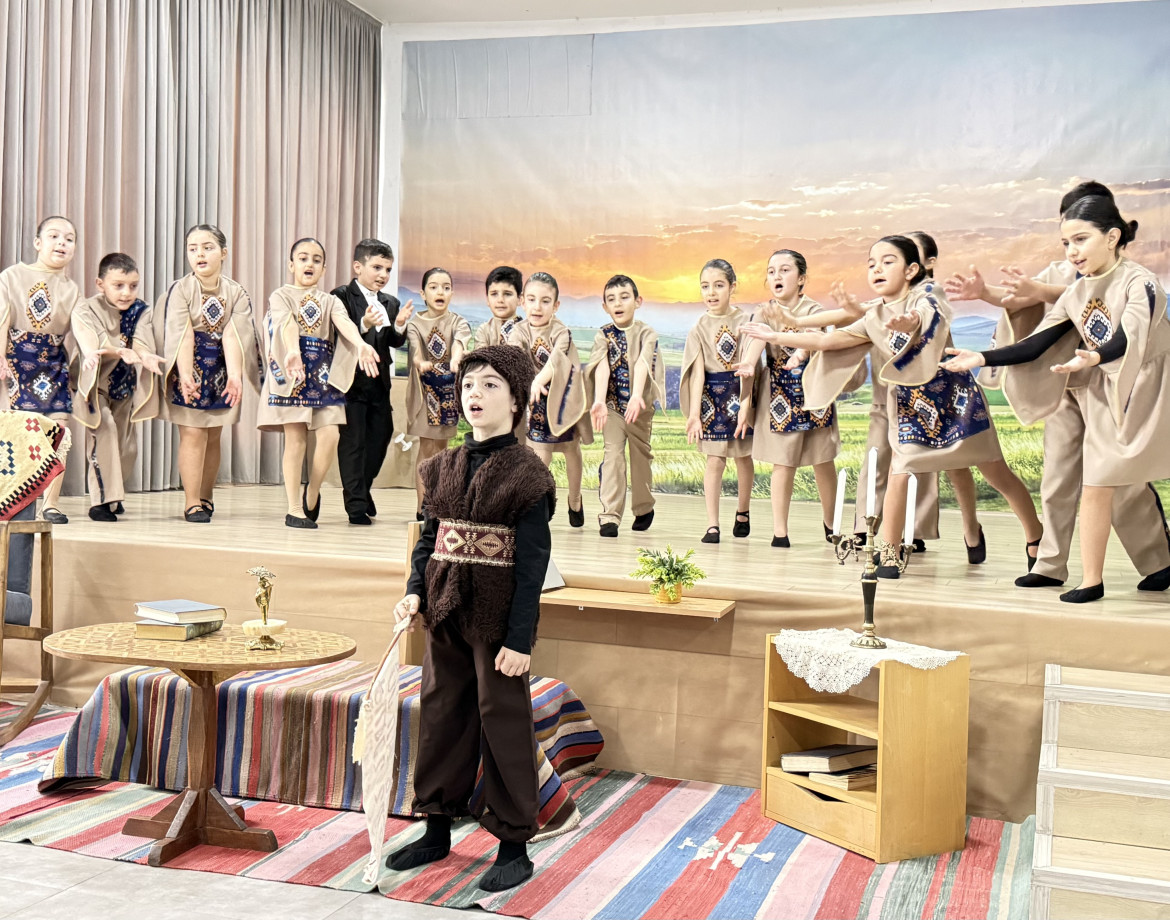
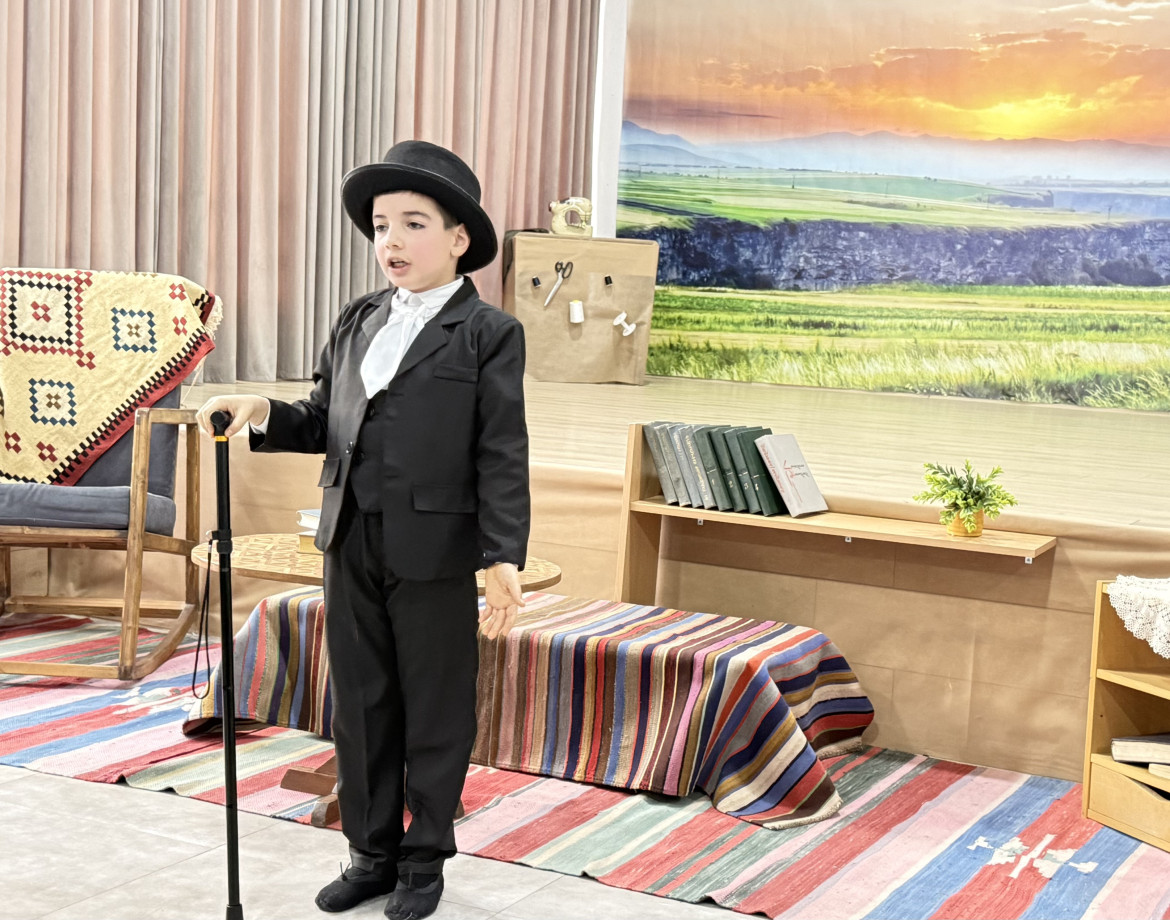
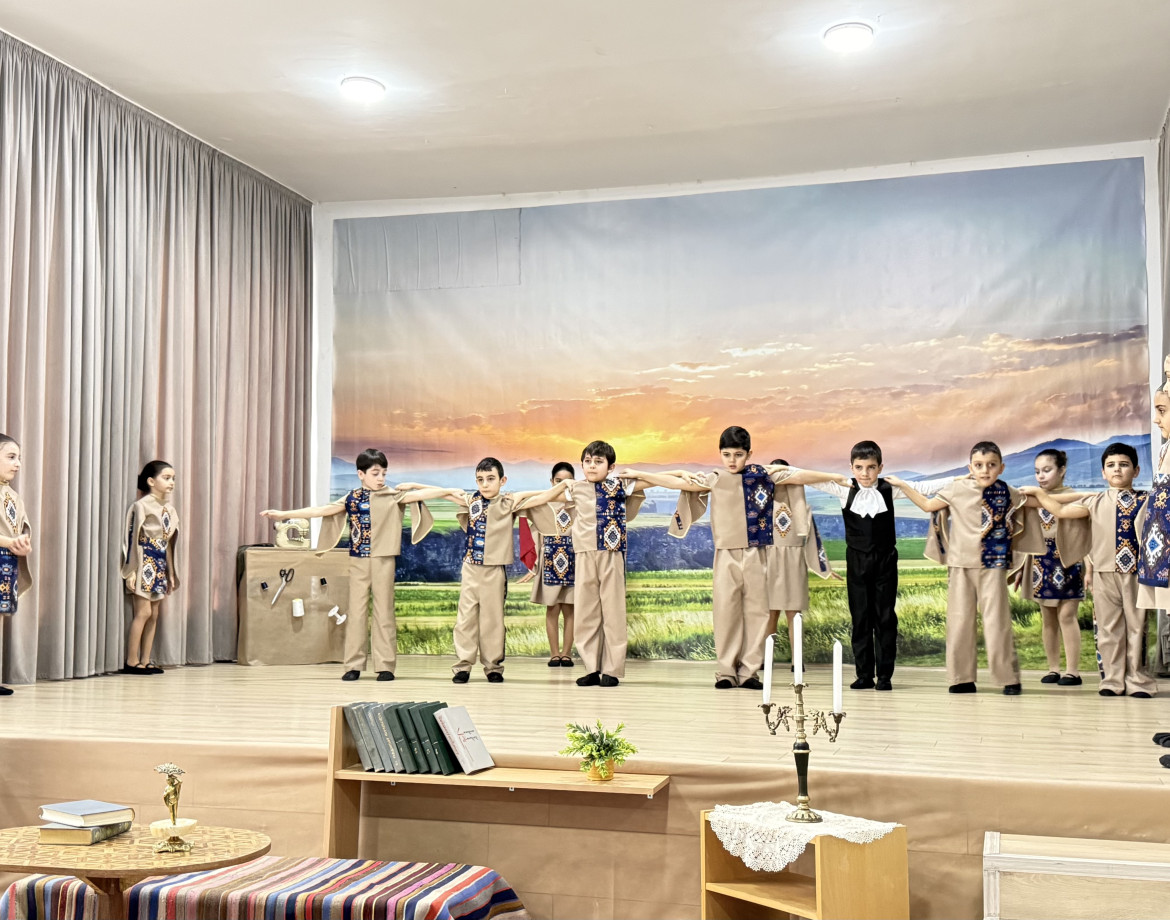
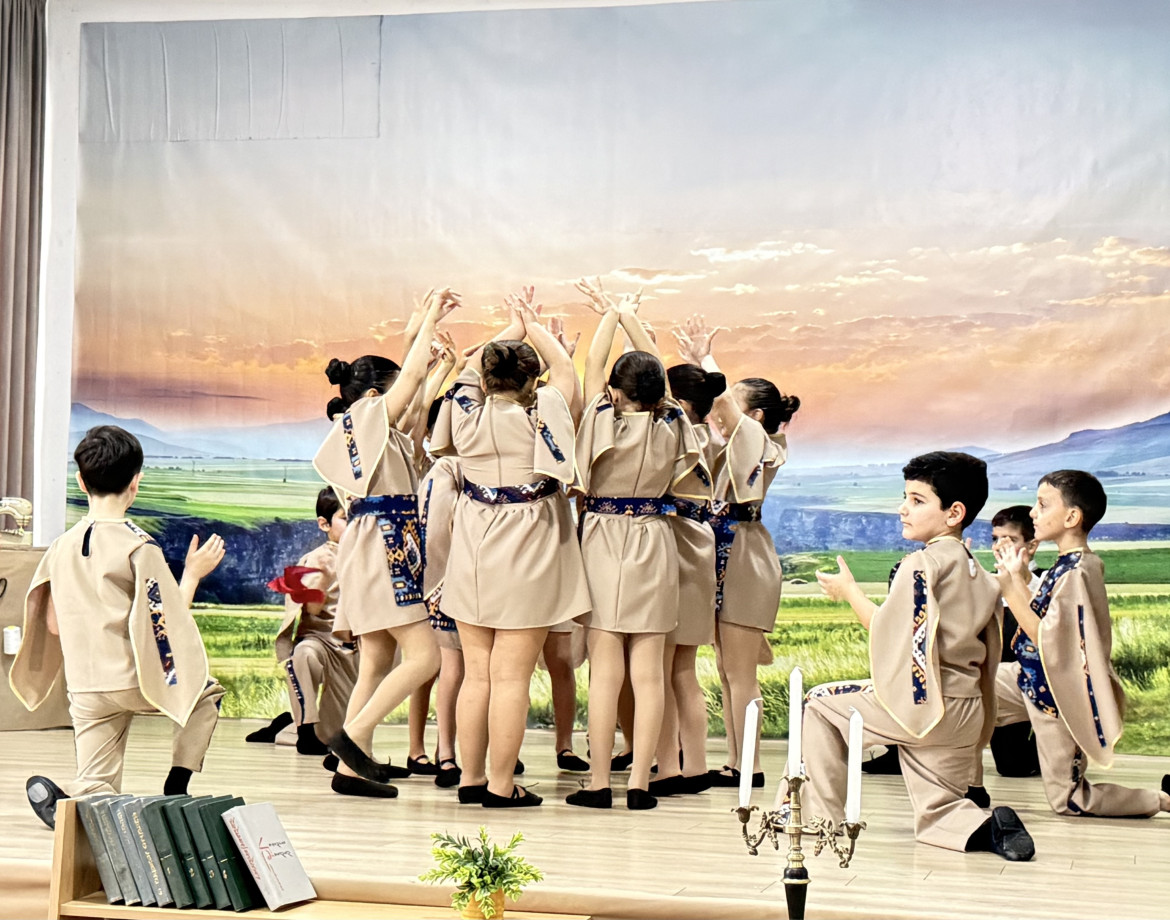
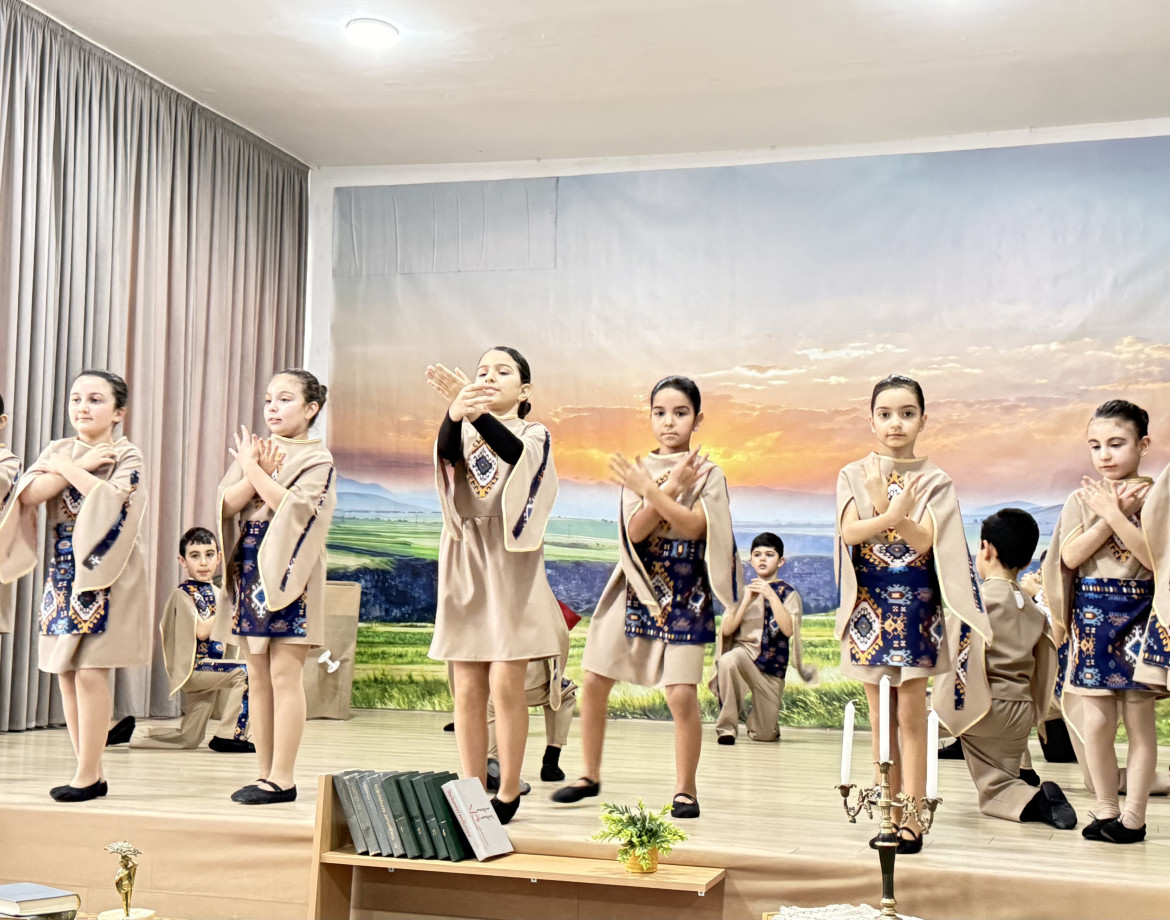
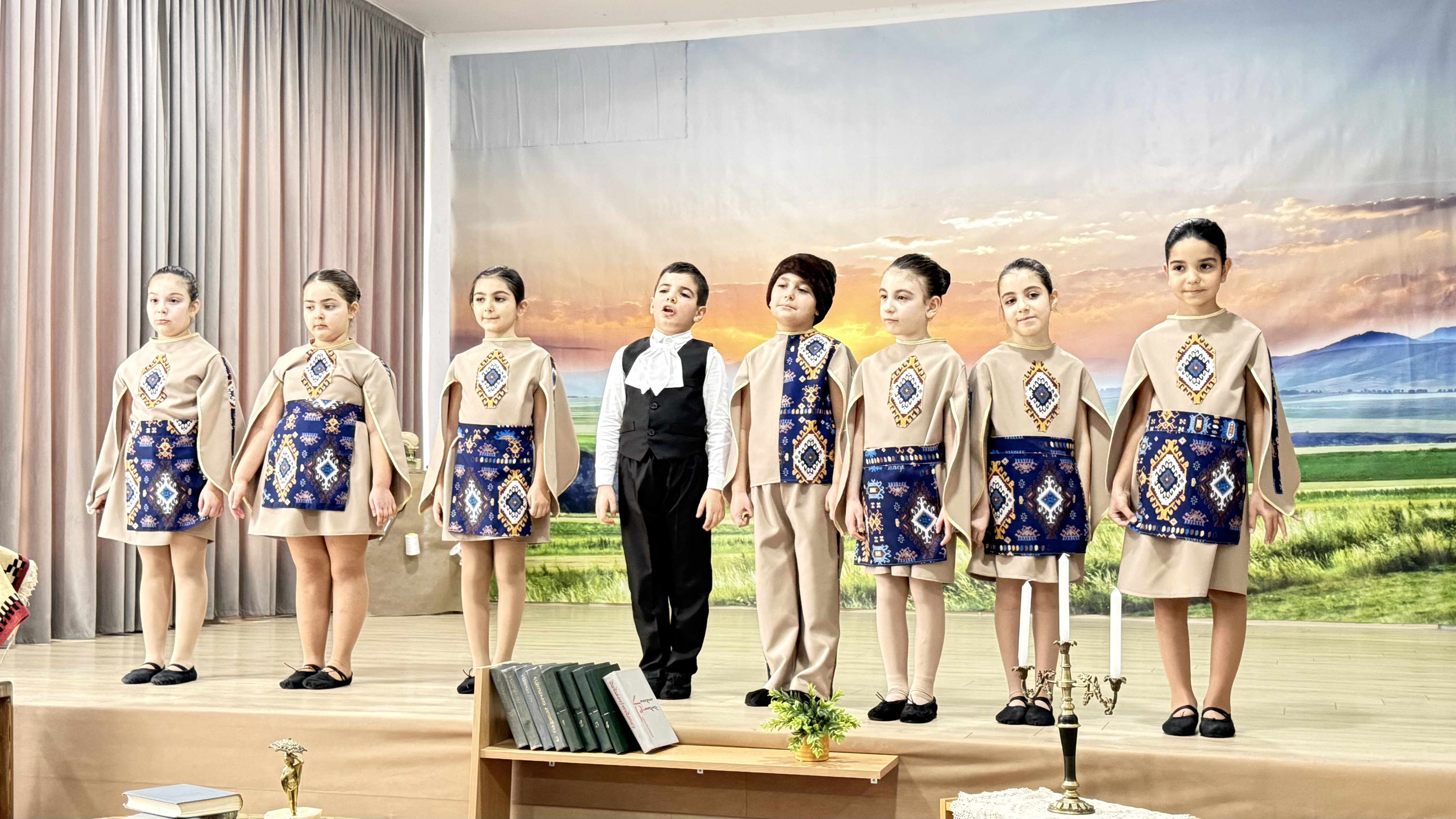
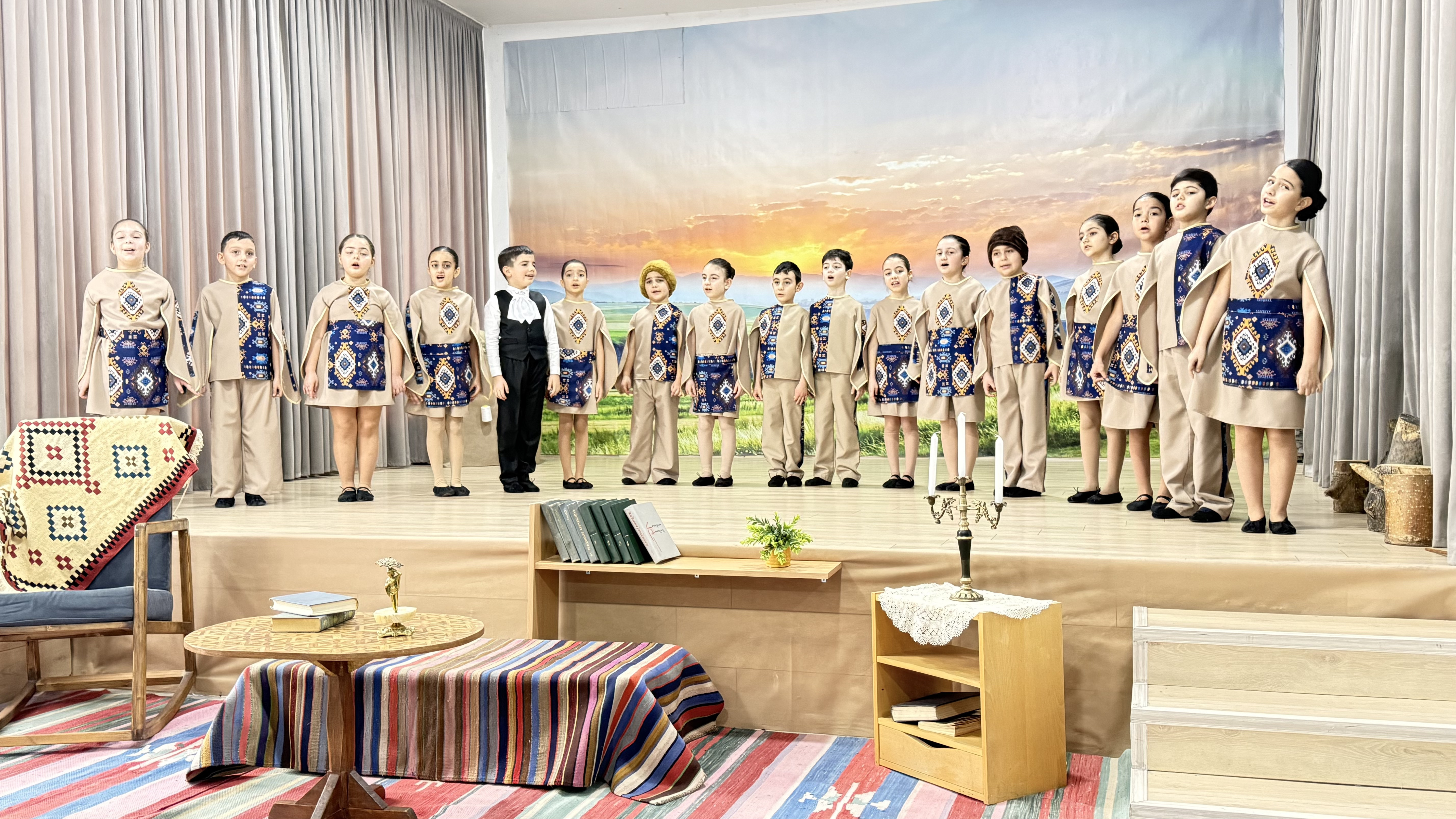
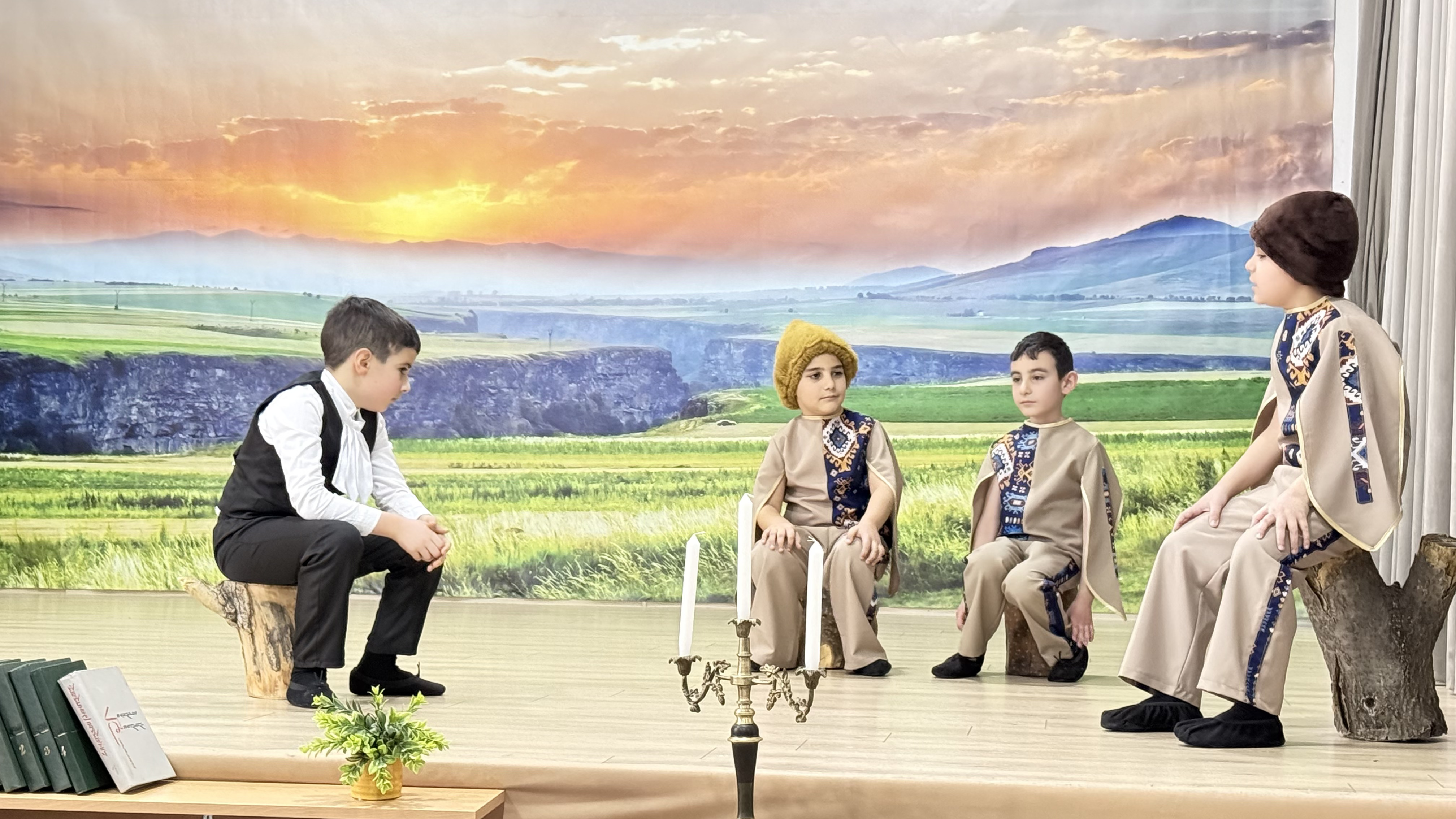
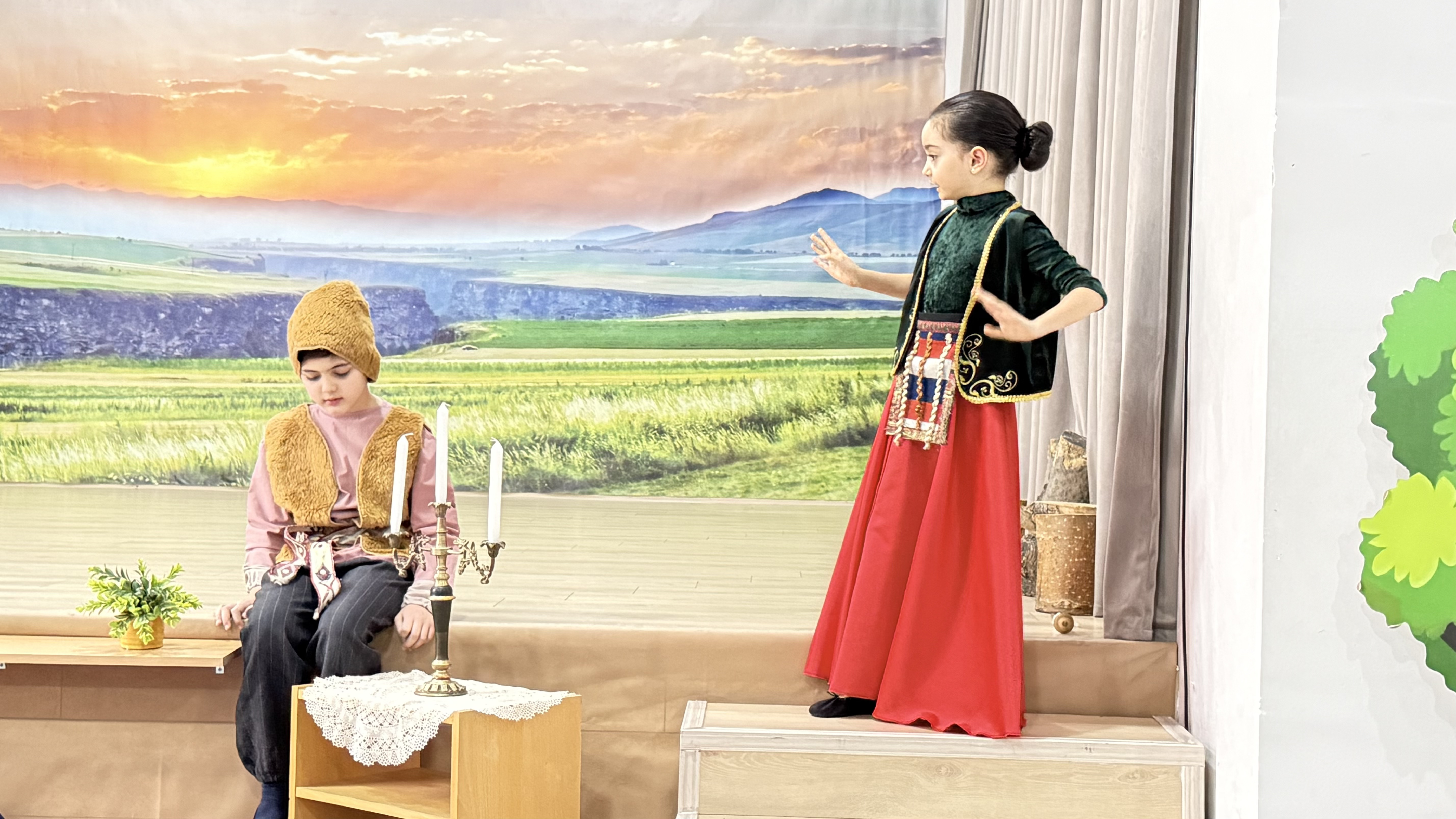
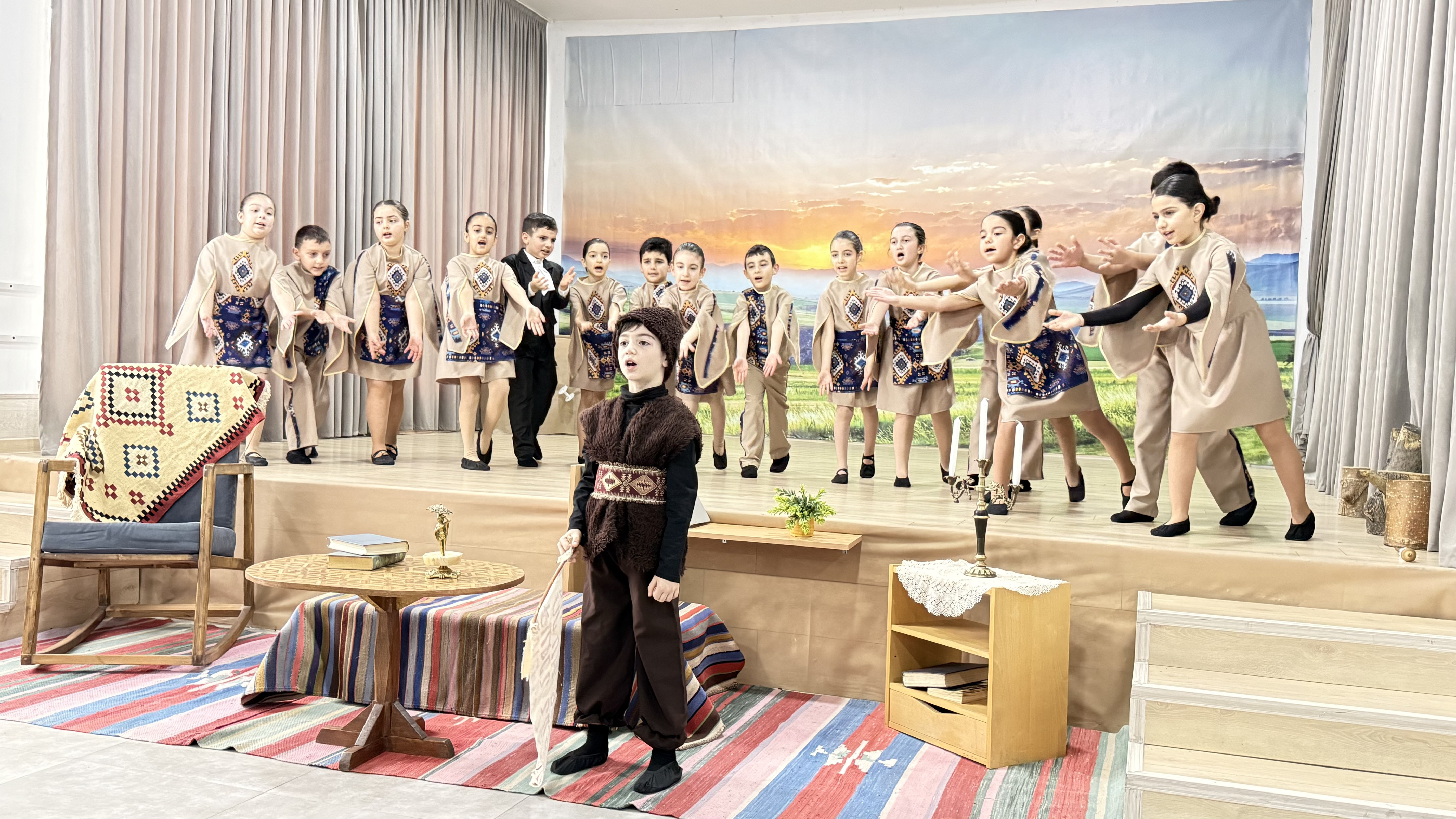
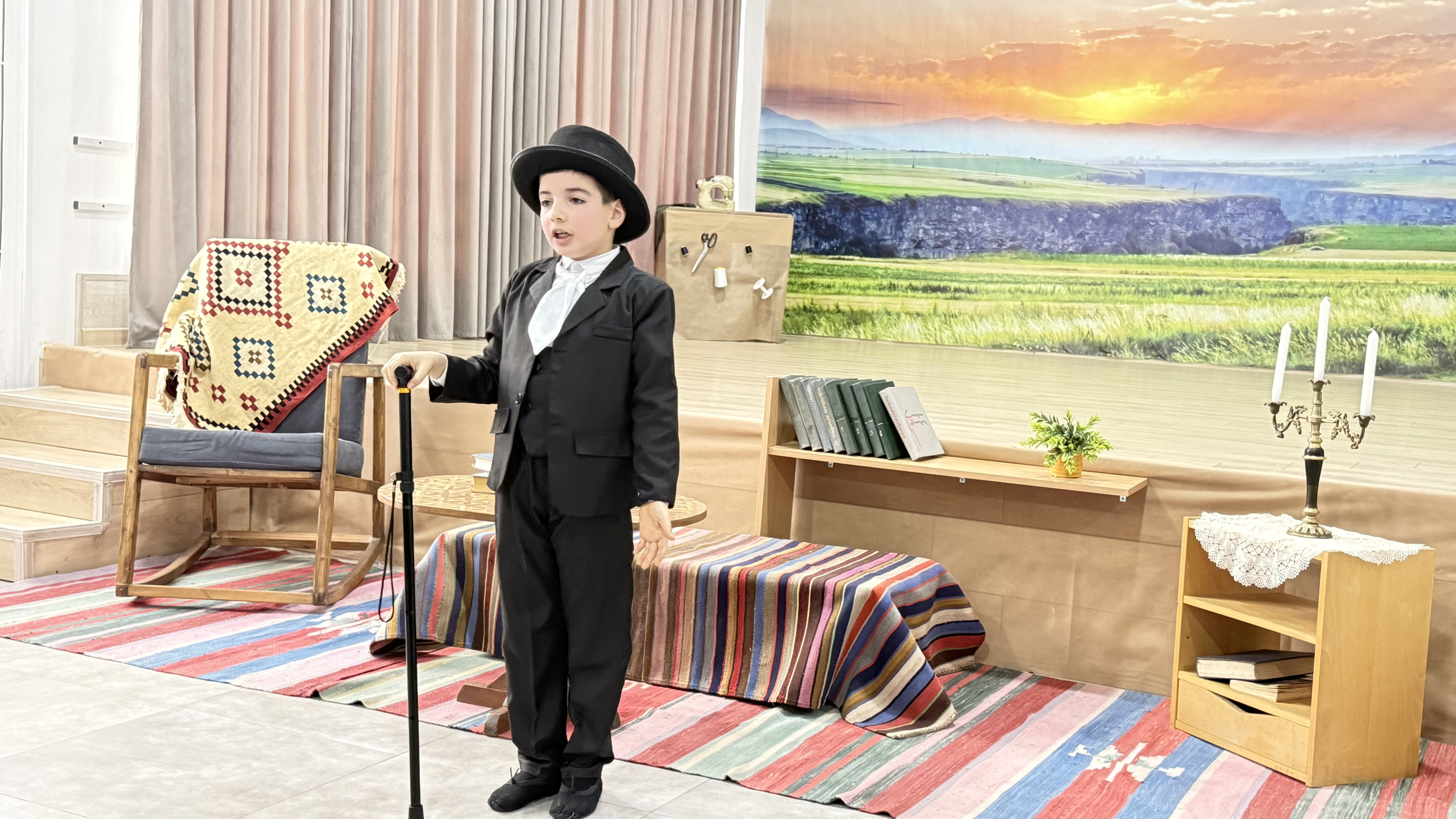
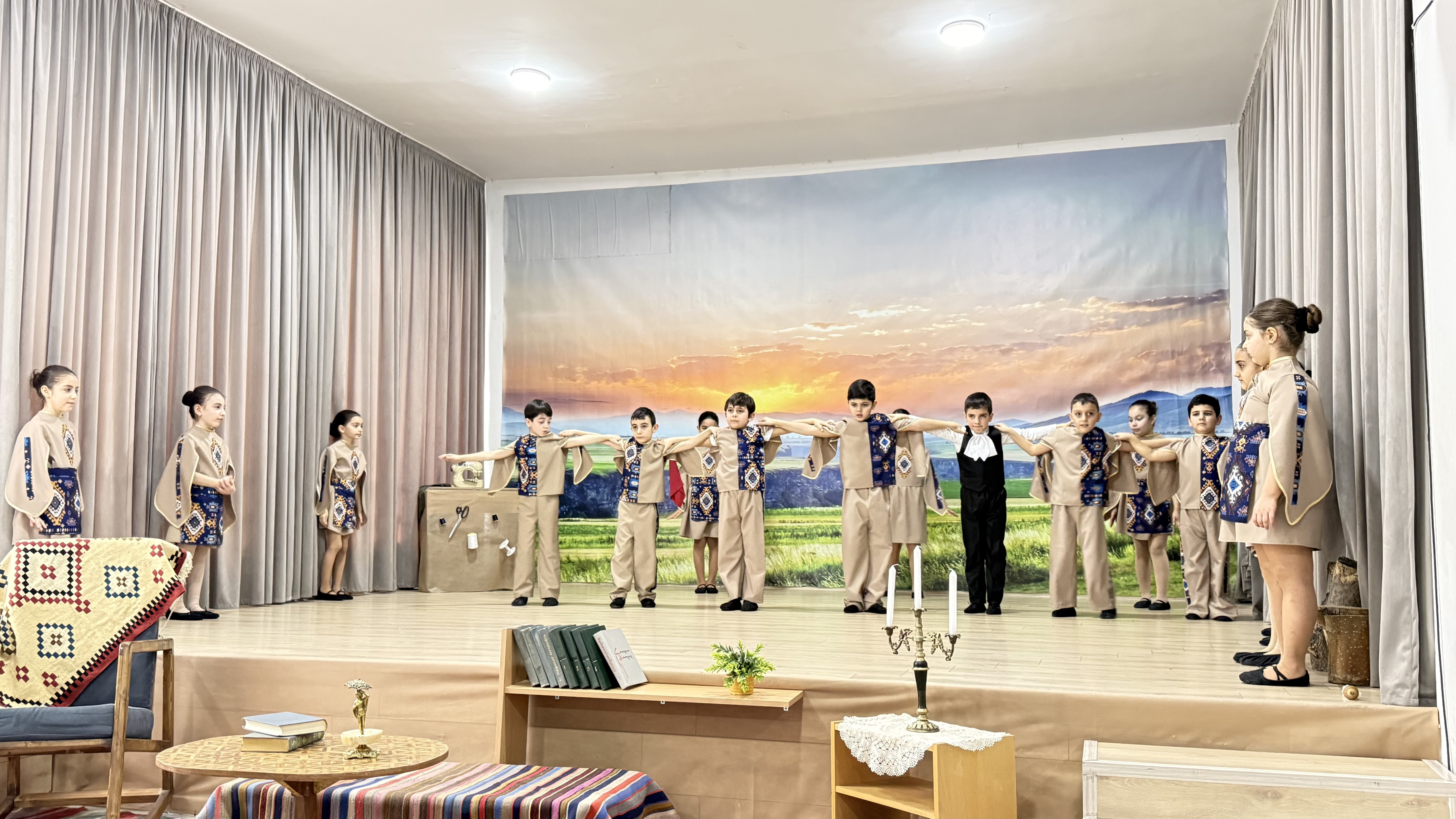
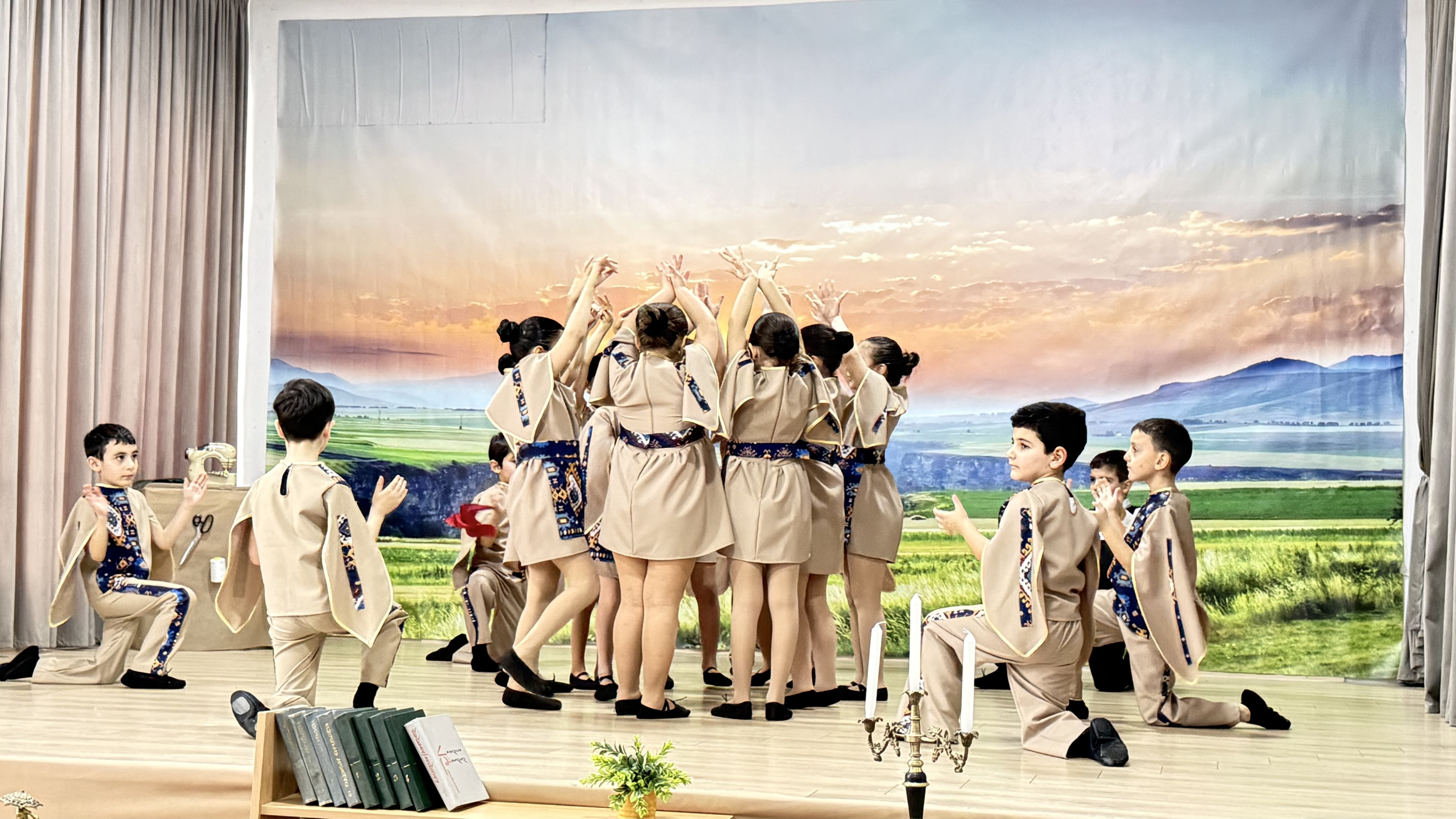
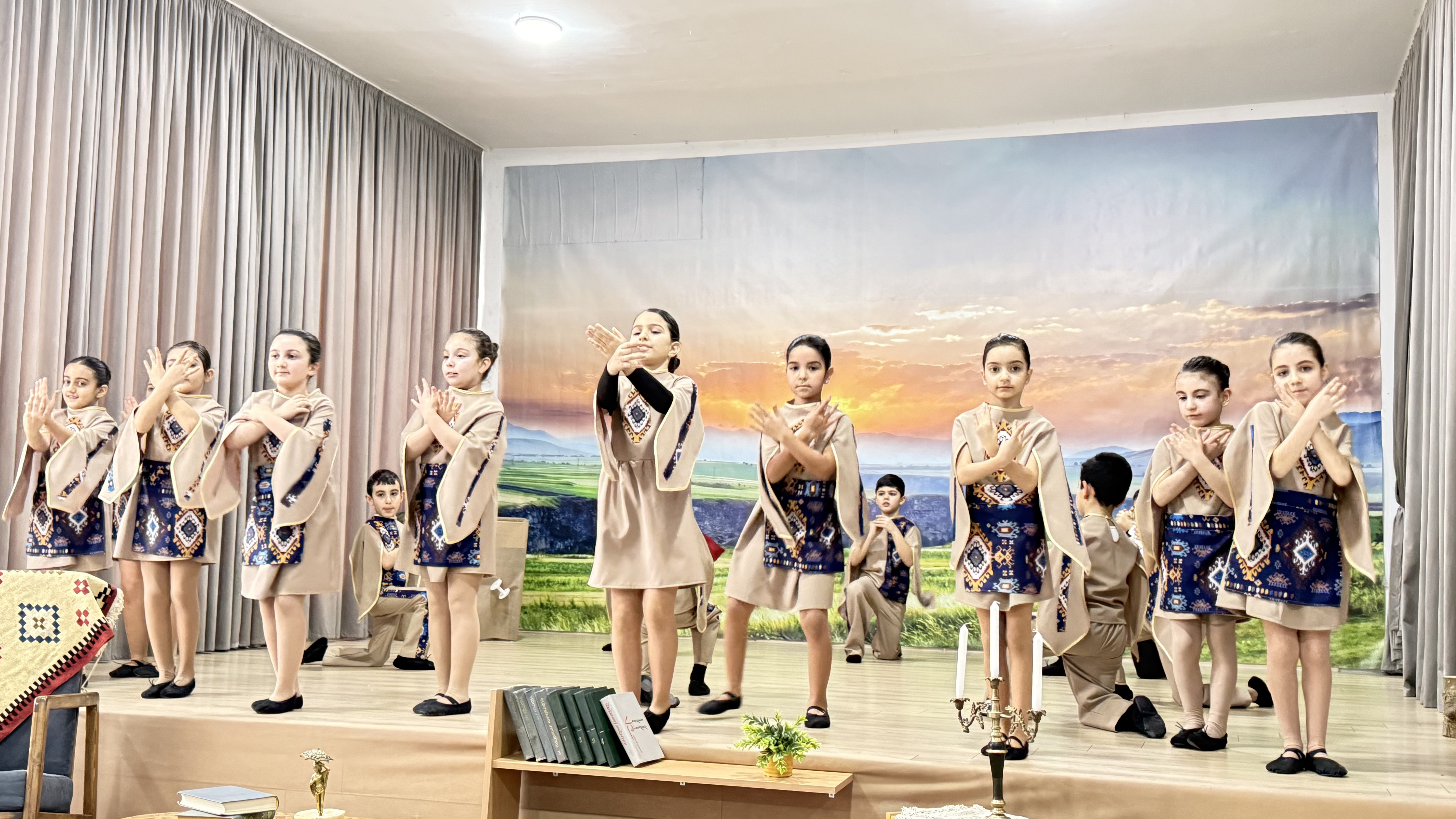
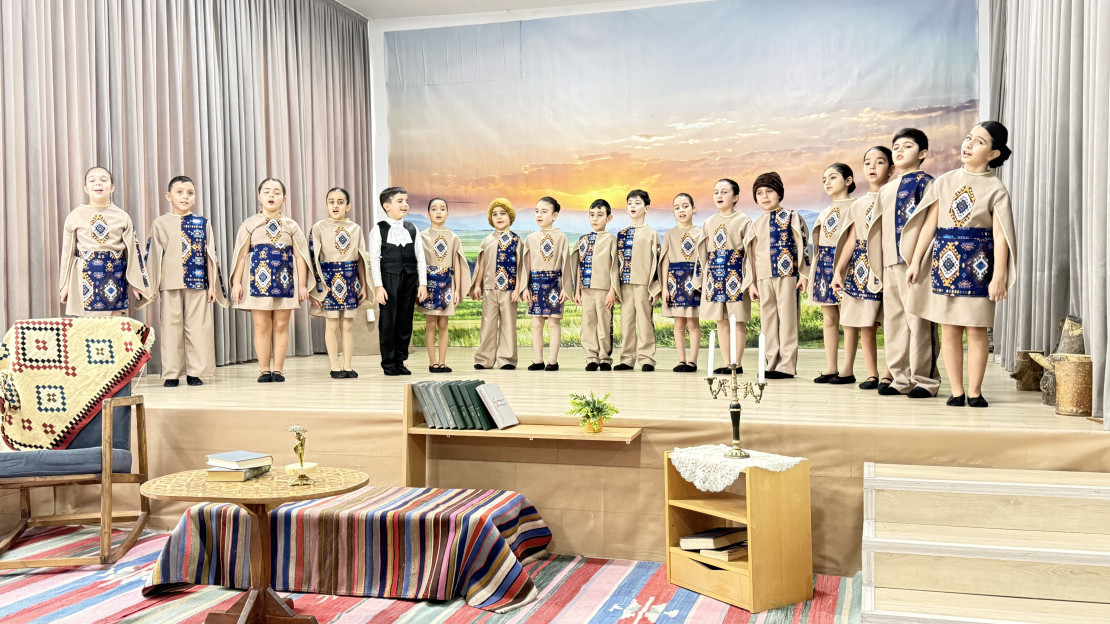
The performance titled “Playwright,” staged by teacher Grigoryan Gayane with the participation of the 2nd “E” grade students, became a unique cultural event. It was not merely a school activity, but a spiritual encounter with the creative world of Tumanyan.
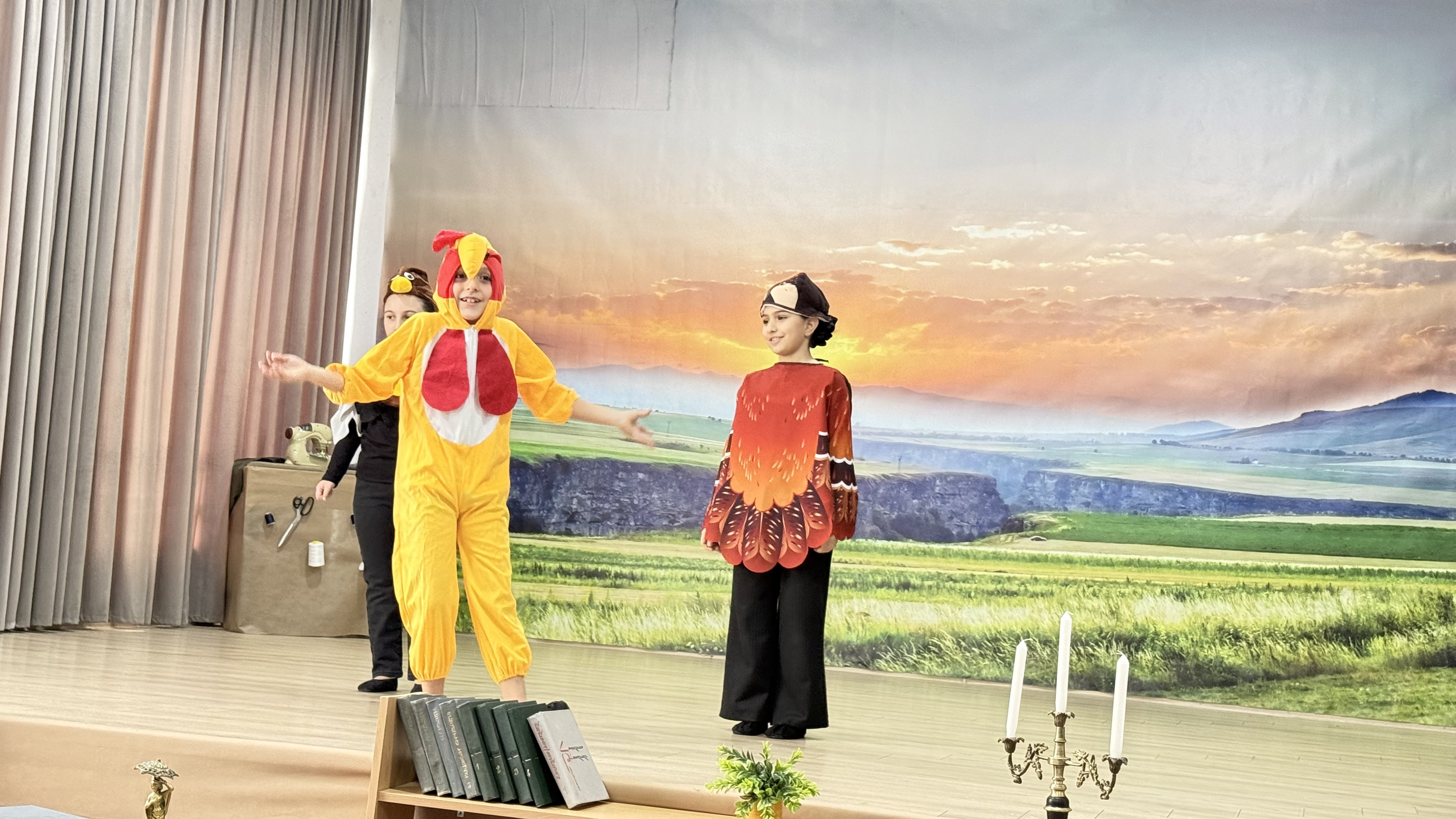
The production was structured as a fairy-tale gathering, where characters from various works met on the same stage. The proud and cheerful voice of the Rooster, the demanding innocence of the Sparrow, the song of the Partridge, the humorous quarrels of Barekendan and Huri, the misfortunes of Dzakhord Panos, the strange fate of Kikos, and the “fortunate” philosophy of Brave Nazar — all these characters came together to create a lively theatrical mosaic.
Each character, through their presence, reminded the audience of Tumanyan’s central message: a person may make mistakes, may lose their way, but can also change, understand, and choose goodness. Beneath the humor and laughter lay serious questions about responsibility, wisdom, honesty, and fate.
A special atmosphere was created by the theme of nature and the native village. Tumanyan’s poetic excerpts sounded like lyrical highlights, reminding us that at the heart of his worldview lies the harmony between human beings and nature. Songs and dances enriched the performance, making it festive yet deeply meaningful.
The young performers not only recited their lines but truly embodied their characters, conveying to the audience the sincerity and authenticity that define Tumanyan’s works.
The finale became the ideological culmination of the performance. It emphasized that Tumanyan’s word transcends time. Each generation finds its own Tumanyan — one in childhood fairy tales, another in life experience, and yet another in the search for national identity.
This production once again proved that Tumanyan does not belong only to us. He belongs to all times and all ages. His words continue to live as long as children smile at his tales, adults reflect on his messages, and the stage repeatedly brings his heroes back to life.
Tumanyan’s world is open to everyone. One only needs to open a page of his book or listen to the voice of a fairy tale — and once again we find ourselves in a place where kindness prevails, love unites, and the human being remains truly human.
To not think freely is to not think at all!