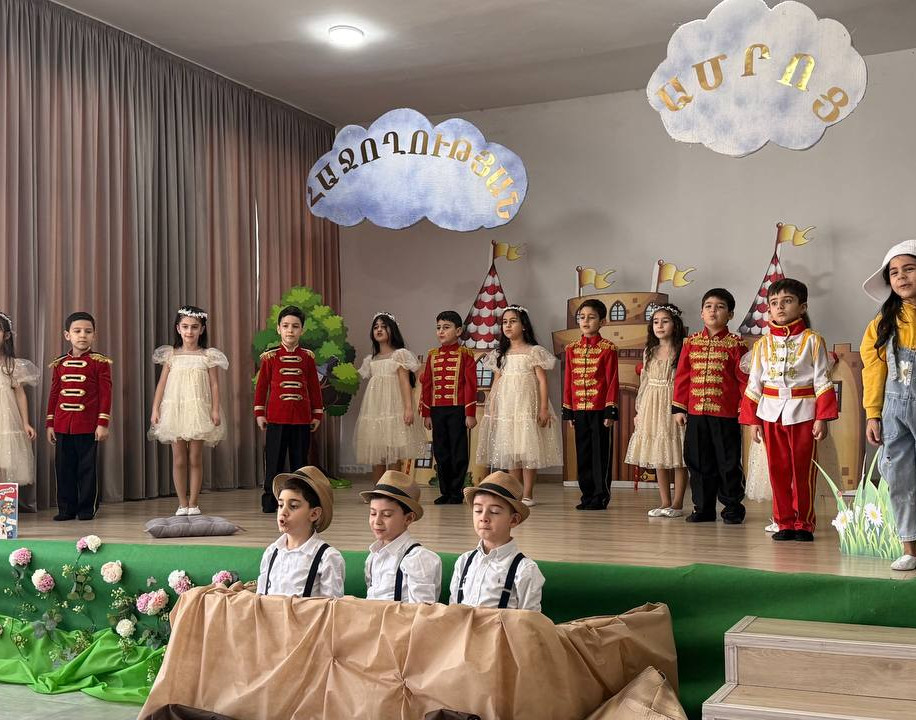
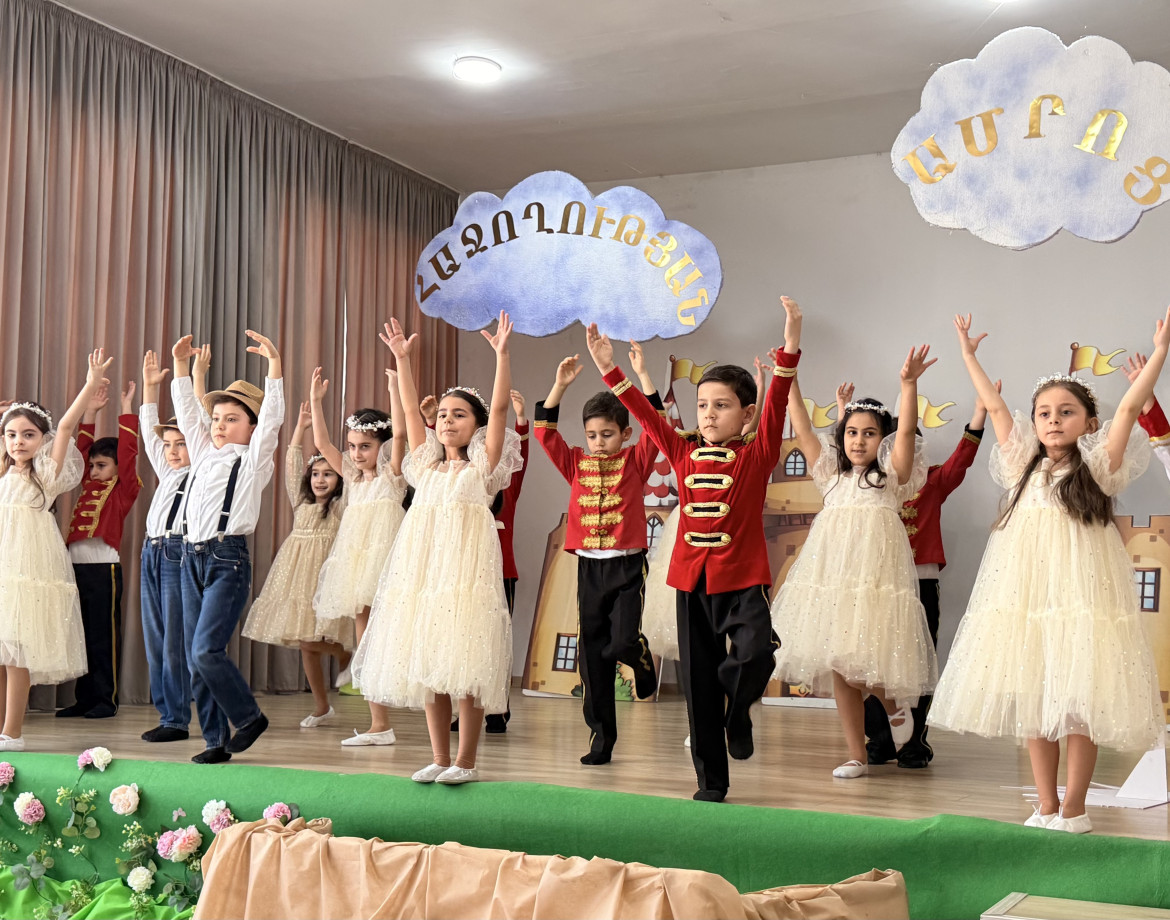
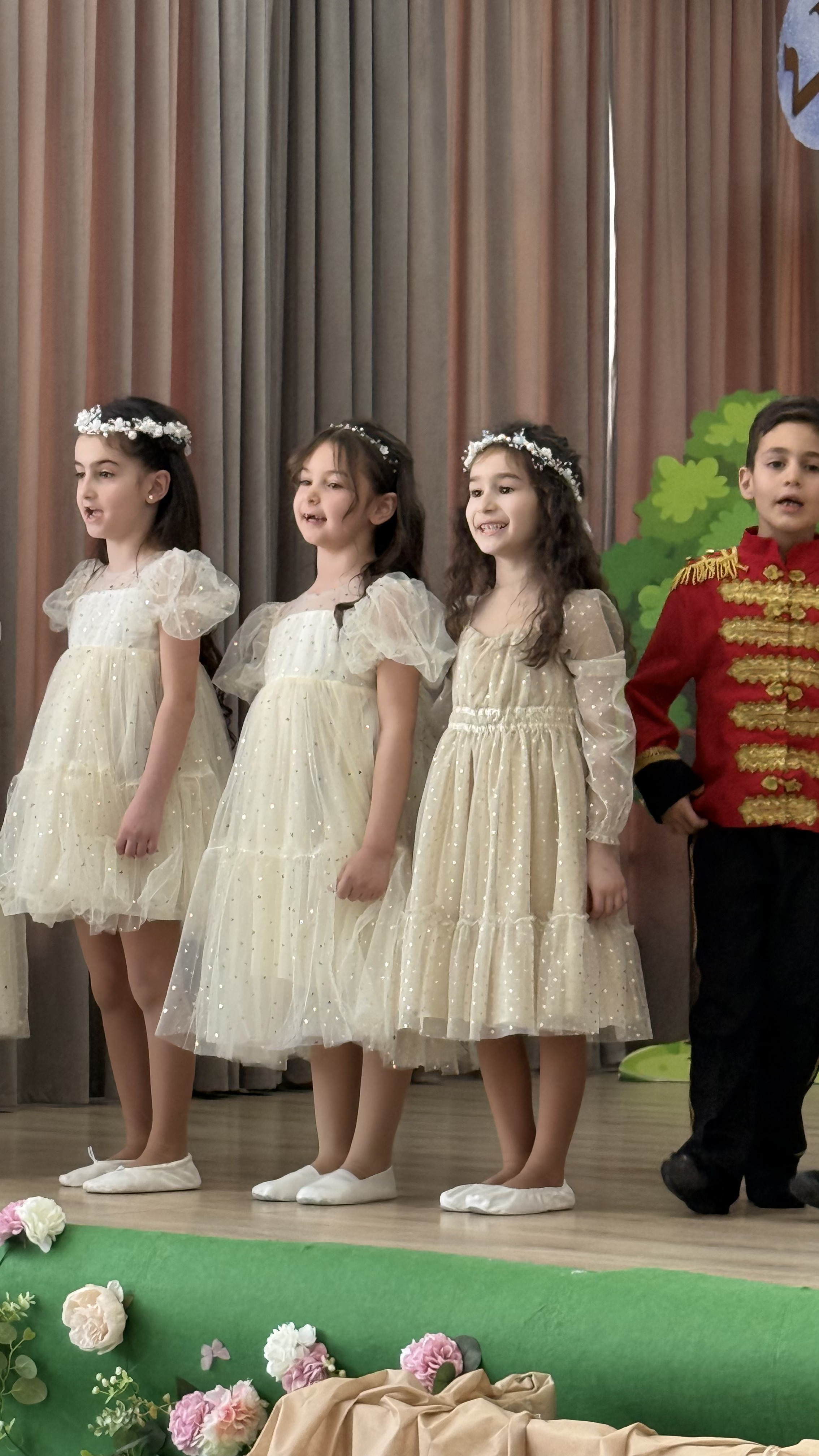
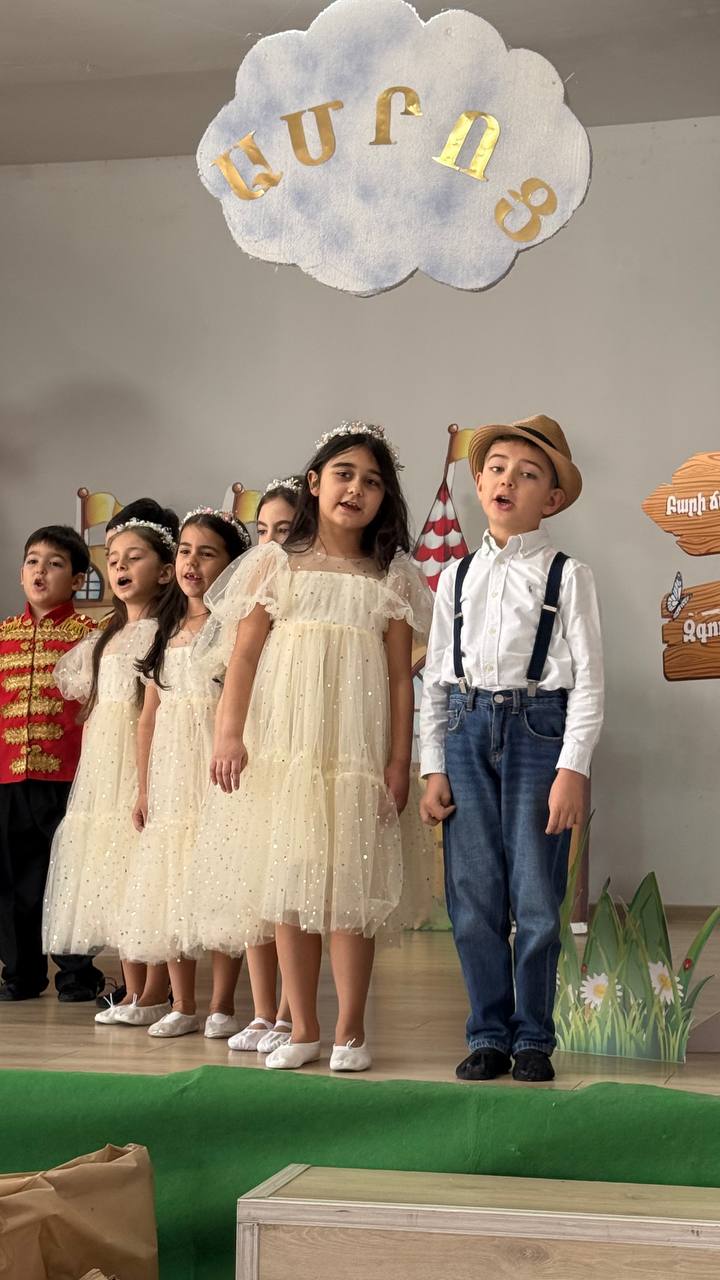
In these days, the youngest students of general education say goodbye to the Alphabet Book as the first companion of their reading journey. Yet this farewell is not a sad or melancholic one. Instead, it becomes a true celebration filled with gratitude and appreciation. But before speaking about the celebration itself, let us first understand when and how the first alphabet books appeared.
The history of alphabet books dates back to very ancient times, to the emergence of writing systems and the development of education. When different peoples created their own writing systems, the need to teach them naturally arose. From that moment, the first “alphabet books” began to take shape—materials and texts through which people learned letters, reading, and writing.
The earliest educational materials of this kind appeared in ancient civilizations such as Ancient Egypt, Mesopotamia, and Ancient Greece, where children learned symbols by engraving them on wooden tablets or wax-covered boards. These were not books in the modern sense, but they already served the same purpose: teaching literacy.
Alphabet books in the classical sense began to develop during the Middle Ages, especially after the invention of the printing press in the 15th century by Johannes Gutenberg. Printing made it possible to distribute books widely, and special instructional manuals were created in which letters were presented in sequence, accompanied by examples, words, and sometimes illustrations.
The first printed Armenian alphabet books appeared later, in the 17th–18th centuries, when Armenian printing developed, particularly in Armenian printing houses operating in Venice and Amsterdam. These books were already closer to modern alphabet primers, containing letters, exercises, and simple reading materials.
Over time, alphabet books evolved into much more than tools for learning letters. They became important educational instruments that help shape children’s thinking, language, and values. Even today, they mark one of the very first and most significant steps in a child’s education—a step worthy of celebration and dedication through special events.
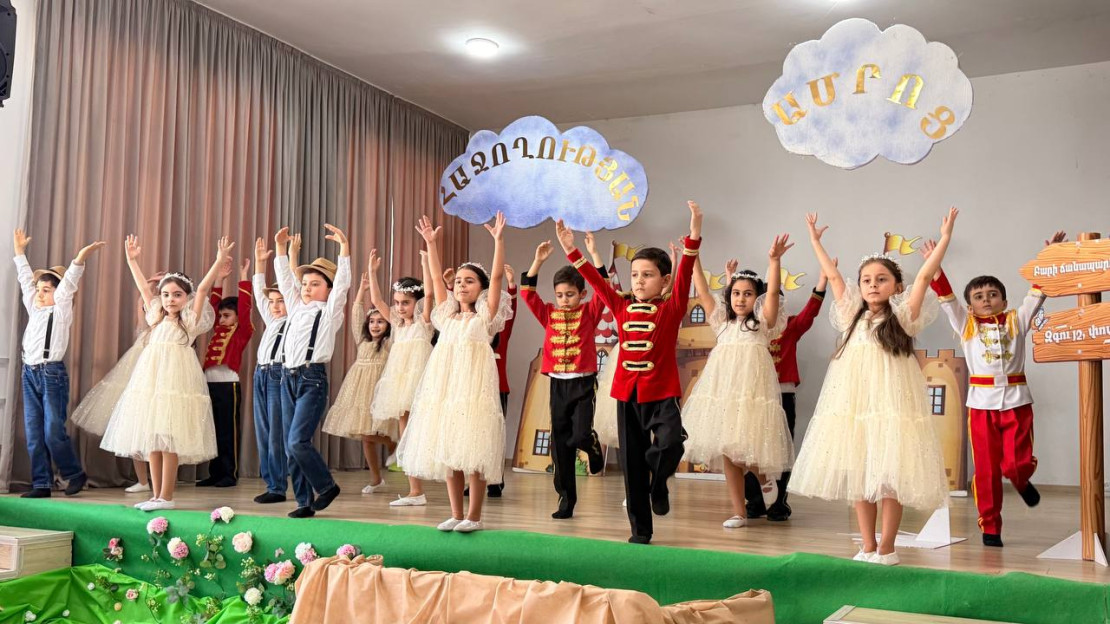
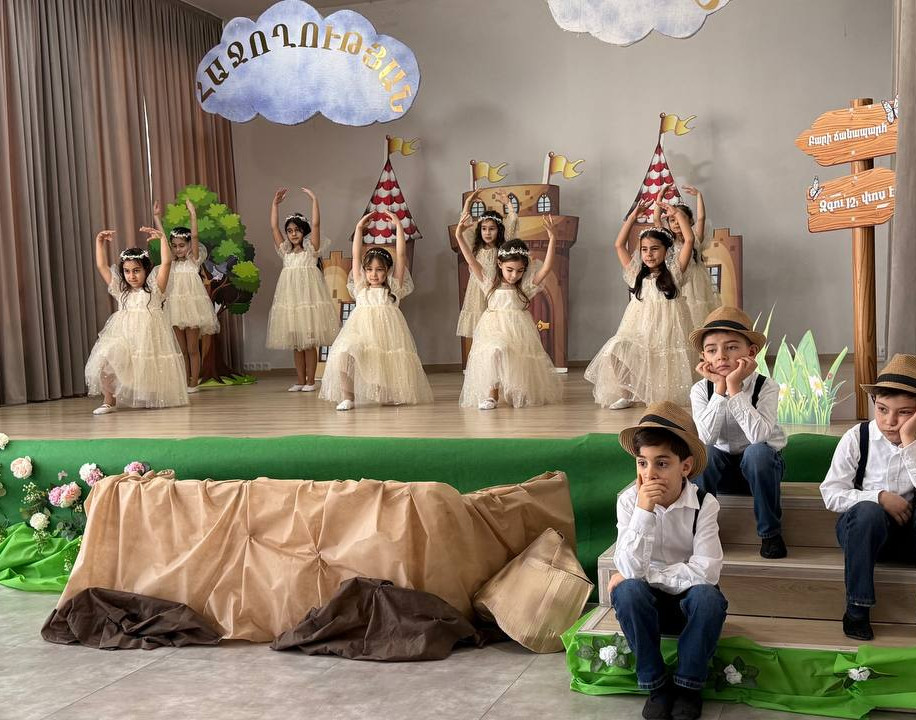
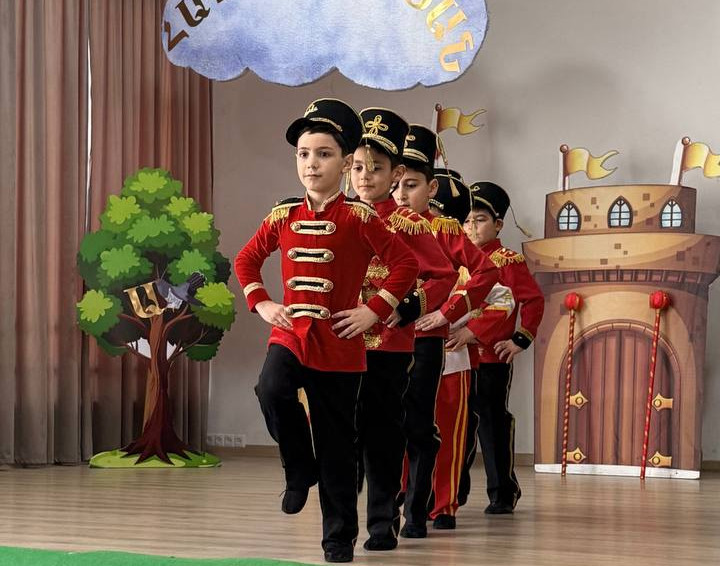
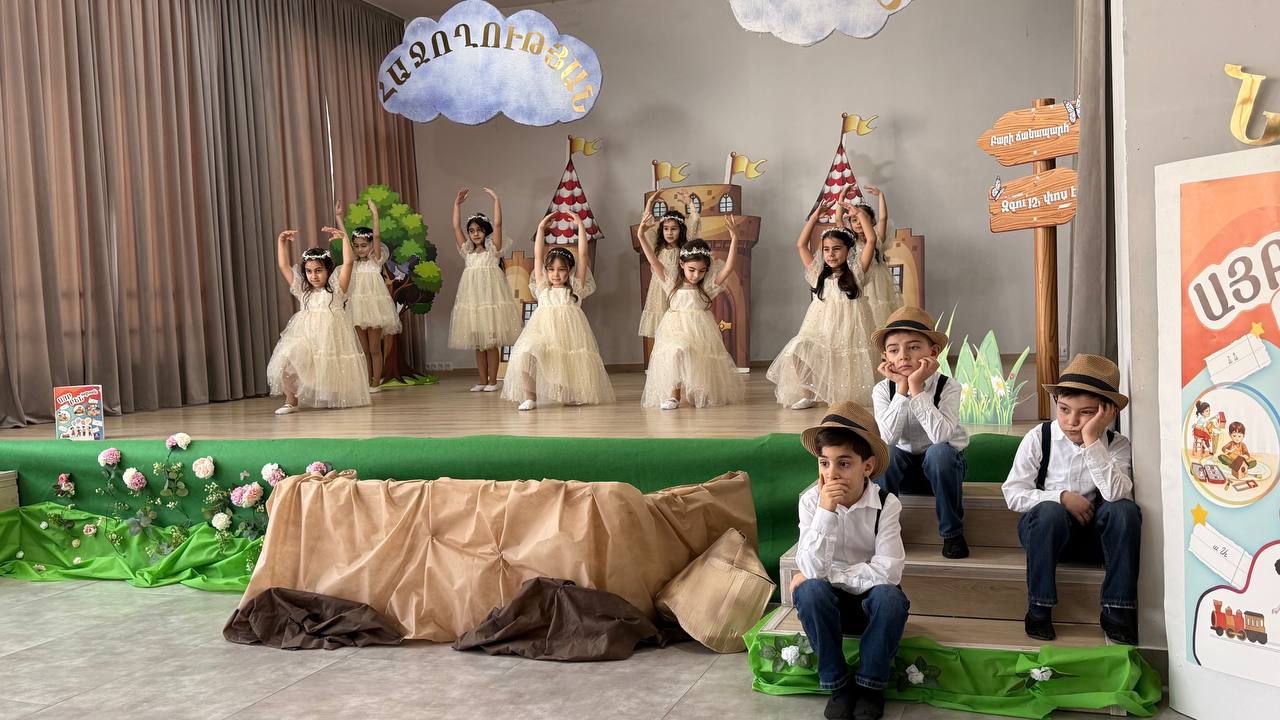
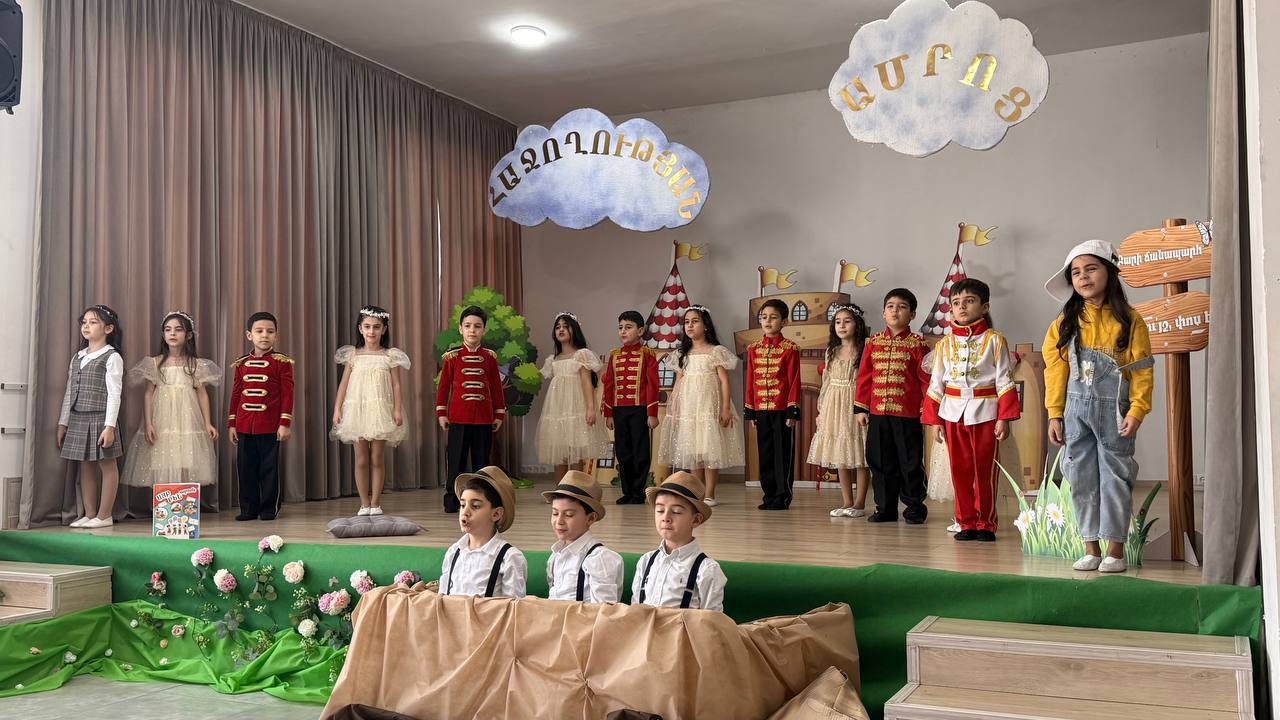
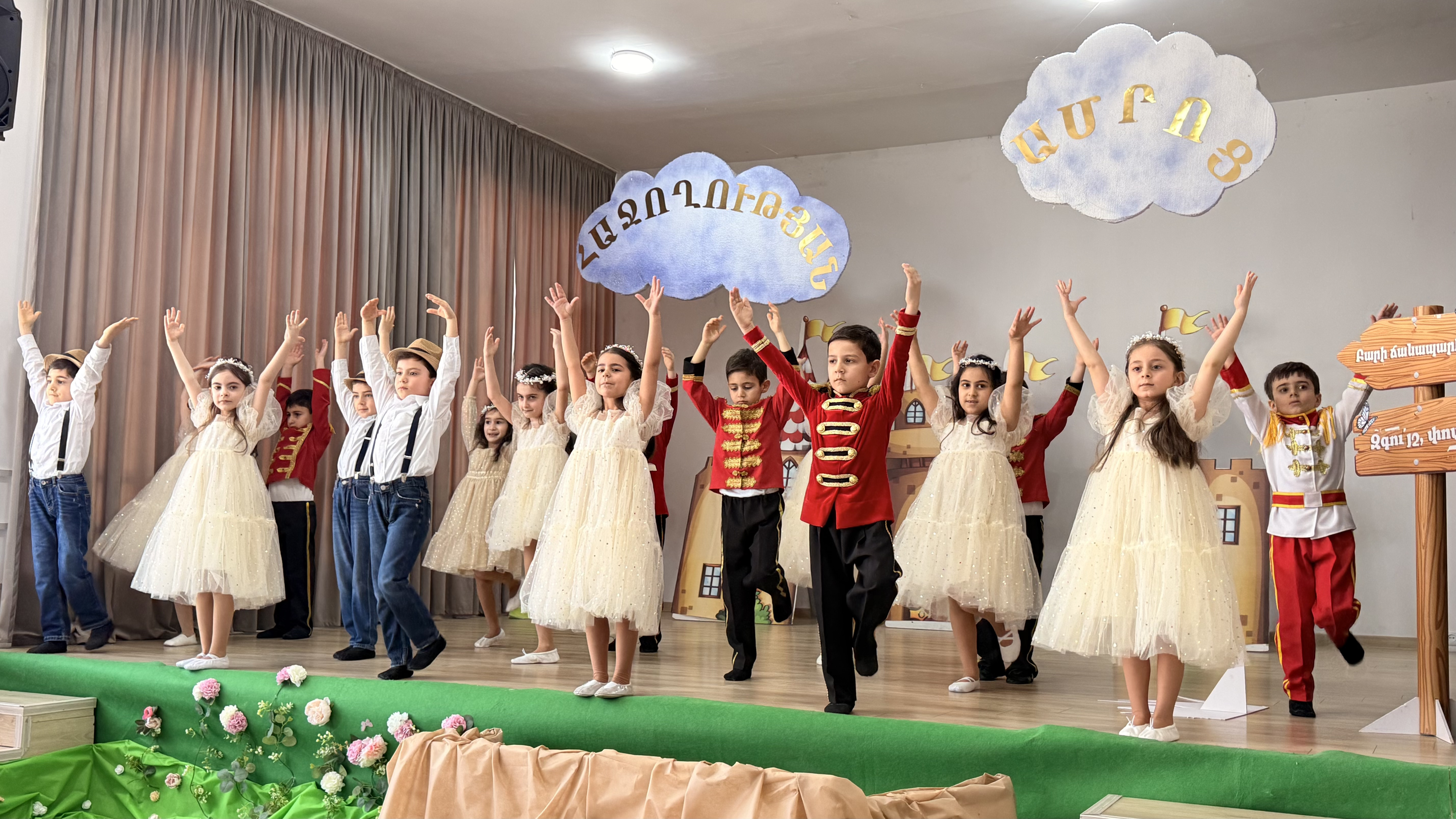
The performance titled “Towards the Fortress of Success”, presented by the young students, was exactly such a tribute. It questioned the idea of luck and coincidence, emphasizing instead that everything in life is built through knowledge, choices, and effort. In a simple yet powerful way, the story demonstrated how illiteracy can close doors, while education can become the key that opens the doors to the entire world.
The story began with a symbolic scene in which a boy stands at a crossroads of life. Unable to read the signs around him, he is forced to make his choice through “blind luck.” This situation symbolizes real life, where the lack of knowledge often prevents people from making the right decisions. Soon he falls into a pit of trouble, where he realizes that he is not alone—many people fail while searching for luck when they lack the necessary knowledge and skills.
At this point, two symbolic forces of life appear: Laziness and Work. The first encourages doing nothing, waiting, and relying on chance, while the second insists that success comes only through effort and labor. This contrast presents one of the most important choices in life: whether to wait passively or actively build one’s own path.
After overcoming their difficulties, the boys reach the Fortress of Success, where the guards explain an important truth: luck is not something stored somewhere—it is created by people themselves. However, the gates of the fortress open only to those who can read the Book of the Rules of Success. At this moment, the boys face their greatest obstacle—illiteracy. This becomes a turning point, as they realize that their failures are the result of their indifference toward learning.
In these moments of despair, the characters begin to rethink their lives and decide to seize the opportunity they once missed. They become acquainted with the magical world of the Armenian alphabet, discovering that letters are not only the foundation of language but also the key to thinking and understanding the world. In this part of the performance, the importance of the mother tongue is especially emphasized. Language is presented as the carrier of a nation’s history, culture, and identity.
By the end of the story, the heroes understand the most important truth: luck does not come to those who simply wait for it. It belongs to those who learn, work, and move forward. Every letter becomes a step toward the future, and every learned word becomes a new opportunity.