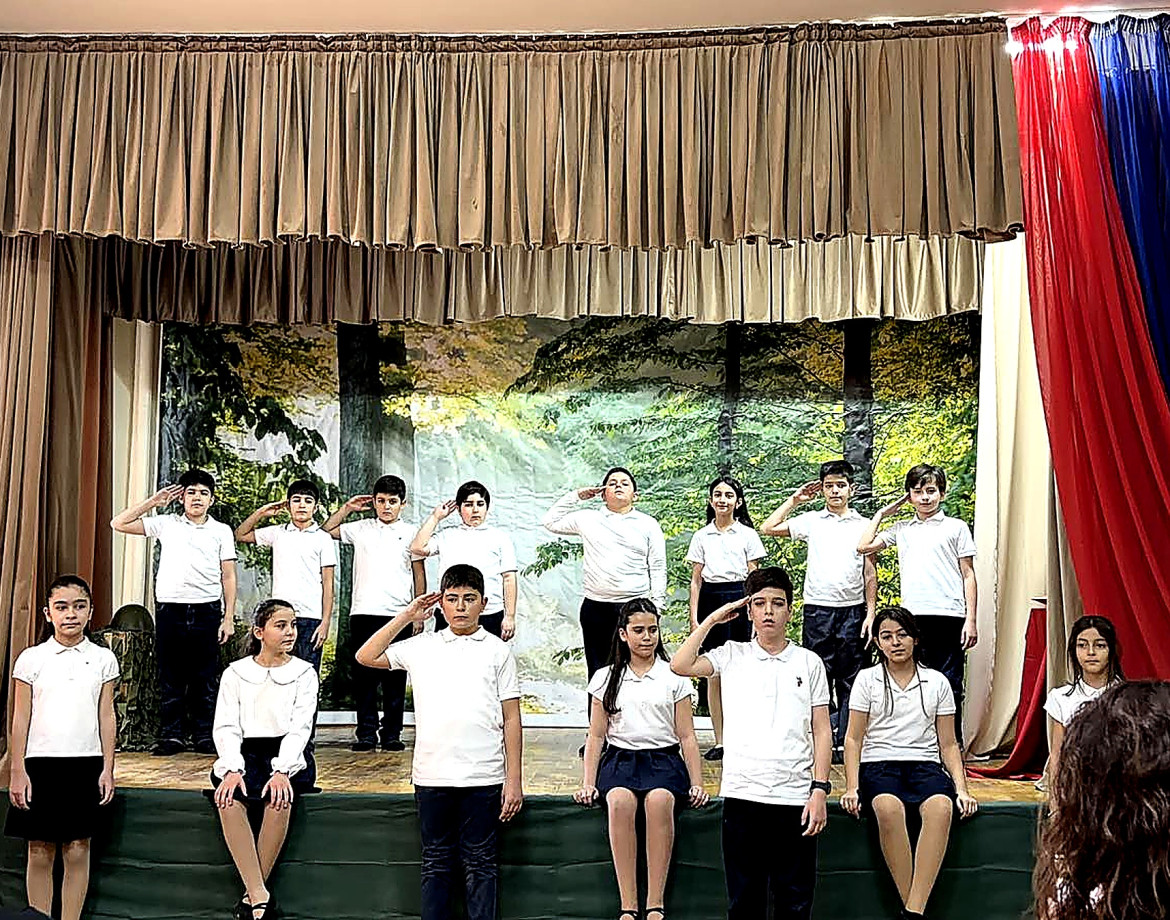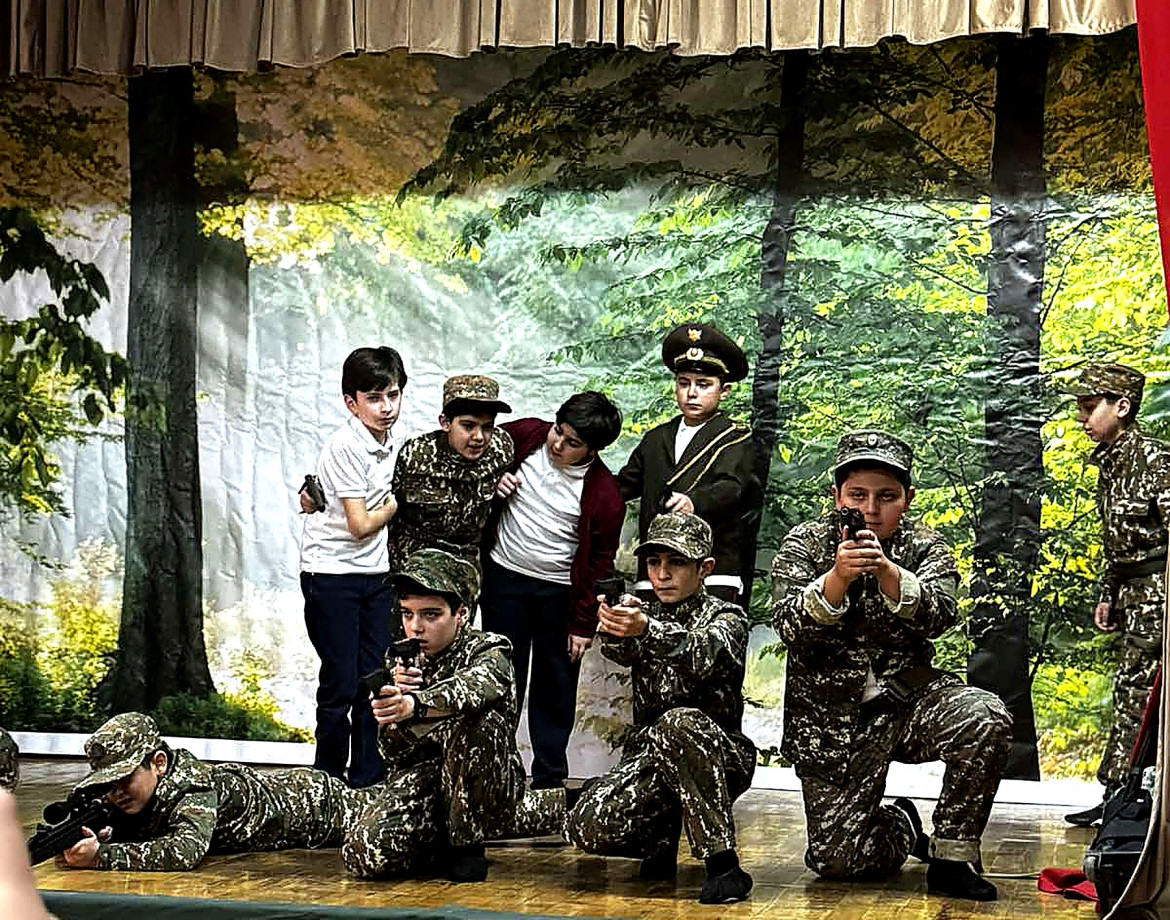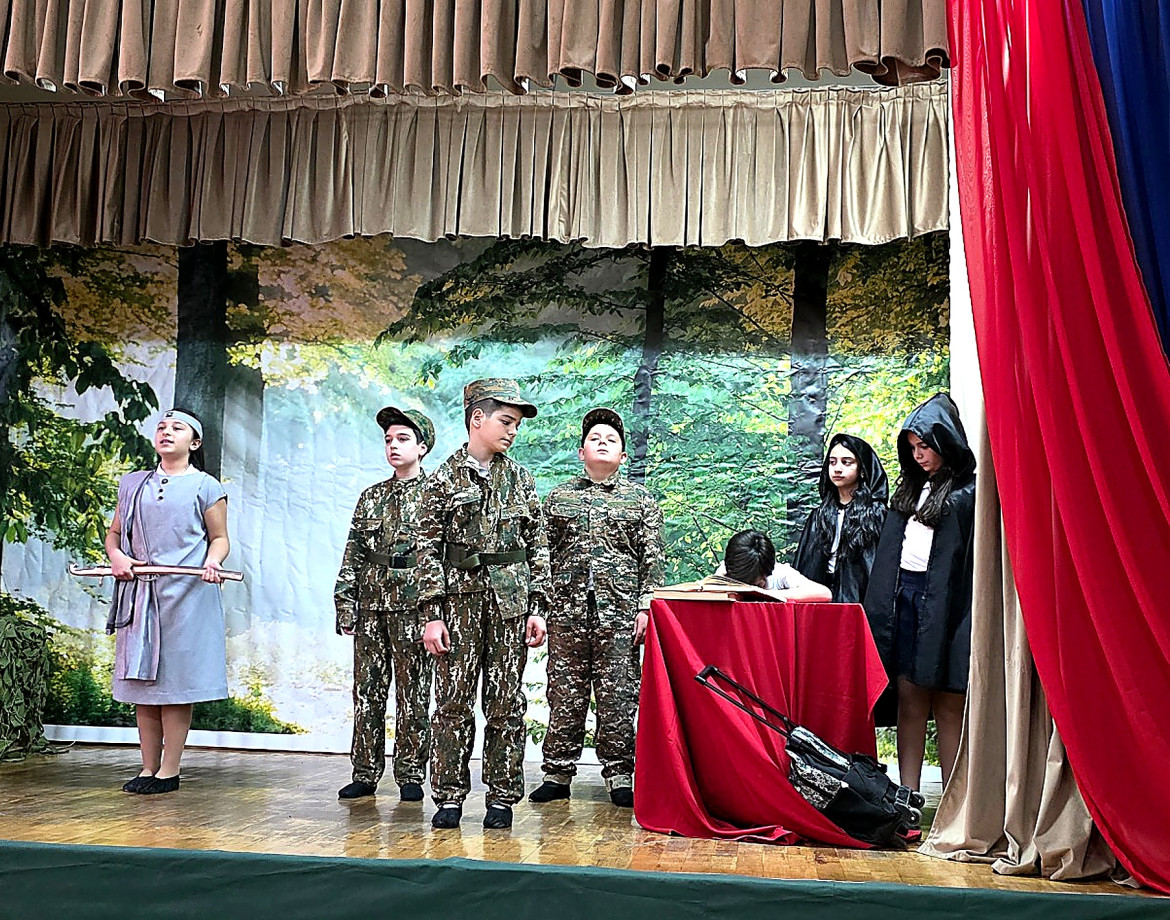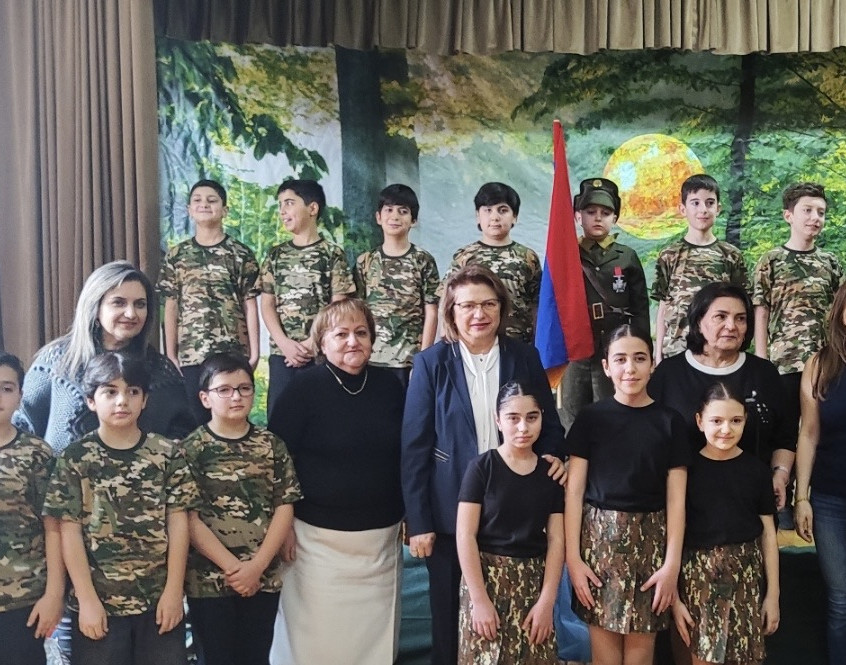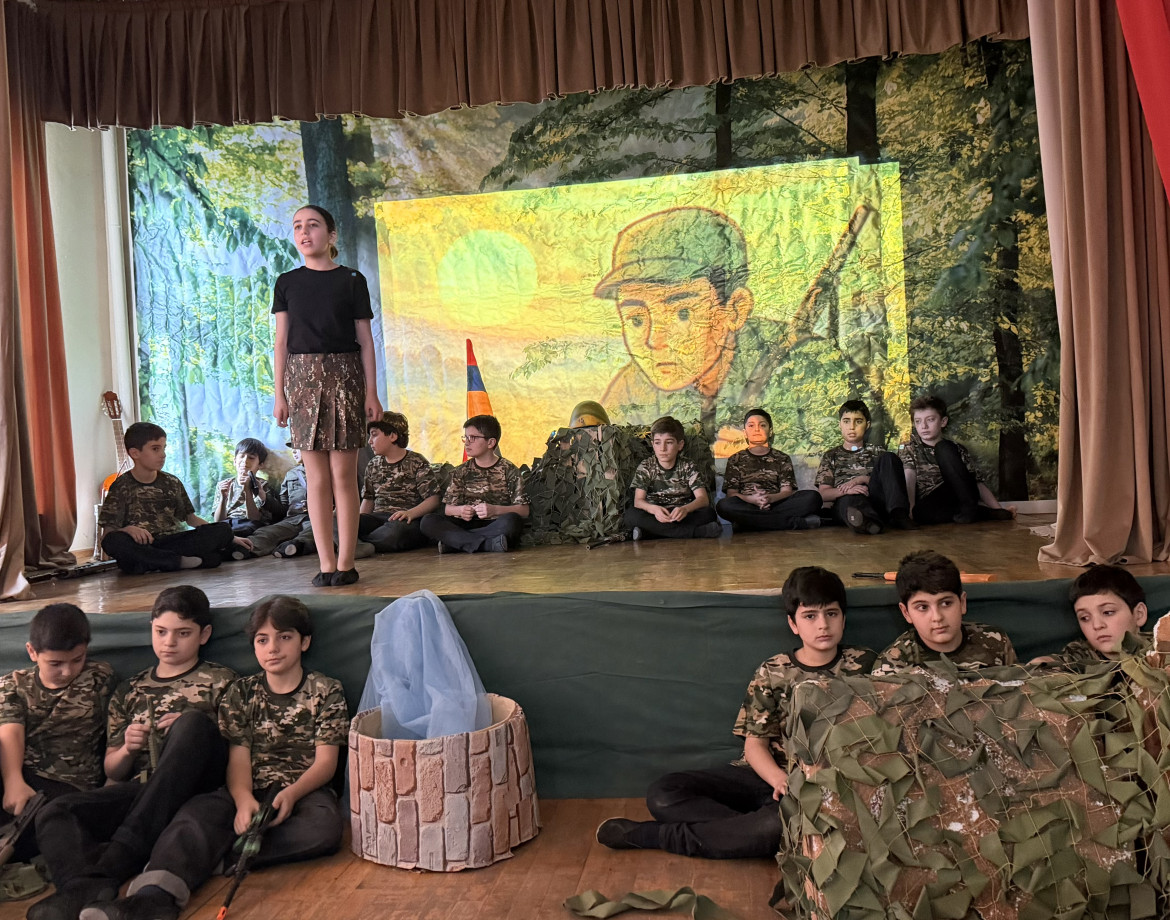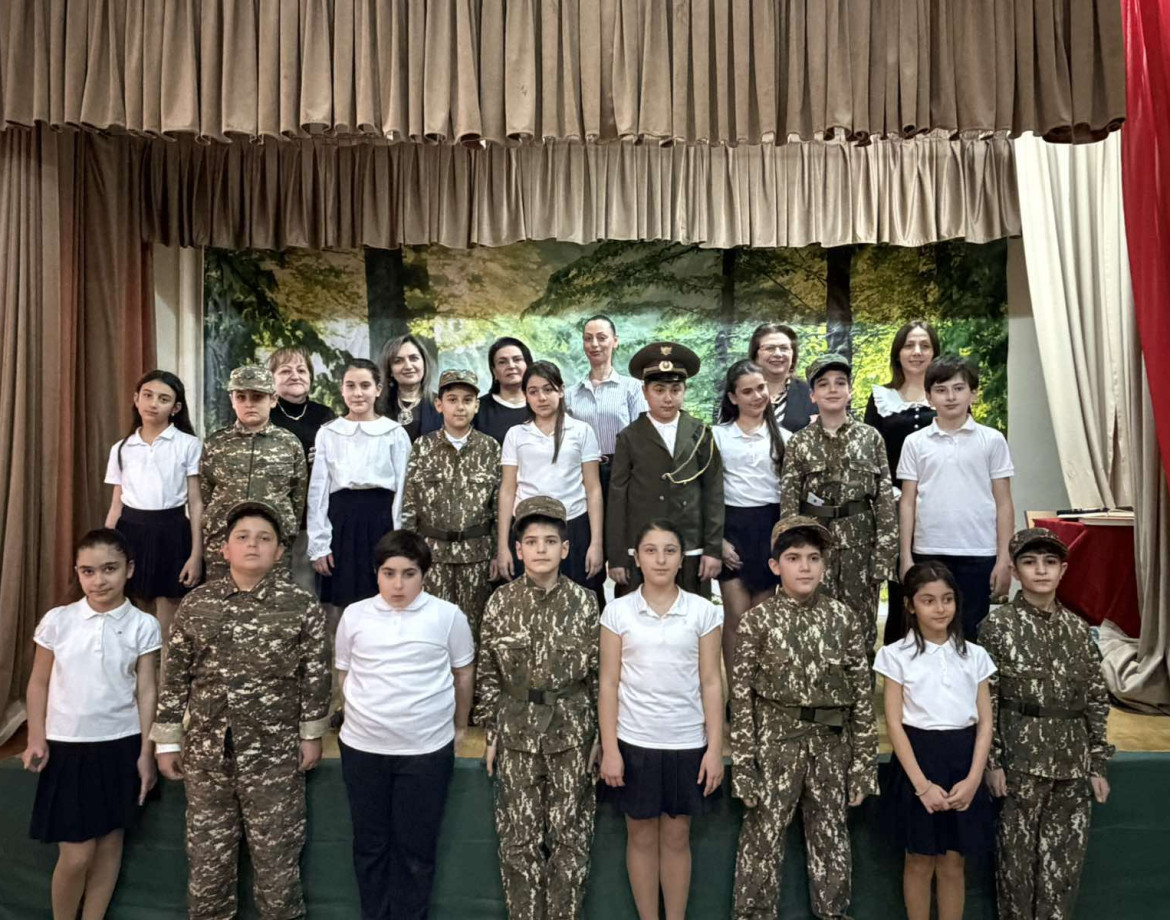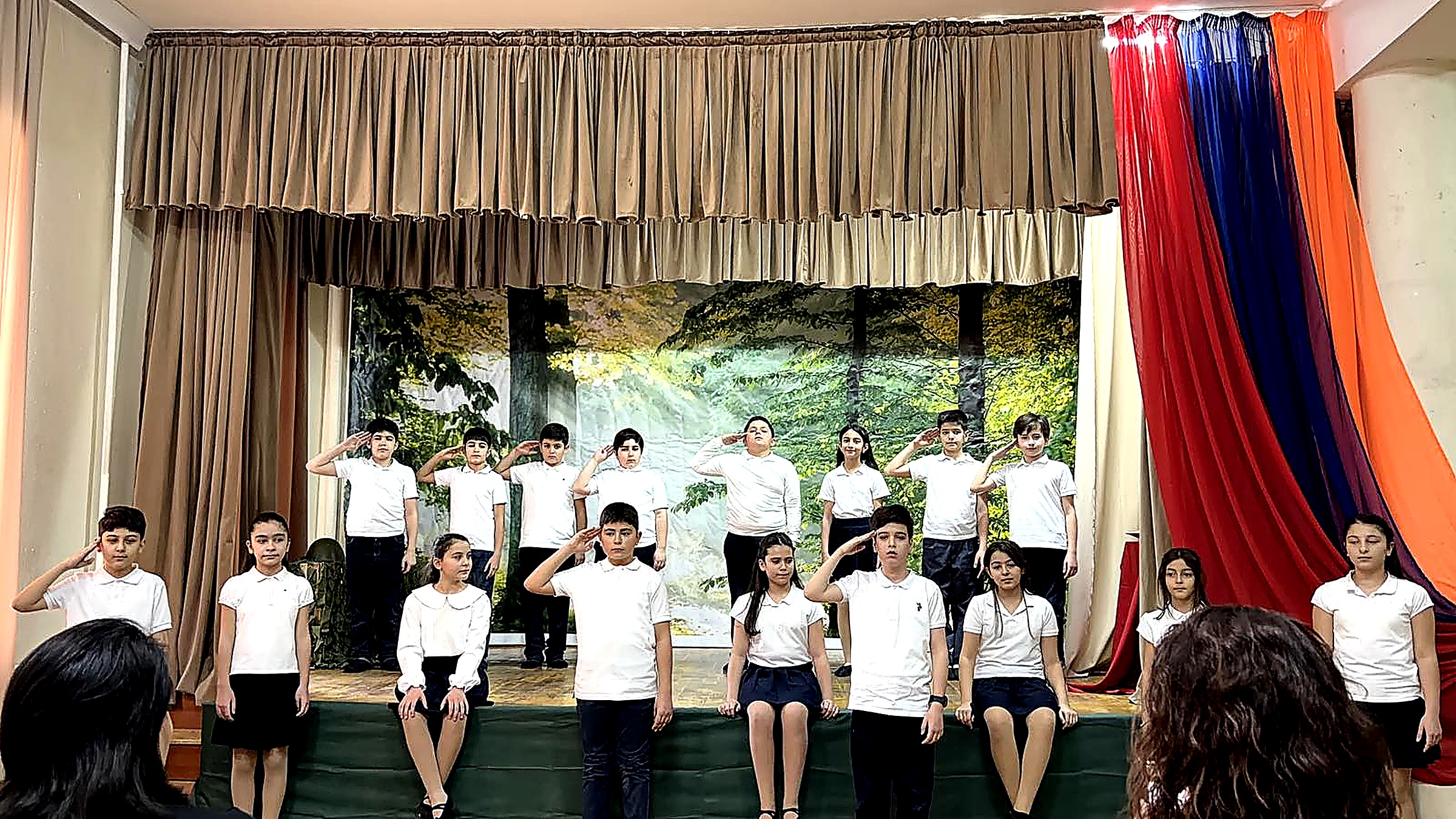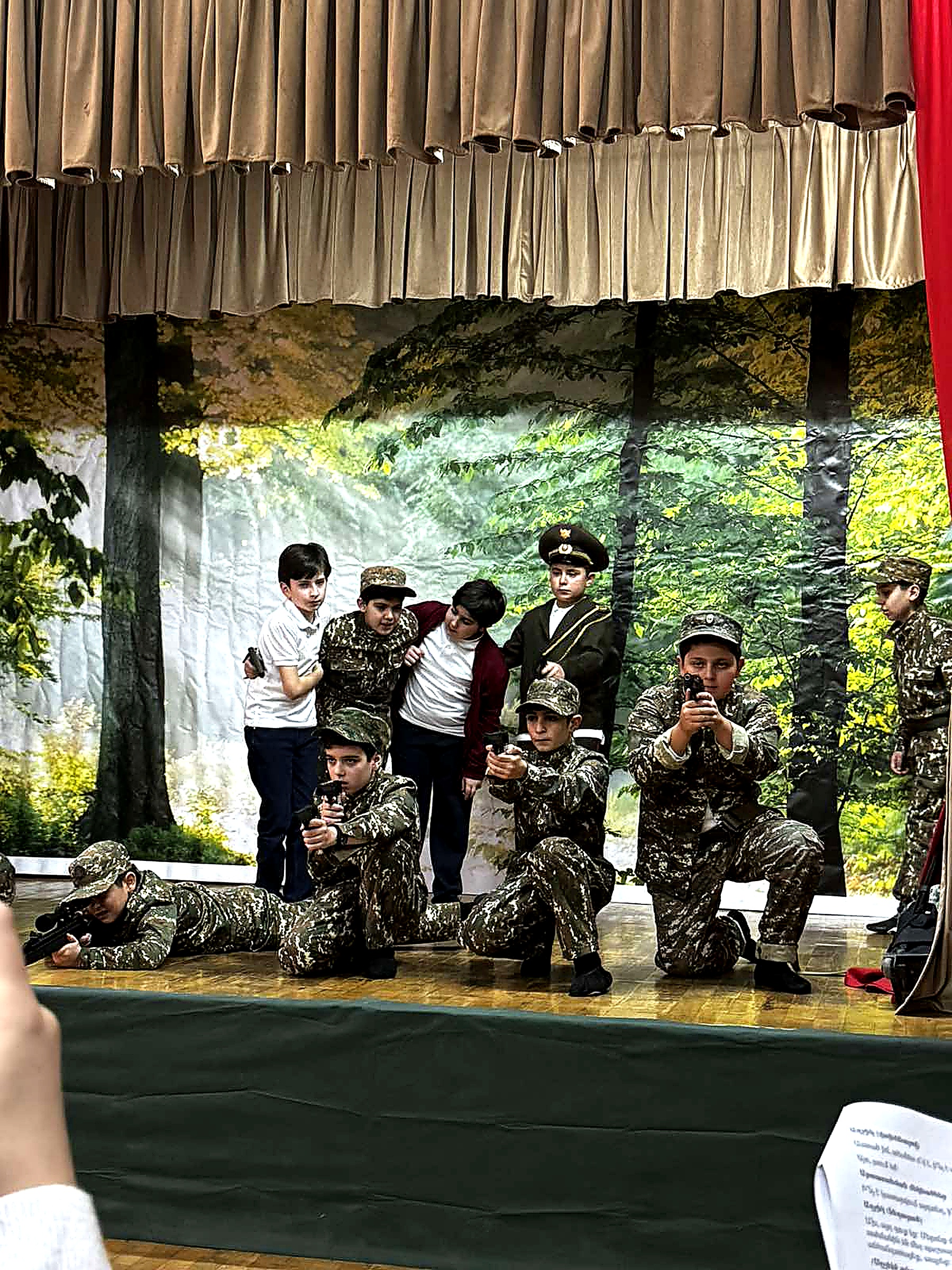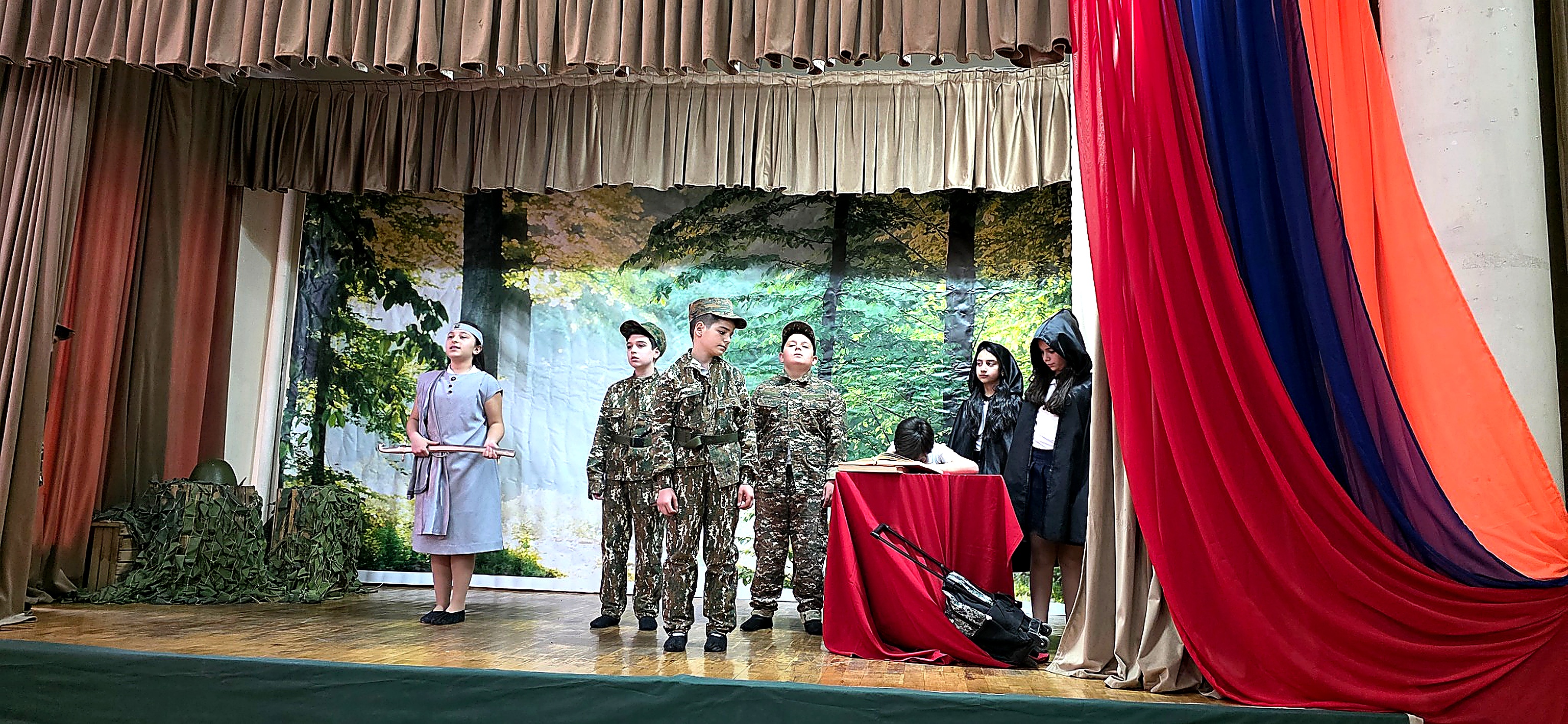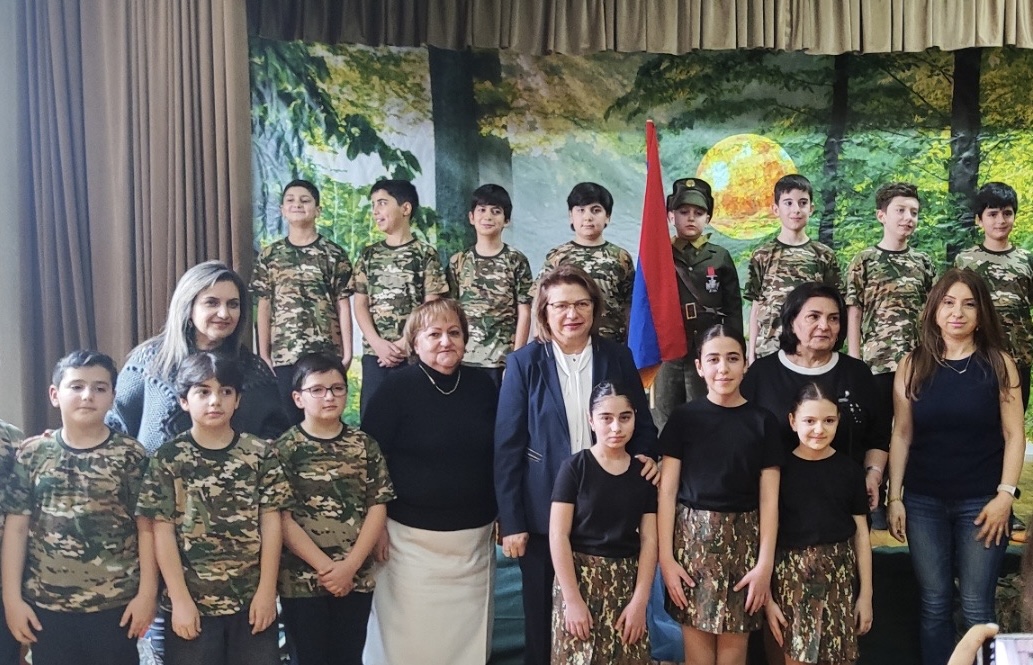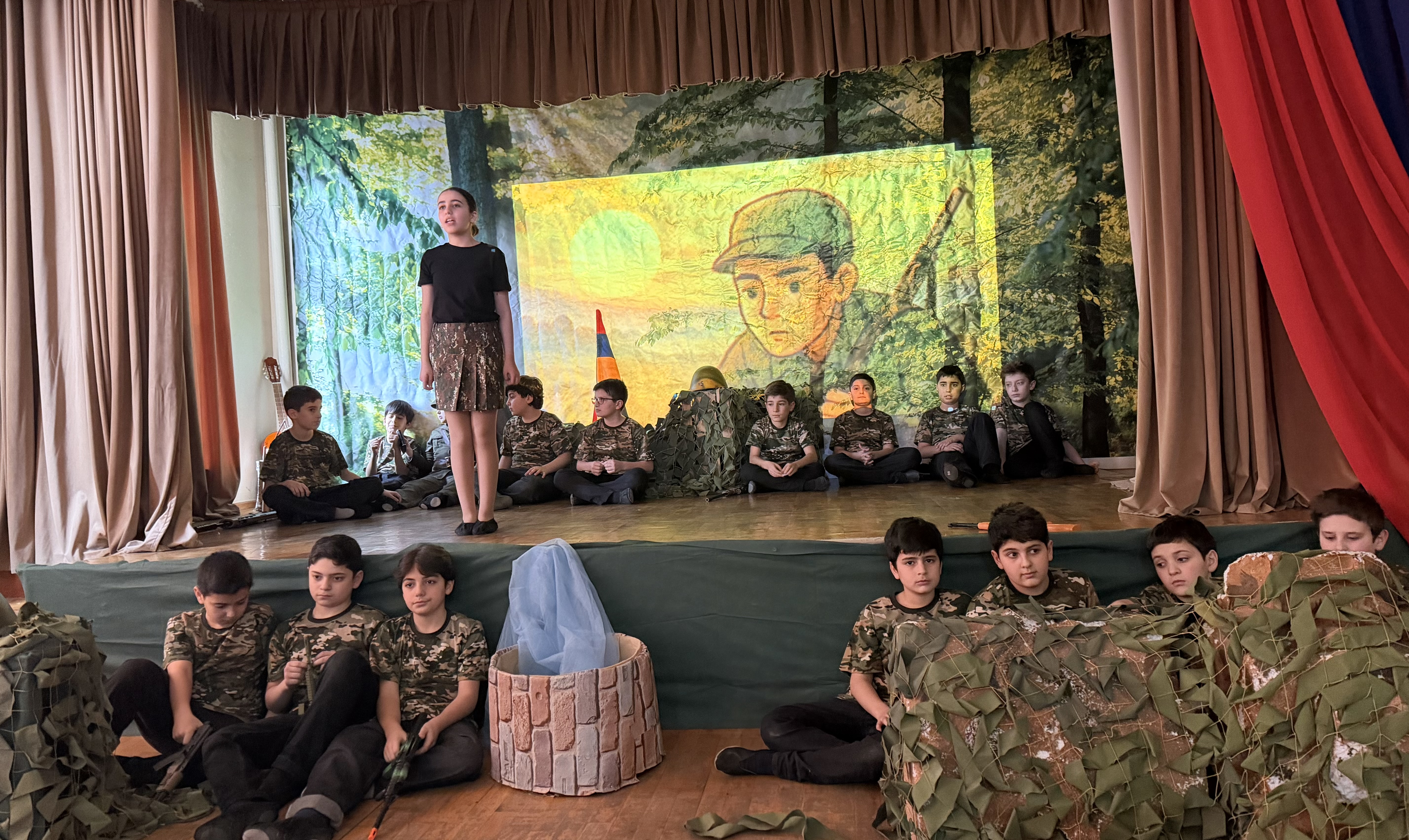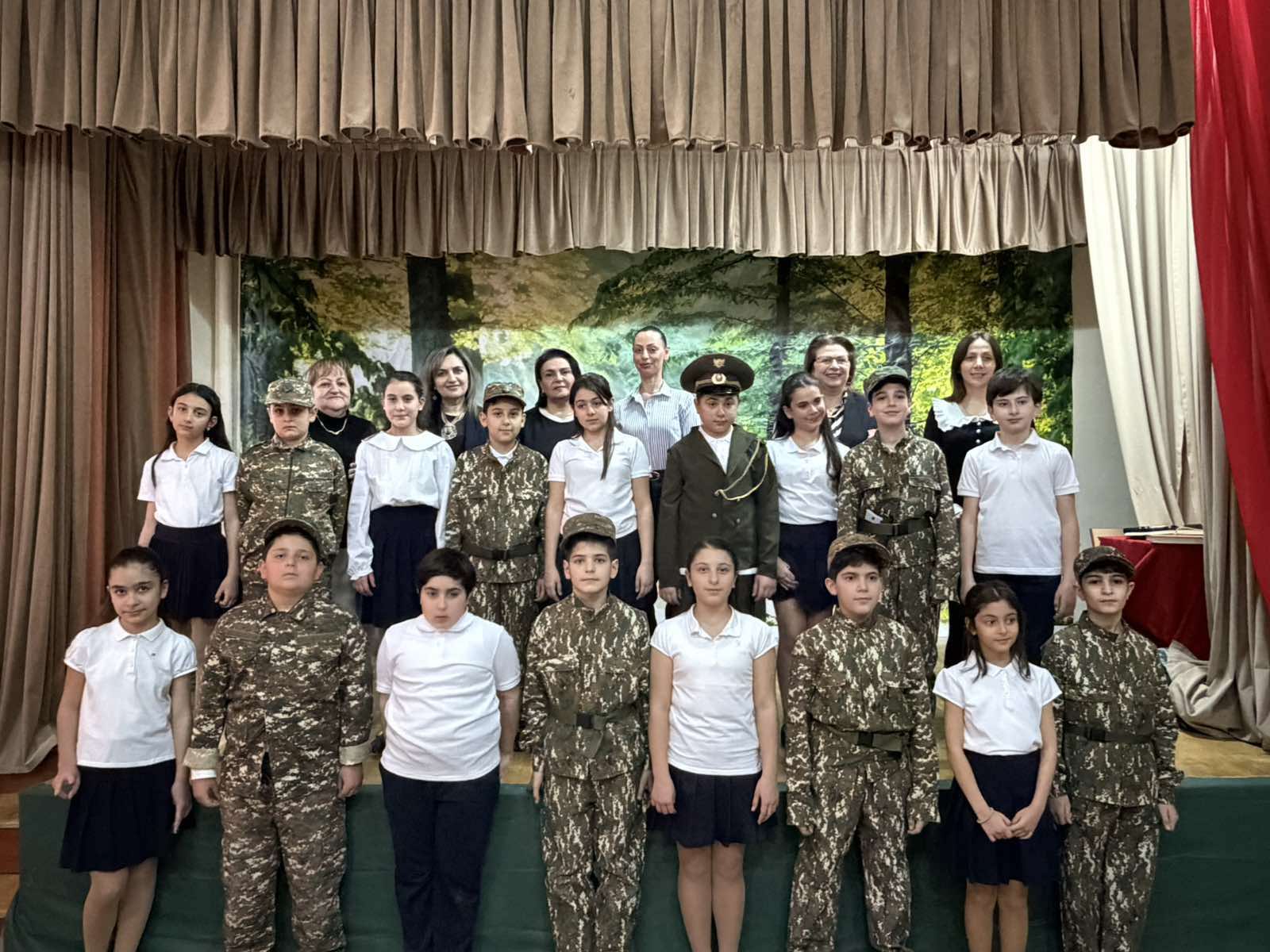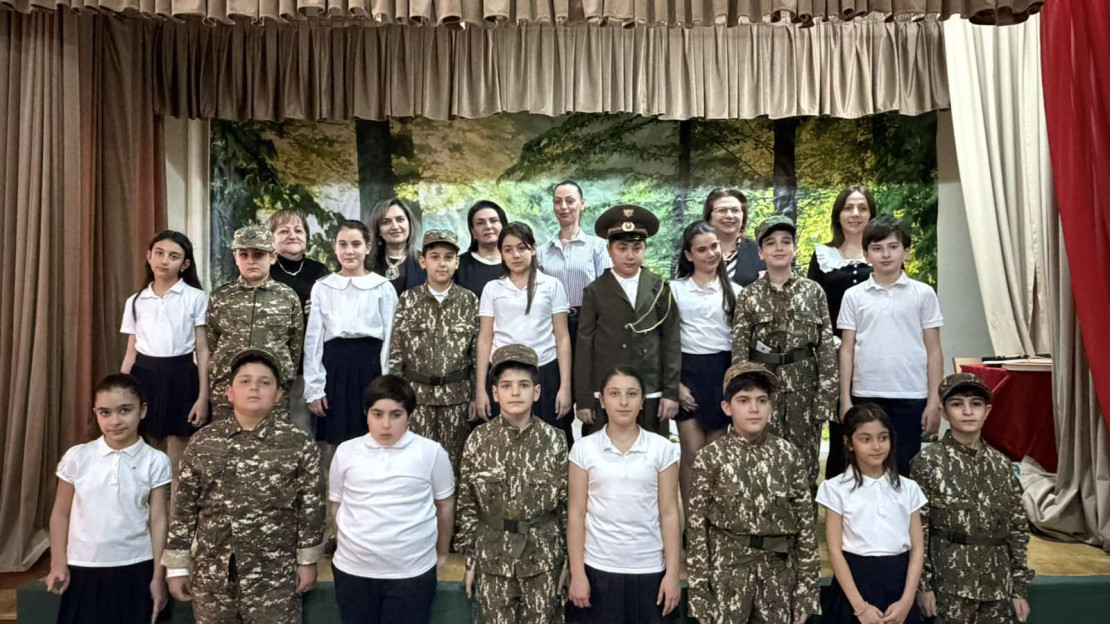
In Armenian schools, patriotic education is not limited to textbook knowledge; it comes alive on stage, through characters, living speech, and heartfelt emotion. In recent days, two performances presented by fifth graders — “Dawn at the Border” (based on Stepan Zoryan’s short story “By the Well”) and “My Pride Wears Your Colors…” — became not only cultural events, but also powerful messages about peace, humanity, and responsibility.
The performance titled “Dawn at the Border” transported the audience to the days of the First World War. On one side of the trench stood Armenian soldiers, on the other, Austrians. In the harsh reality of war, thirst became the boundary between life and death. At the heart of the plot was the collective image of a devoted soldier who, by drawing lots, was obliged to crawl toward a well and bring water to his comrades. The path was dangerous; every movement could fall under enemy fire. Yet it was precisely in that danger that human greatness was revealed. Baghdasar not only brought water, but unexpectedly established contact with soldiers from the opposing side. A single cup of water became a bridge between two “enemies.” One of the most symbolic moments of the performance came when, in the evening, an order was given to open fire. But the soldiers who had just shared water and smiles could not pull the trigger. Two forces collided — command and conscience. It was this inner struggle that elevated the performance to a broader philosophical level.
Through the character of the company commander, the fifth graders embodied the idea of humanity. He allows water to be brought, refuses to force the soldiers to shoot, and chooses life. Later he is killed, yet, as emphasized in the performance, history ultimately justifies such people. The cornerstone of the event was the conviction that war may harden even the gentlest person, but a human being can still choose the warmth of the heart.
The students concluded their presentation with a symbolic message: if light breaks at the border, it means the night has passed without loss. Dawn becomes not only the beginning of a new day, but also a sign of survival, hope, and rebirth. And who else can embody and bring that dawn, if not the soldier — familiar with both weapons and emotions — the guardian of the long-awaited light?
The second patriotic performance connected the classroom with the trench, and the trench with the home front. It began in a graduating classroom filled with reflection: some students considered leaving abroad, others preparing for military service. The conversations were simple, sometimes humorous, yet beneath them lay a serious question — who will remain if everyone leaves?
The turning point came when one of the boys stood up to protect his female classmates from harassment. That small scene became symbolic: protection begins in everyday life. If you do not take responsibility for protecting your friend today, you will not do so for your homeland tomorrow. The students portraying soldiers came to understand that the army is not fear, but a test. With the oath-taking scene at the center of the stage, the ideas of statehood and honor came vividly to life.
A significant element of the event was its historical reflection. References to Vardanants, Sardarapat, and other heroic battles created a sense of continuity in values. The story showed that defending the homeland is not a choice for only one generation; it is a national responsibility. In the end, the classmates meet symbolically on the battlefield, forming a collective image of unity regardless of their earlier choices.
In conclusion, although the two performances addressed different historical periods, they carried the same essential message. The first spoke of humanity even in times of war; the second of responsibility and choice in times of peace. Both emphasized that the army is not merely weapons and discipline, but also conscience, dignity, and love for the homeland. In both cases, victory is measured not by the number of shots fired, but by the preservation of human values.
These performances remind us of a simple yet profound truth: the homeland begins with the individual — the one who shares water, who protects a friend, who chooses to stay and take responsibility. And it is from these choices that the pride is born whose colors are those of our tricolor.

To not think freely is to not think at all!