
Humor and laughter are an inseparable part of friendship. They bring people closer, warm relationships, create shared memories, and often become the unique language of a circle of friends. But where does an innocent joke end and an insult begin? Can the phrase “It was just a joke” justify the pain caused to someone else?
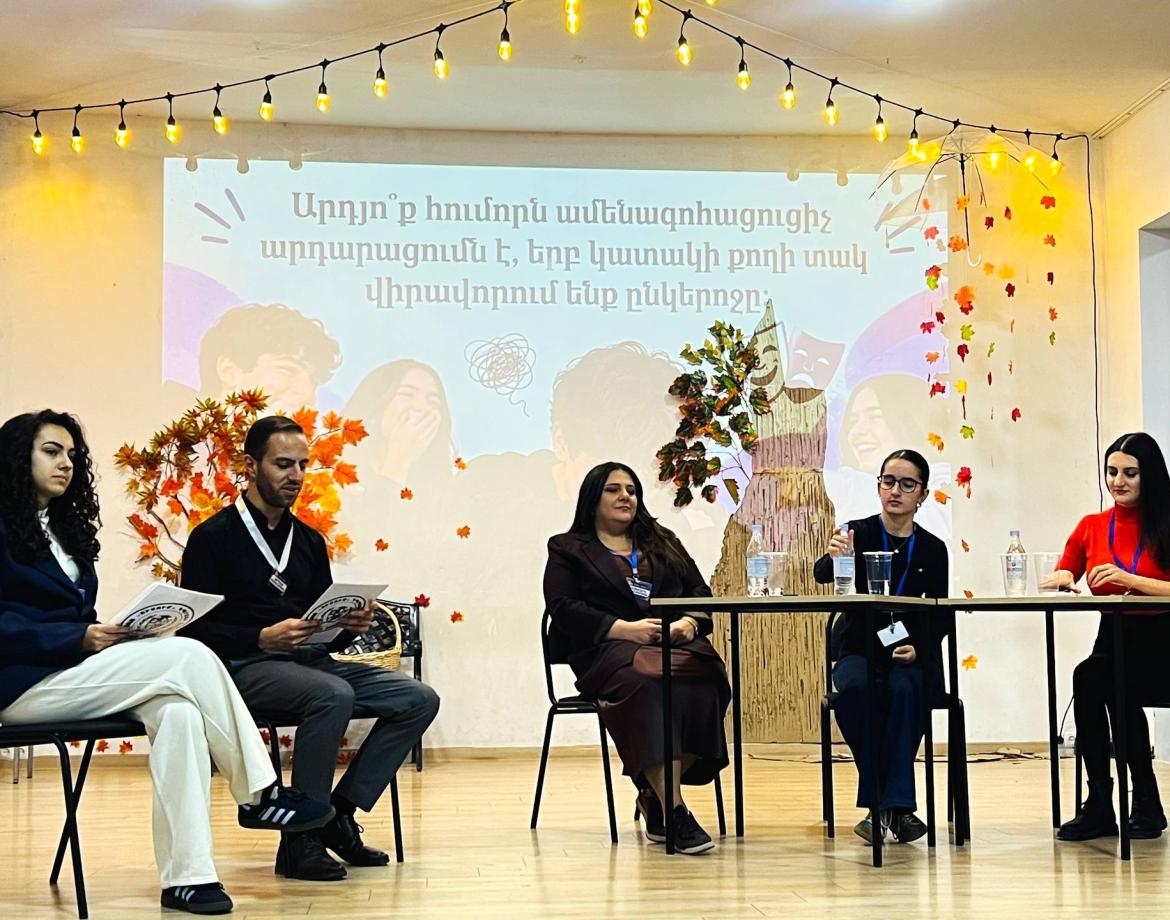
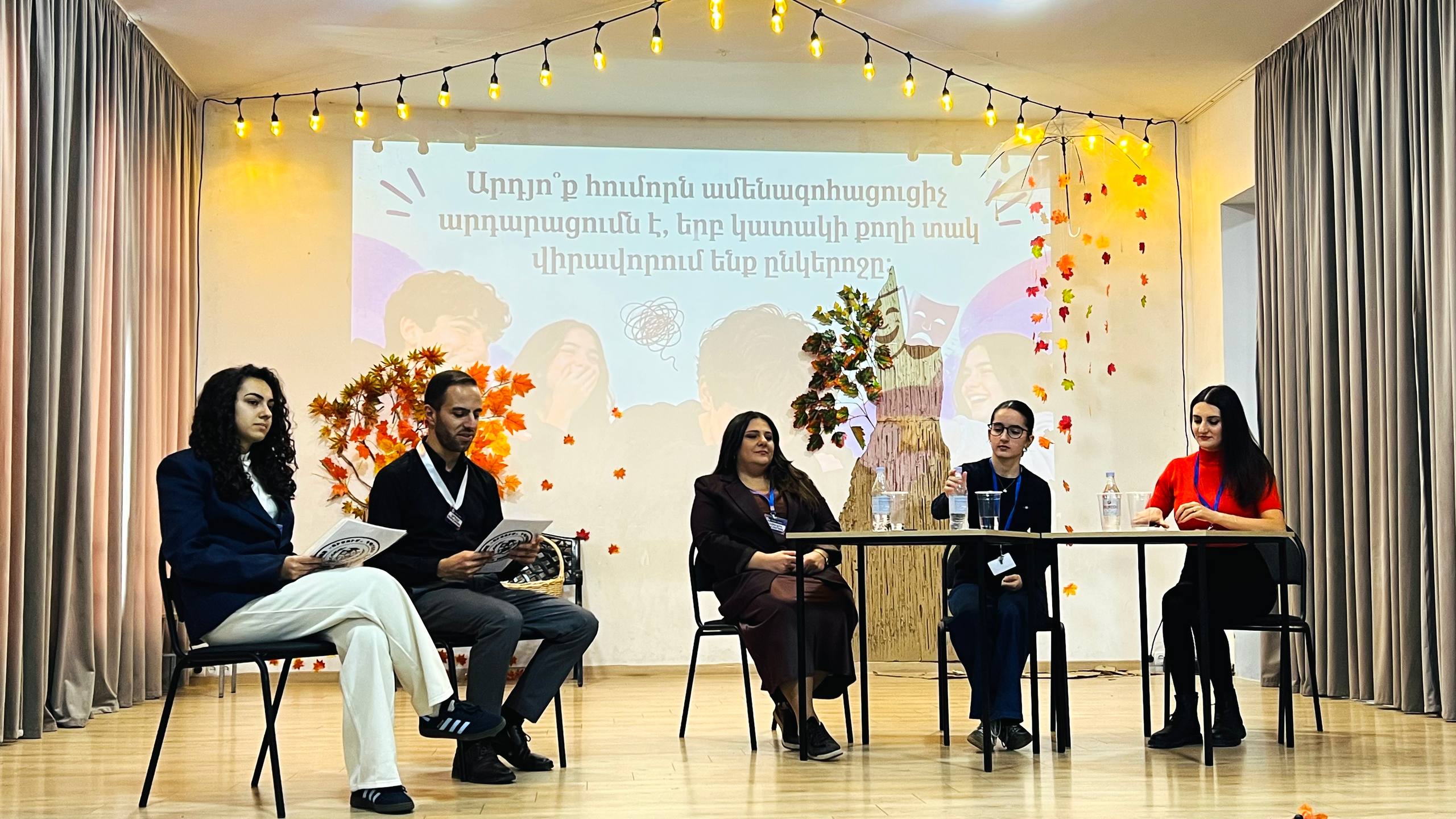
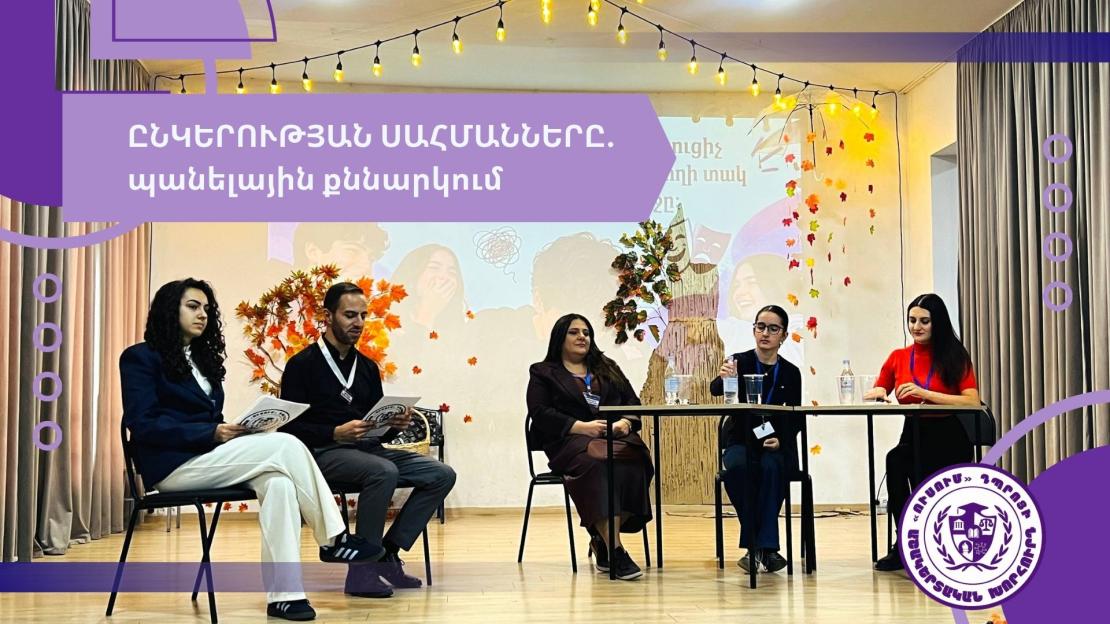
These questions were explored today at a panel discussion entitled “Friendship: With Jokes or with Boundaries?”, held at «Usum» School for students in grades 8 and 9.
During the discussion, participants sought to identify the boundaries of healthy humor among friends, reflect on the importance of personal space and mutual respect, and understand how to respond when a joke becomes hurtful.
The invited speakers were Angela Manasyan, a primary school teacher and head of the “Conscious Parenting” platform; biology teacher Tatevik Yeghiazaryan; and Ella Mkrtchyan, a 12th-grade student and coordinator of the usuMUN interschool conference. Elmira Zakinyan, President of the Student Council, also took part in the event as a moderator.
The discussion began with stories about the most memorable and beloved jokes and memes shared among friends. These warm and sincere memories helped create an informal atmosphere and highlighted the important role humor plays in human relationships. The conversation then turned to the psychological aspects of humor. Participants discussed its ability to bring people together or, conversely, create distance between them.
Speaker T. Yeghiazaryan paid particular attention to “inside jokes,” which can become an expression of a group’s unique bond and shared memories, but may sometimes also serve as a means of excluding certain members of the group.
The discussion also addressed whether there are topics that should be considered off-limits for jokes in friendships, regardless of how close people are. According to E. Mkrtchyan, there are subjects that should never be joked about, regardless of the level of intimacy. These include jokes about a person’s appearance, family, financial situation, or personal failures, as they may touch upon someone’s most sensitive feelings.
One of the most important parts of the discussion focused on situations in which someone hurts a friend and then dismisses their reaction as being “unable to take a joke.”
A. Manasyan specifically addressed different types of humor encountered in professional environments, which may be understood only within a very narrow circle and may receive mixed reactions from a wider audience. The speaker also emphasized the possible motivations behind aggressive humor, ranging from personal insecurity to attempts to establish control in relationships.
It was highlighted that criticism, dissatisfaction, or a desire to demonstrate superiority may sometimes be concealed behind a joke. This behavior is particularly common among young people in the age group represented by the audience, making the discussion especially relevant and meaningful.
The participants also explored how to respond appropriately when a friend refuses to acknowledge the impact of their words and presents an insult as an innocent joke. The speakers emphasized the importance of paying attention not only to the content of a joke but also to the other person’s reaction. Silence, a change in facial expression, or withdrawal may be signs that a joke has crossed a safe boundary.
The panelists also discussed the importance of establishing personal boundaries and respecting those of others. How can we say, “That joke made me uncomfortable,” without damaging a friendship? How can we learn to express our feelings honestly while remaining attentive to those of others?
It was emphasized that healthy friendship does not require people to laugh at every joke. Everyone has their own sensitivities, and these differences should be acknowledged and respected in relationships.
The culture of apologizing was also discussed and was considered particularly important among students. At the end of the meeting, participants jointly formulated several principles of healthy humor among friends:
1․ Humor should bring people together, not isolate or humiliate them.
2․ A joke is healthy when everyone laughs, rather than one person laughing at another’s expense.
3․ Jokes about a person’s appearance, family, personal pain, or failures should be avoided; if such topics arise, they must be approached with care and respect.
4․ Speaking honestly about personal boundaries does not weaken relationships; it makes them more trustworthy.
5․ If a joke has hurt someone, we should listen, acknowledge their feelings, and apologize when necessary.
The central message of the discussion was clear: empathy comes first, and a friend’s feelings are more important than the temptation to make a successful joke.
Organized at the initiative of the Student Council’s Legal and Disciplinary Commission, the panel discussion provided another opportunity for students to learn not only how to speak, but also how to listen; not only how to laugh, but also how to understand the impact their words can have on others.
To not think freely is to not think at all!