
The Armenian people are among the most ancient in the world, with a history that stretches back thousands of years. At the core of Armenian identity lies not only historical memory, but also a heroic mindset that was formed in prehistoric times. In Armenian tradition, the origin of heroes is linked to Hayk Nahapet and his descendants. A hero in Armenian culture is not merely a physically strong individual, but a complete character endowed with faith, wisdom, justice, and patriotism. These heroic figures have been shaped both by historical events and by folk tradition, passing from generation to generation.
Beginning with Hayk Nahapet, figures such as Aram, Ara the Beautiful, David of Sassoun, Tigranes the Great, and Vardan Mamikonian have embodied the fundamental values of the Armenian people. In their images, history and myth merge, forming a unique foundation of national identity. Throughout centuries, despite wars, displacement, and losses, the Armenian people have preserved their heroic spirit, ensuring the continuity of generations. This spirit has also endured in modern times through heroes such as General Andranik, Garegin Nzhdeh, and Monte Melkonian.
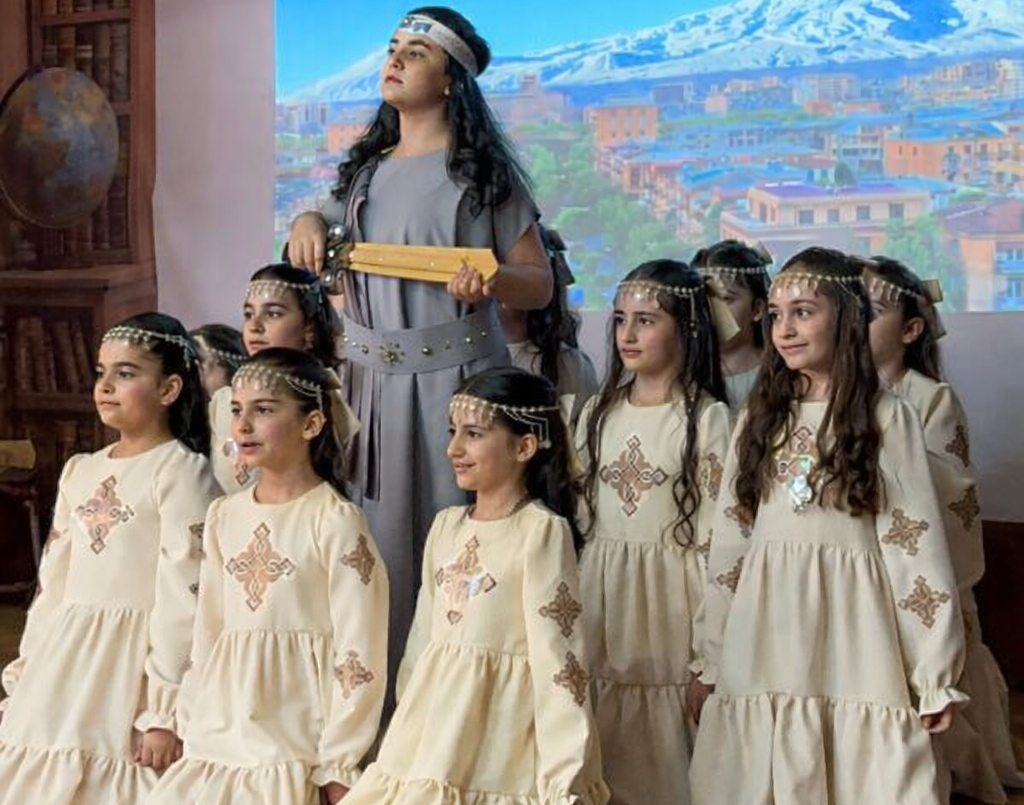
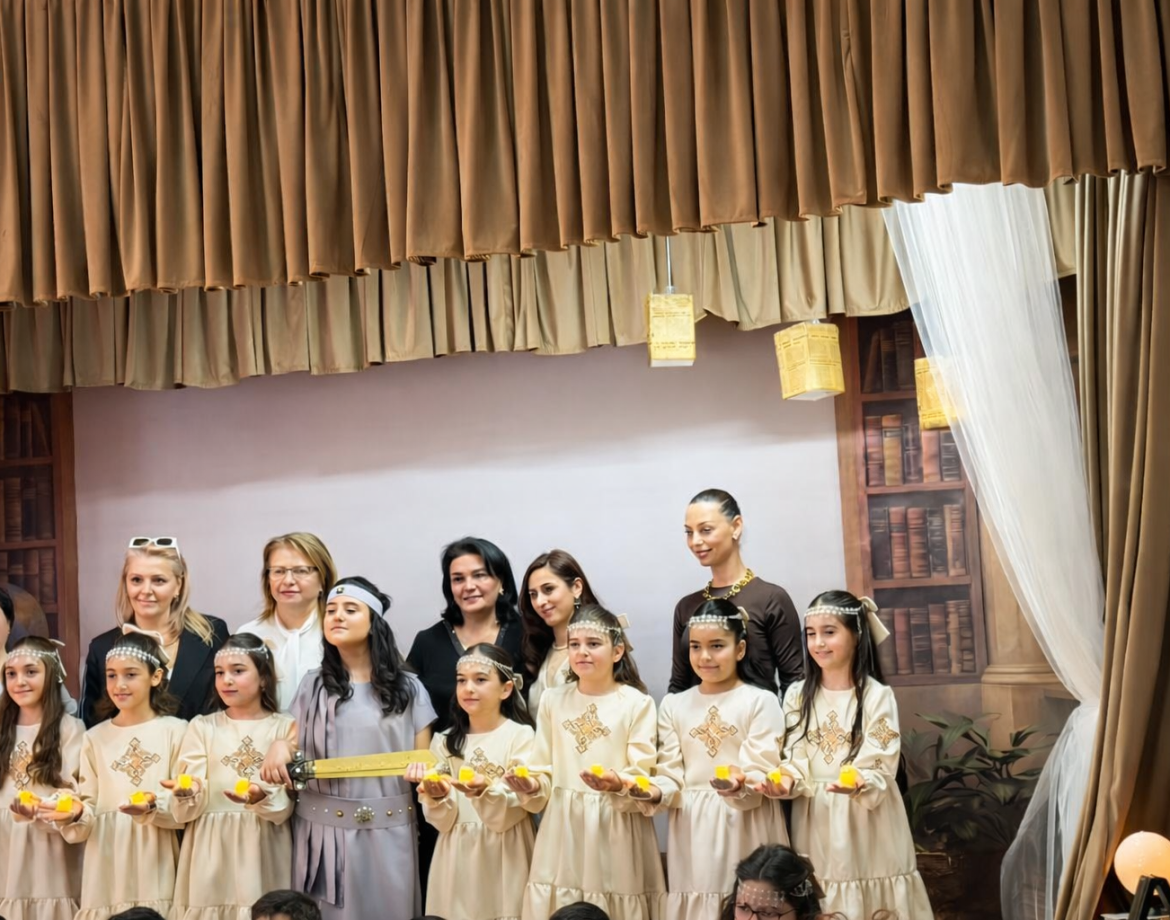
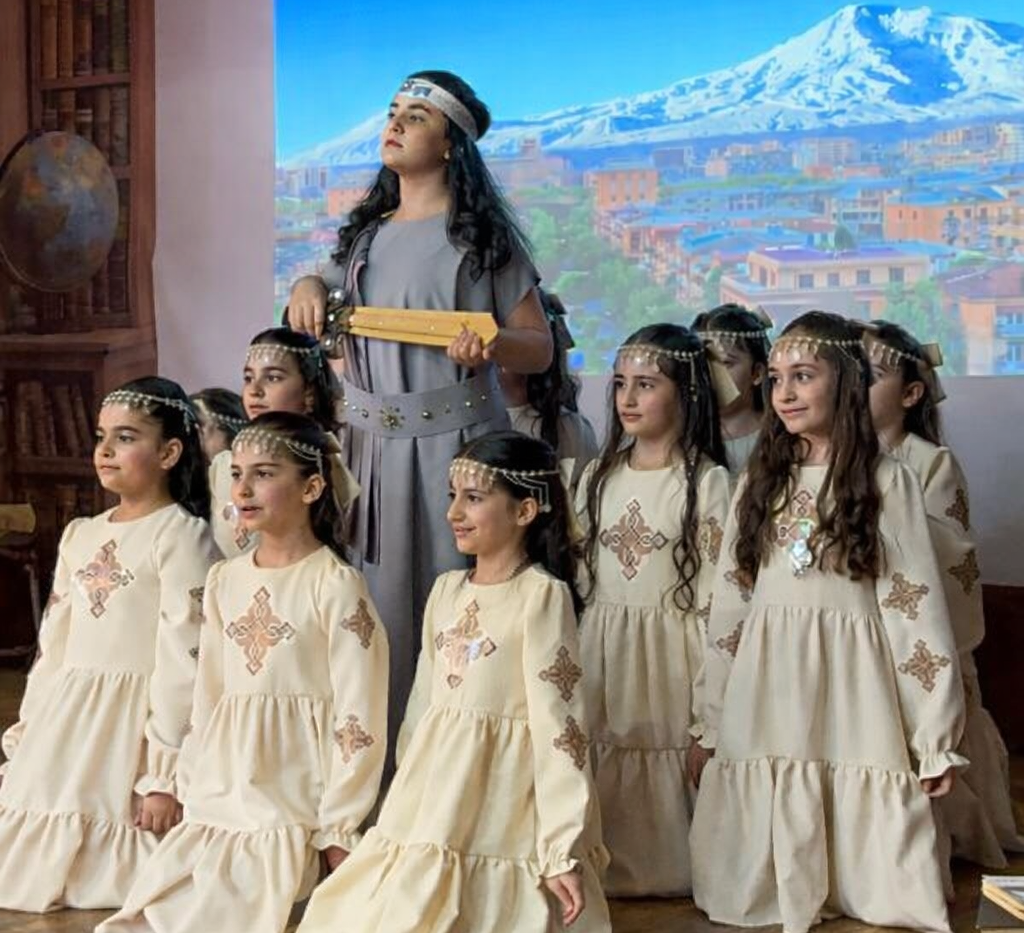
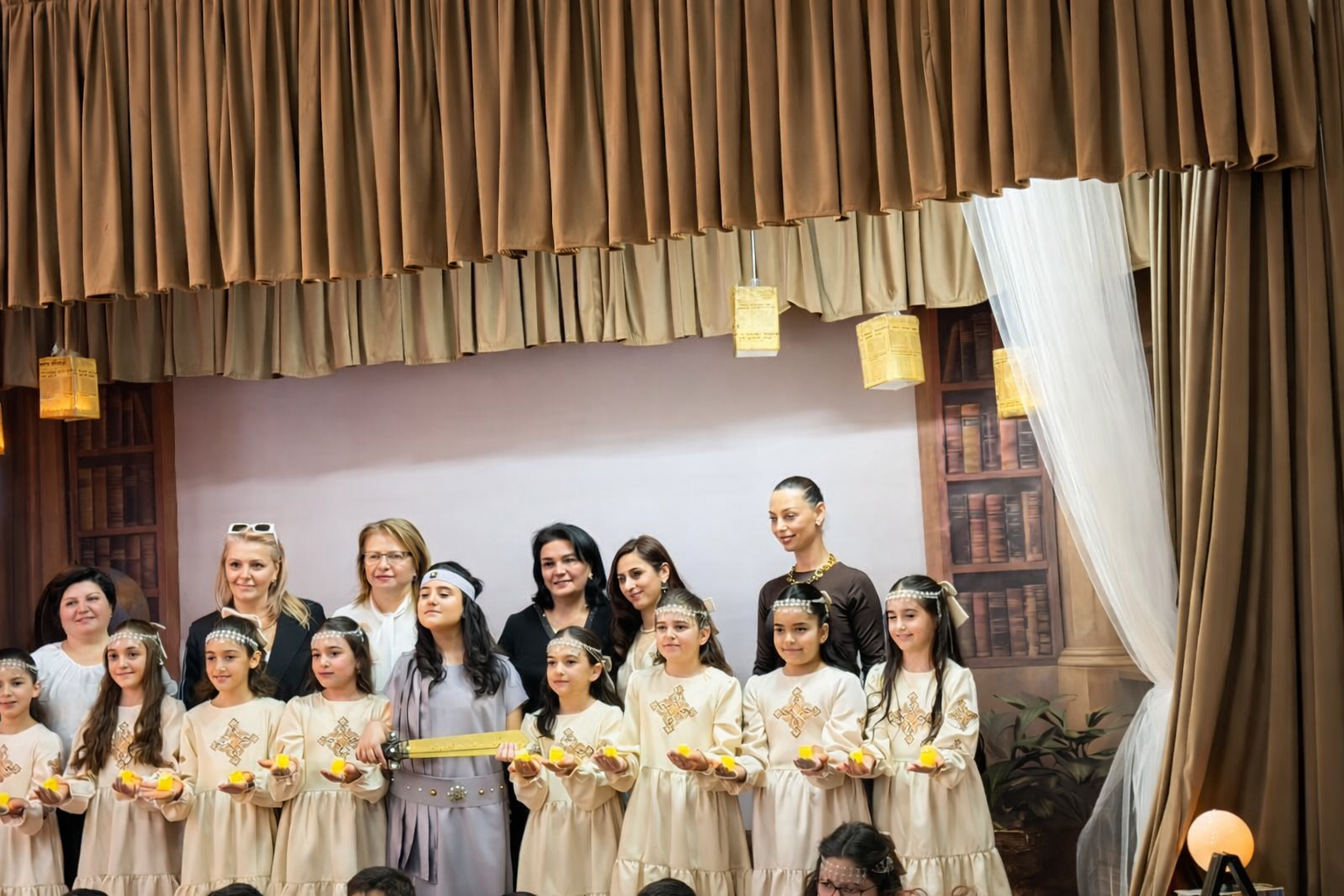
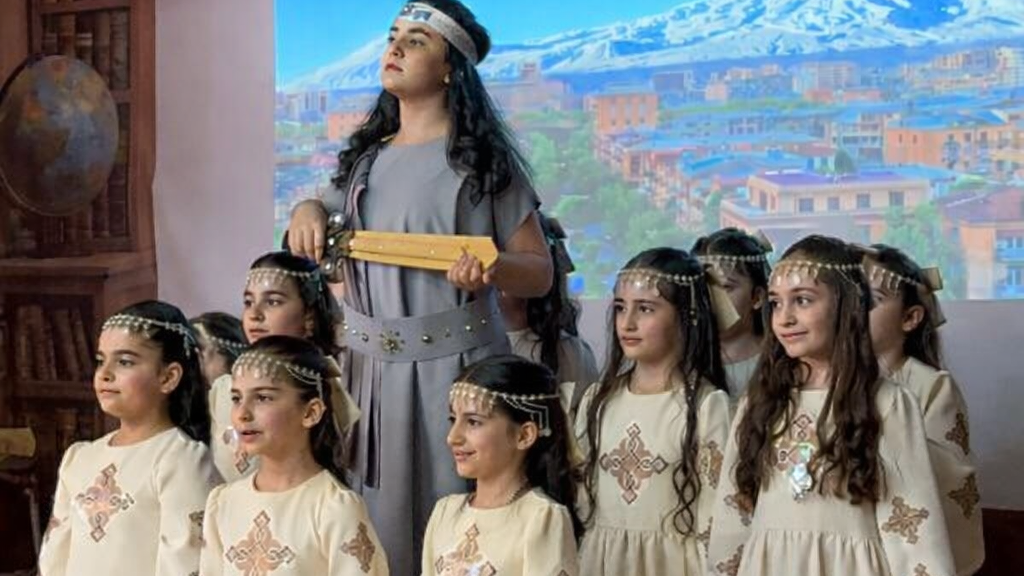
Thus, the origin of Armenian heroes is not merely a story of the past; it is a living heritage that shapes Armenian self-awareness and guides future generations. It was with this vision of a living and enduring heritage that today’s fourth-grade students took the stage, summarizing their four years of primary education and laying the foundation for their journey of patriotic upbringing.
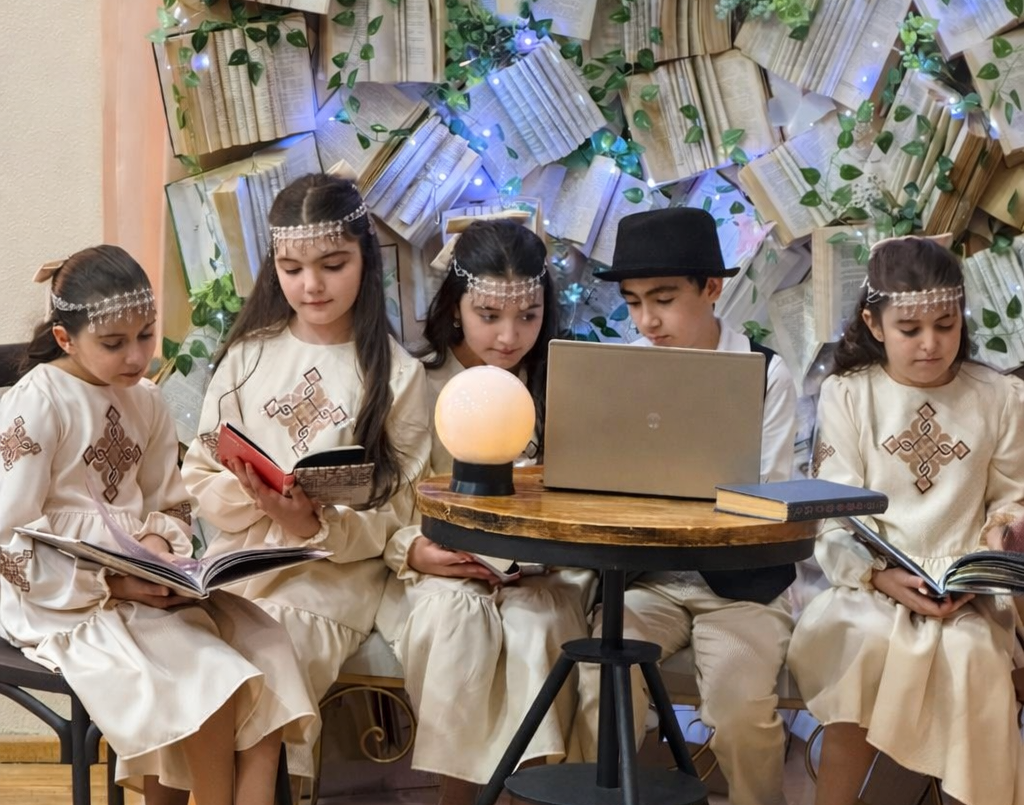
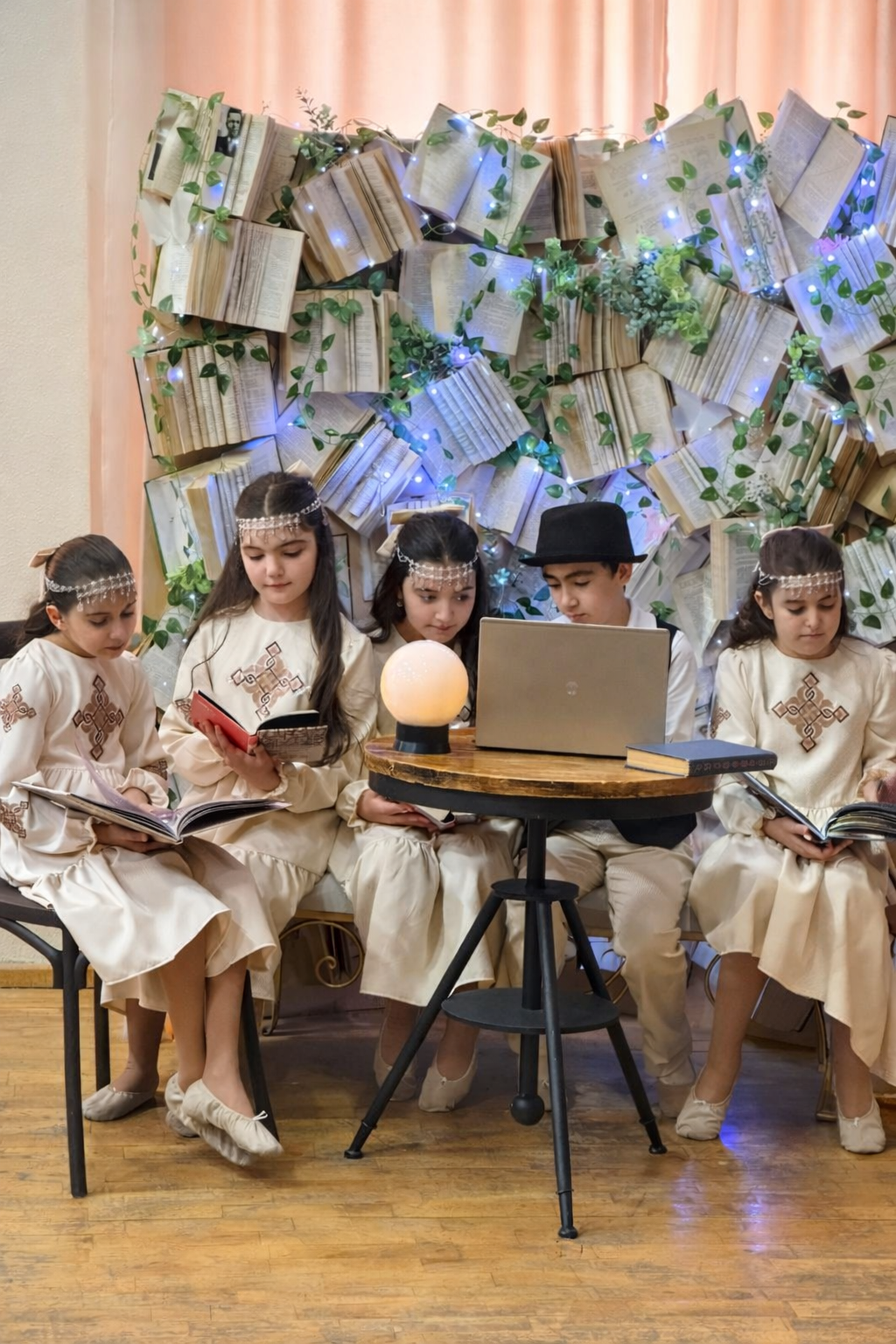
“Heritage of Heroes” took the audience on a unique historical and value-based journey, revealing the essence of the Armenian spirit. The performance began with a library scene, where a foreign character sought to understand the resilience of the Armenian people and the source of their strength. Guided by a librarian and students, the symbolic book “The Testament of Strength” was opened, serving as the central idea of the performance. The production was built around four key values—unity, courage, wisdom, and faith—presented through heroes from different periods of Armenian history.
The audience witnessed the dramatization of the struggle between Hayk Nahapet and Bel, emphasizing the power of unity. This was followed by portrayals of Aram, Ara the Beautiful, and David of Sassoun as symbols of national identity, freedom, and justice. Special emphasis was placed on Tigranes the Great, highlighting the importance of wisdom and statecraft. The Battle of Avarayr brought the audience face to face with the spirit of the Vardanants, symbolizing the struggle to preserve faith and identity.
One of the central messages of the performance was that the strength of heroes does not belong only to the past—it is passed down through generations and lives within every Armenian. This idea was further reinforced through the depiction of modern heroes such as General Andranik, Garegin Nzhdeh, and Monte Melkonian. The conclusion of the performance was dedicated to the image of the Armenian mother, portrayed as the source of national spirit and the origin of heroes. The organizers aimed to convey a clear message: the strength of an Armenian is formed within the family, nurtured by a mother’s love, and strengthened by values passed down through centuries.
In conclusion, this performance was not only an artistic presentation, but also an important step in value-based education, encouraging the younger generation to recognize their identity, understand their history, and embrace their responsibility toward their homeland.
To not think freely is to not think at all!