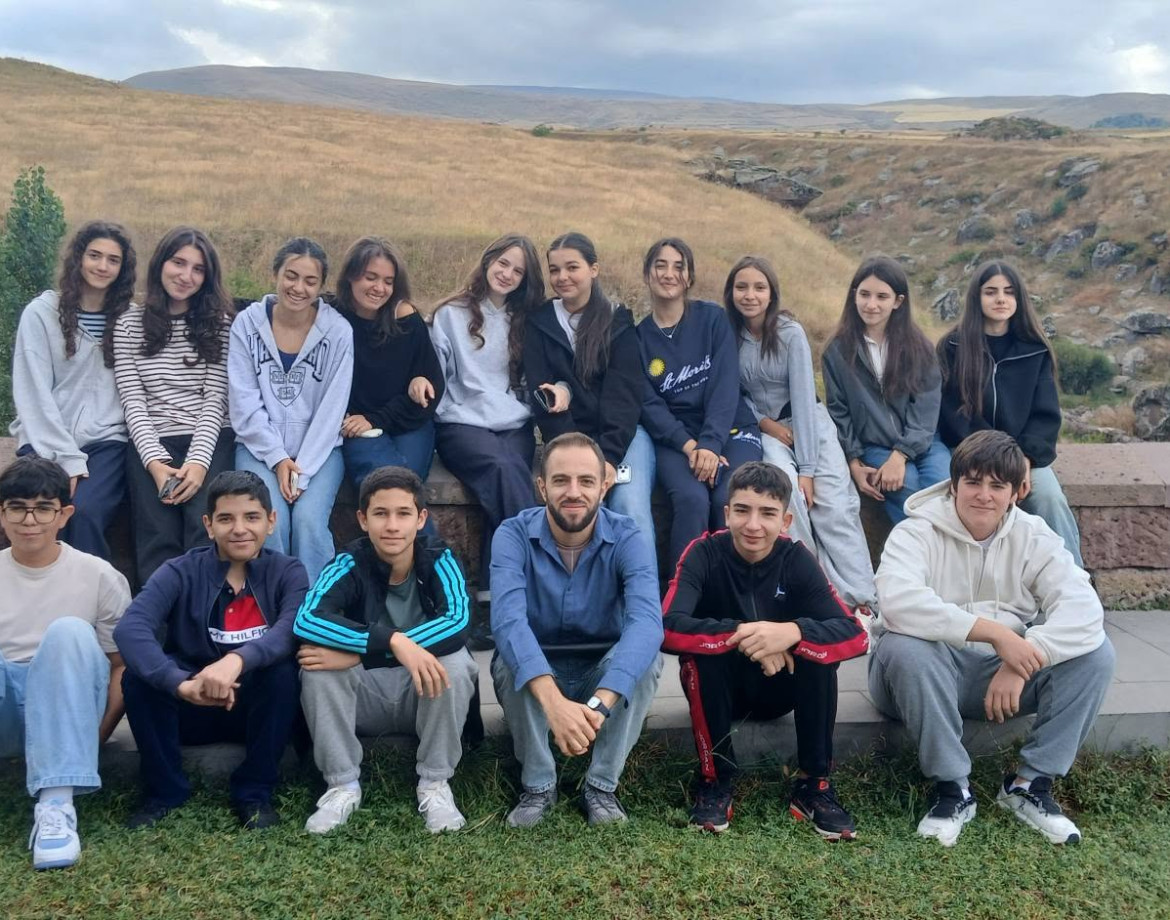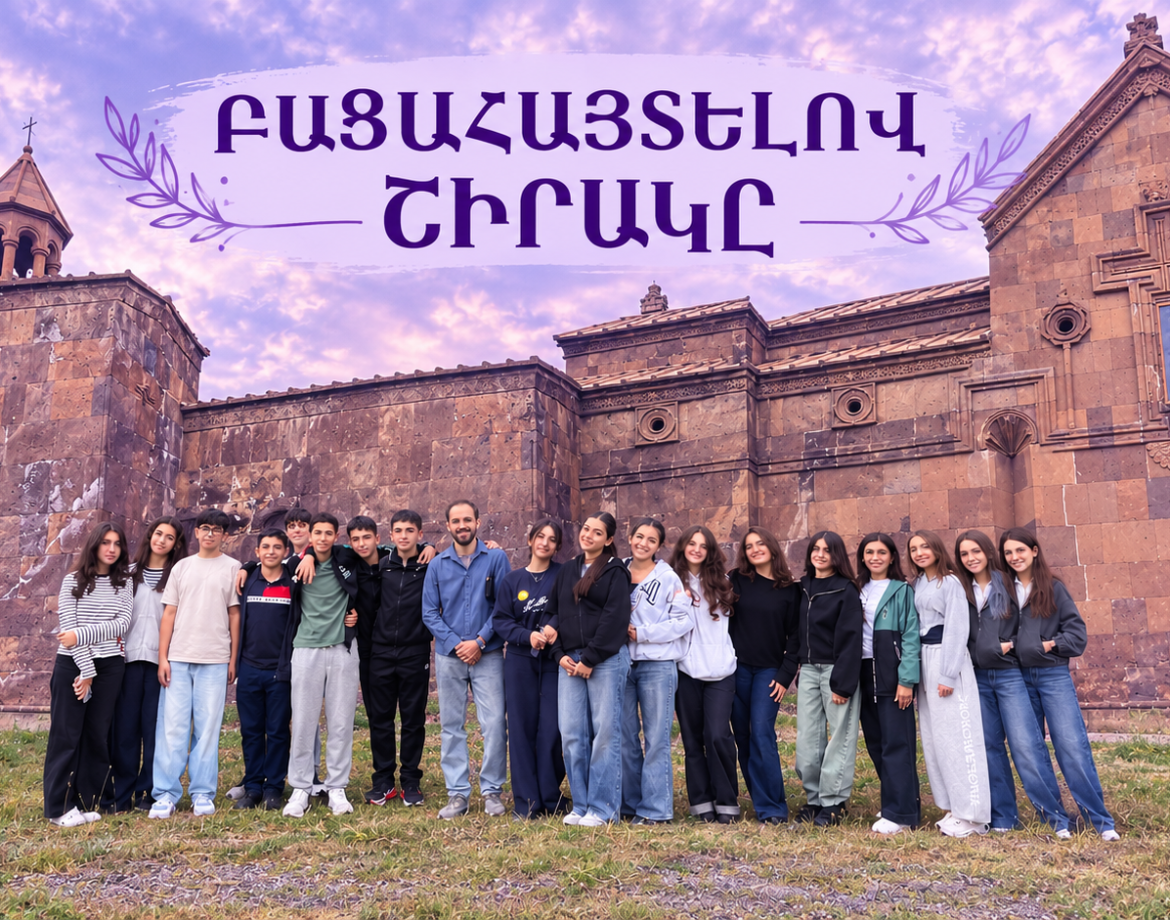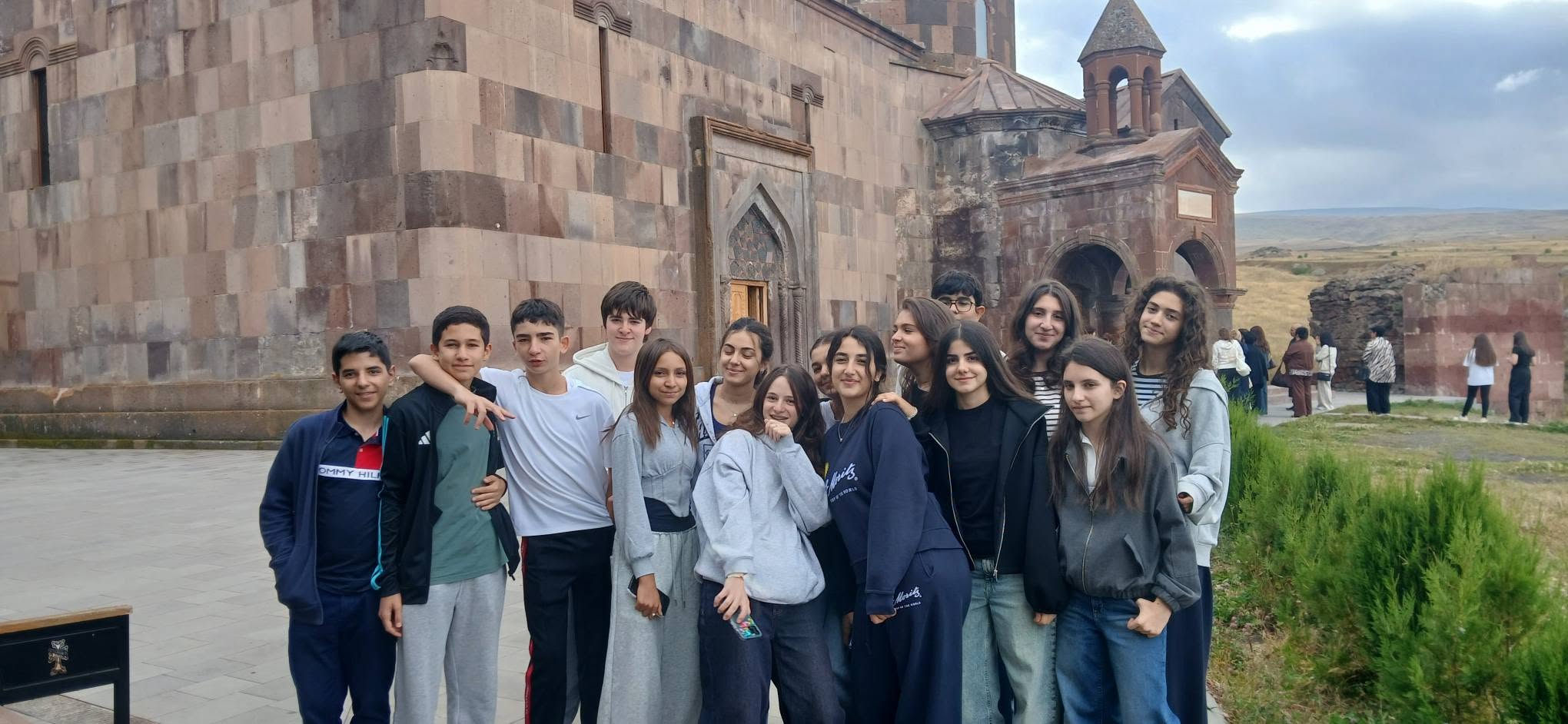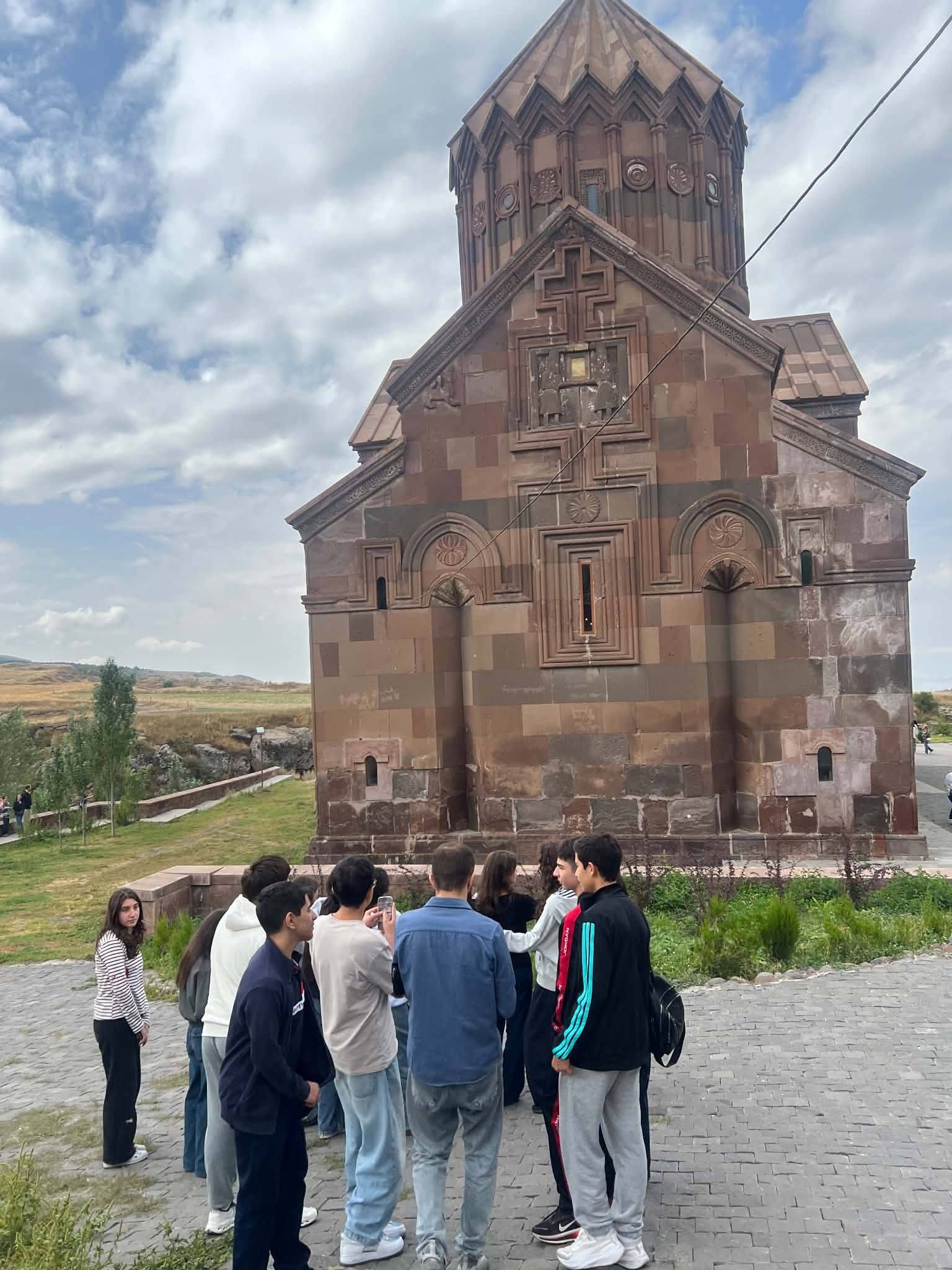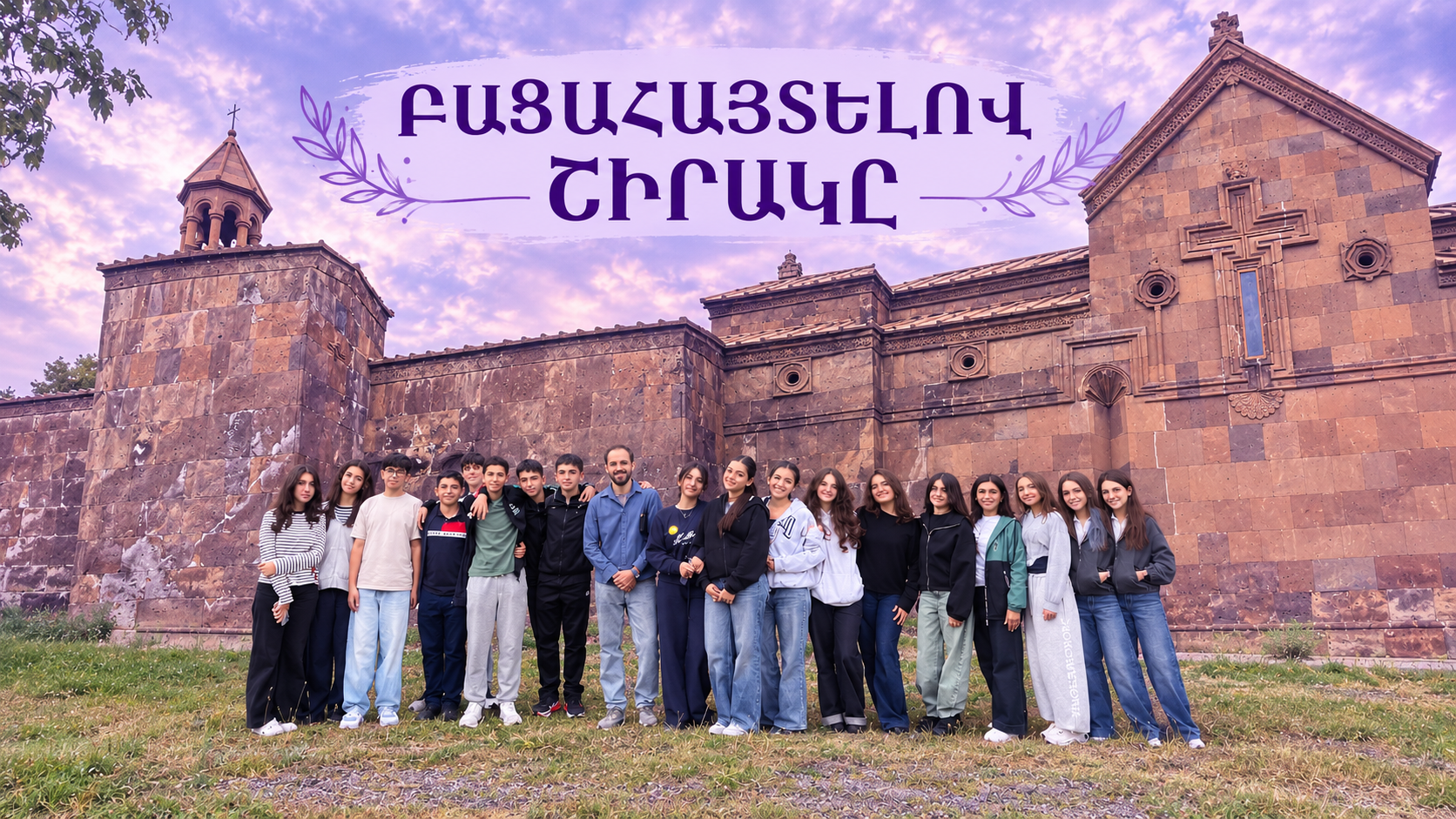

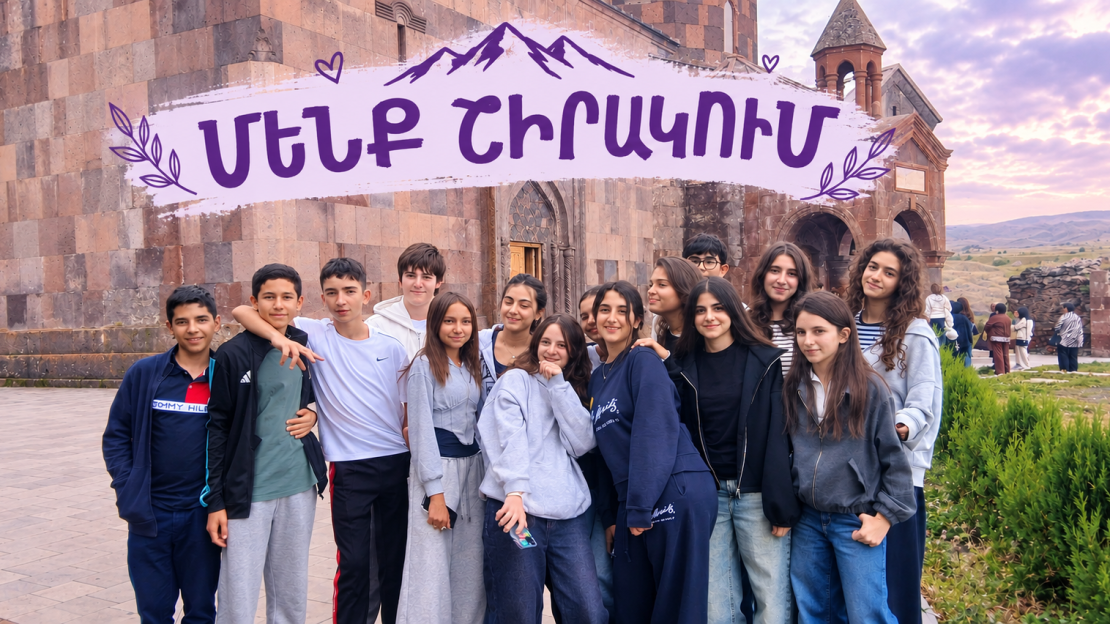
Educational field trips are an integral part of our school’s educational and exploratory process. Recently, the 10th-grade students visited Shirak Province as part of an educational and cultural tour, having the opportunity to explore, within a single day, the province’s historical and cultural heritage, spiritual values, and important chapters of Armenian national art.
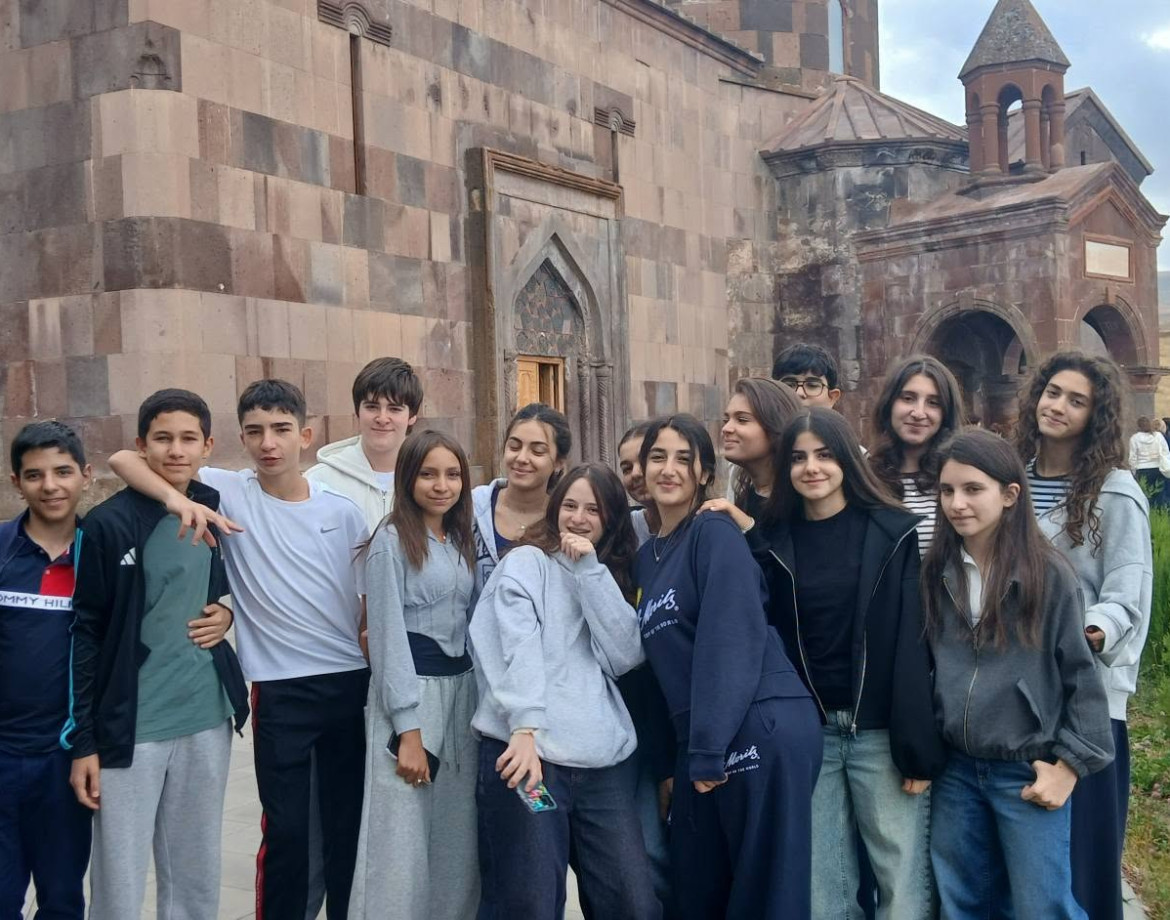
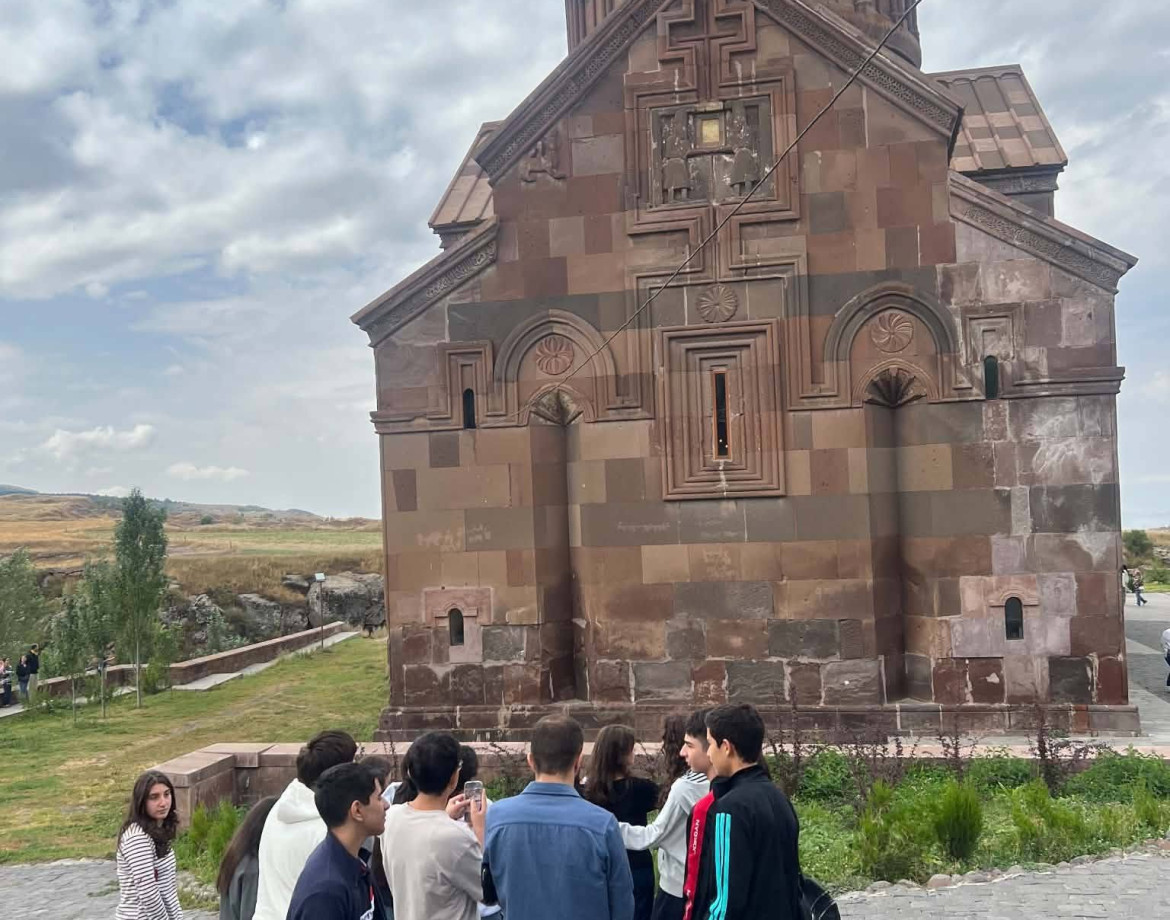
The visit began at Harichavank Monastery, a historic monastic complex located in the village of Harich, Shirak Province. Harichavank dates back to the early medieval period and, throughout the centuries, served not only as a spiritual center but also as an important educational and cultural institution. The oldest structure of the complex is the Church of St. Gregory, dating back to the 7th century. The main church of the monastery, the Church of the Holy Mother of God, was built at the beginning of the 13th century under the patronage of Zakare Amirspasalar and was completed in 1201. A school operated at Harichavank from an early period, where manuscripts were copied. The educational tradition that developed there over the centuries made the monastery an important center of Armenian spiritual and educational life.
The students’ next stop was the Marmashen Monastery Complex. Located on the left bank of the Akhuryan River, Marmashen is a valuable monument of medieval Armenian architecture. The main church of the complex, the Cathedral, was built between 988 and 1029 at the initiative of Prince Vahram Pahlavuni, during the period of the Bagratuni Kingdom. The monastery was later damaged during the Seljuk invasions and was restored in 1225 by Vahram Pahlavuni’s grandsons, Archbishop Grigor and Gharib. Throughout the centuries, Marmashen retained its significance as a religious and cultural center and remains one of the important historical and architectural monuments of Shirak.
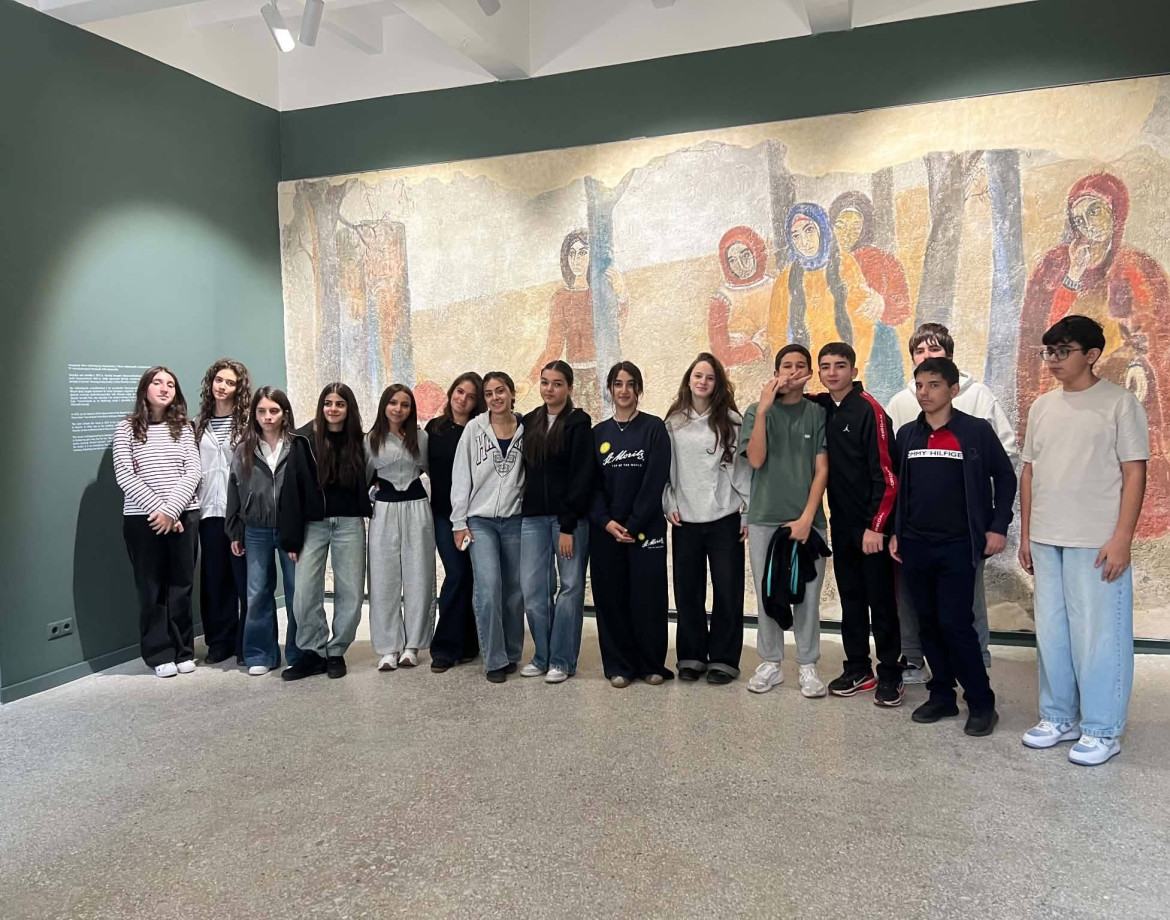
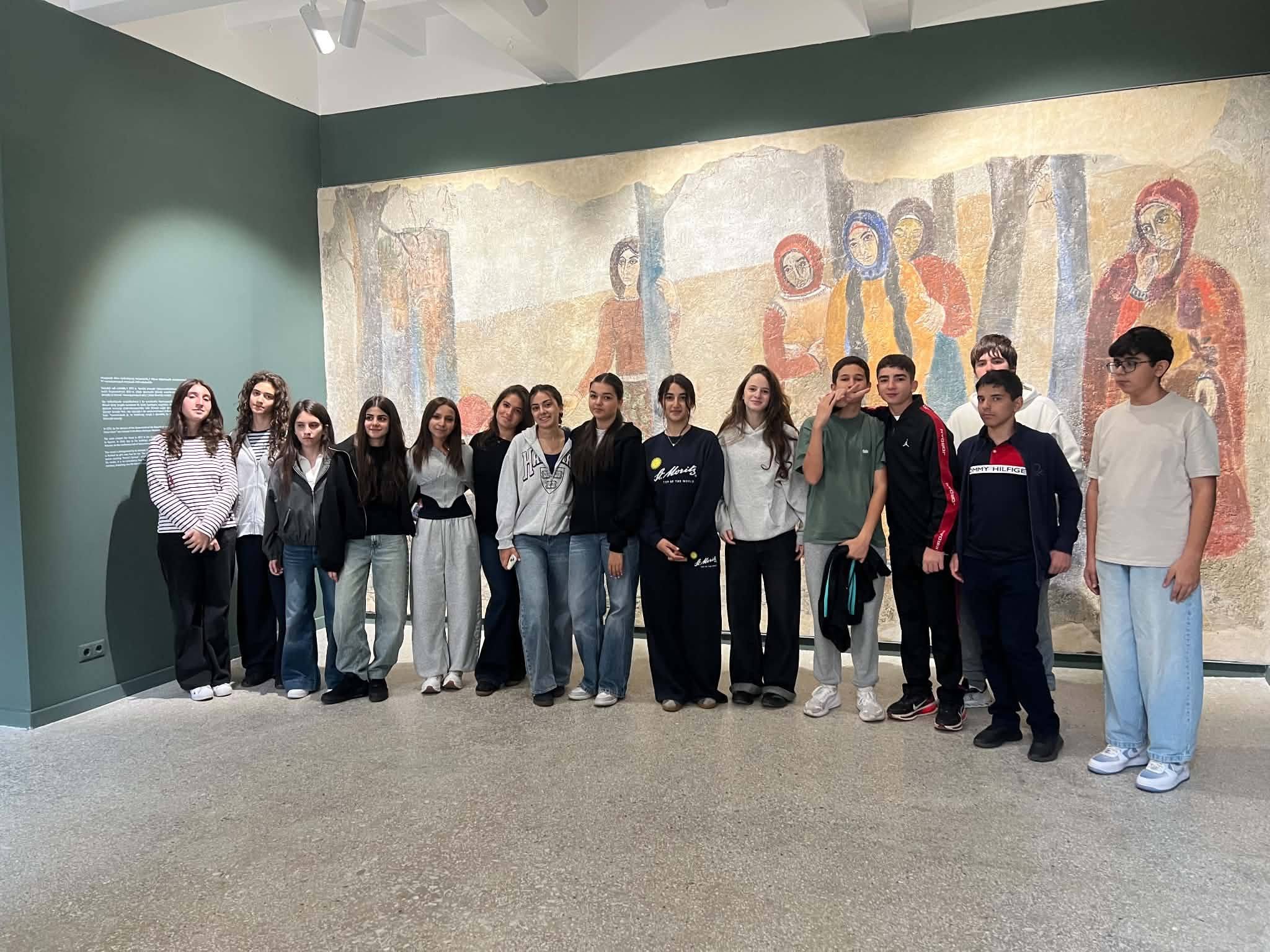
The next and most artistic stop of the journey was the village of Jajur, where the students visited the Minas Avetisyan House-Museum. At the museum, the students became acquainted with the works of one of the prominent representatives of Armenian painting in the second half of the 20th century. They explored the distinctive use of color characteristic of his art, his unique depictions of his native landscape and Armenian village life, as well as his remarkable talent in painting, graphic art, stage design, and mural painting.
It is worth noting that the Minas Avetisyan House-Museum in Jajur was founded in 1982. The building was destroyed in the devastating earthquake of 1988 and was later reconstructed and reopened, with its collection also including works from the artist’s Yerevan studio. Today, the museum houses Minas Avetisyan’s artworks, personal belongings, and works from his studio collection.
The visit to Jajur gave the students an opportunity not only to learn about the artist’s life and creative legacy but also to understand the significance of the environment that shaped Minas Avetisyan’s worldview and artistic expression.
The final part of the visit took place in Gyumri. The students attended the Watercolor Festival, held as part of the events dedicated to the 35th anniversary of the independence of the Republic of Armenia, thus becoming part of the city’s vibrant cultural life and artistic environment.
Thus, the educational visit of the 10th-grade students brought together history, spiritual culture, architecture, and fine art. Harichavank and Marmashen, with their medieval monastic complexes; the artistic legacy of Minas Avetisyan in Jajur; and Gyumri’s contemporary cultural life enabled the students to explore Armenia’s historical and cultural values not only through textbooks but also through direct experience—visiting these sites and engaging with their living history.
The visit was an important step in the students’ educational and cultural development, deepening their interest in the history and heritage of their homeland and fostering a greater appreciation of national values.
To not think freely is to not think at all!