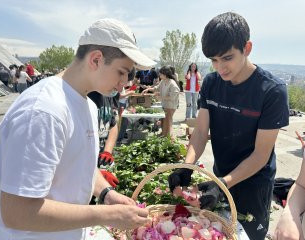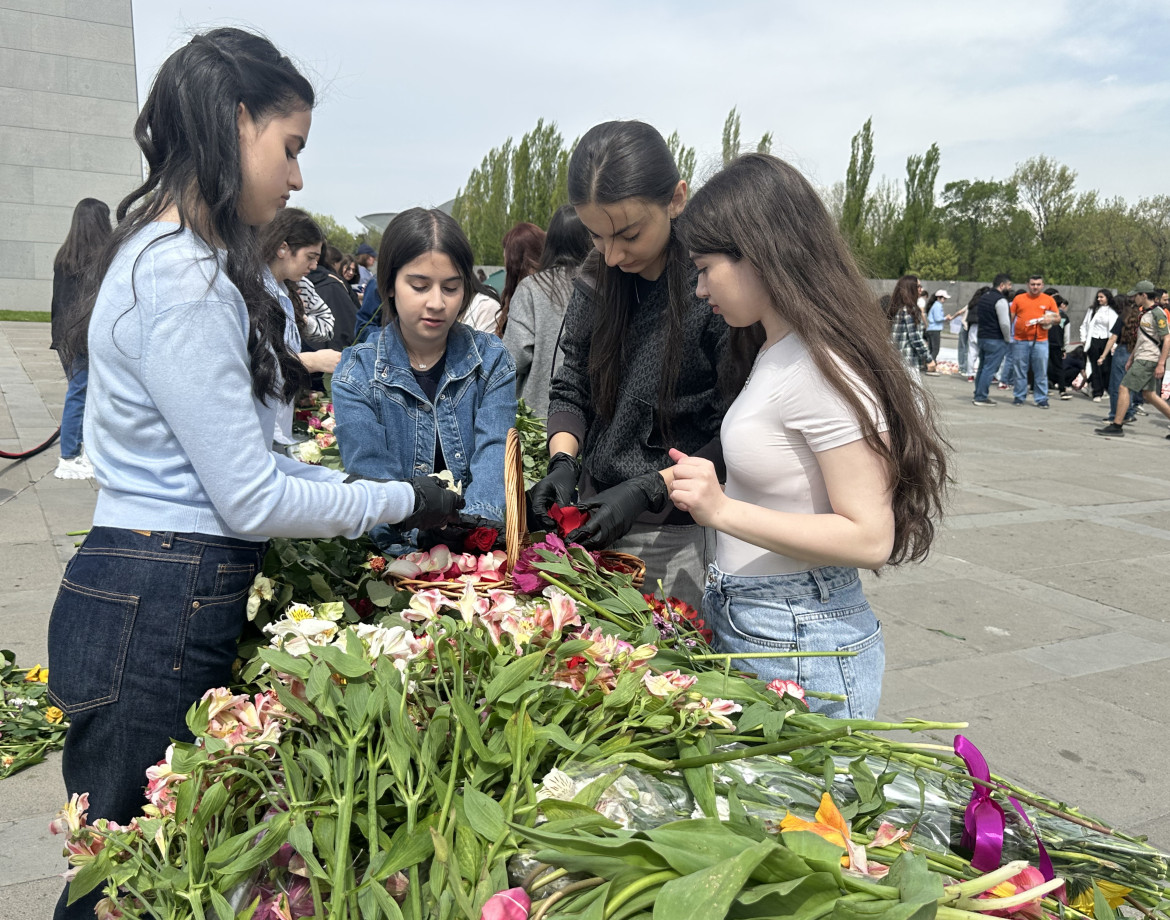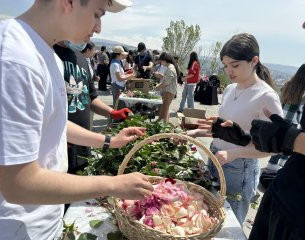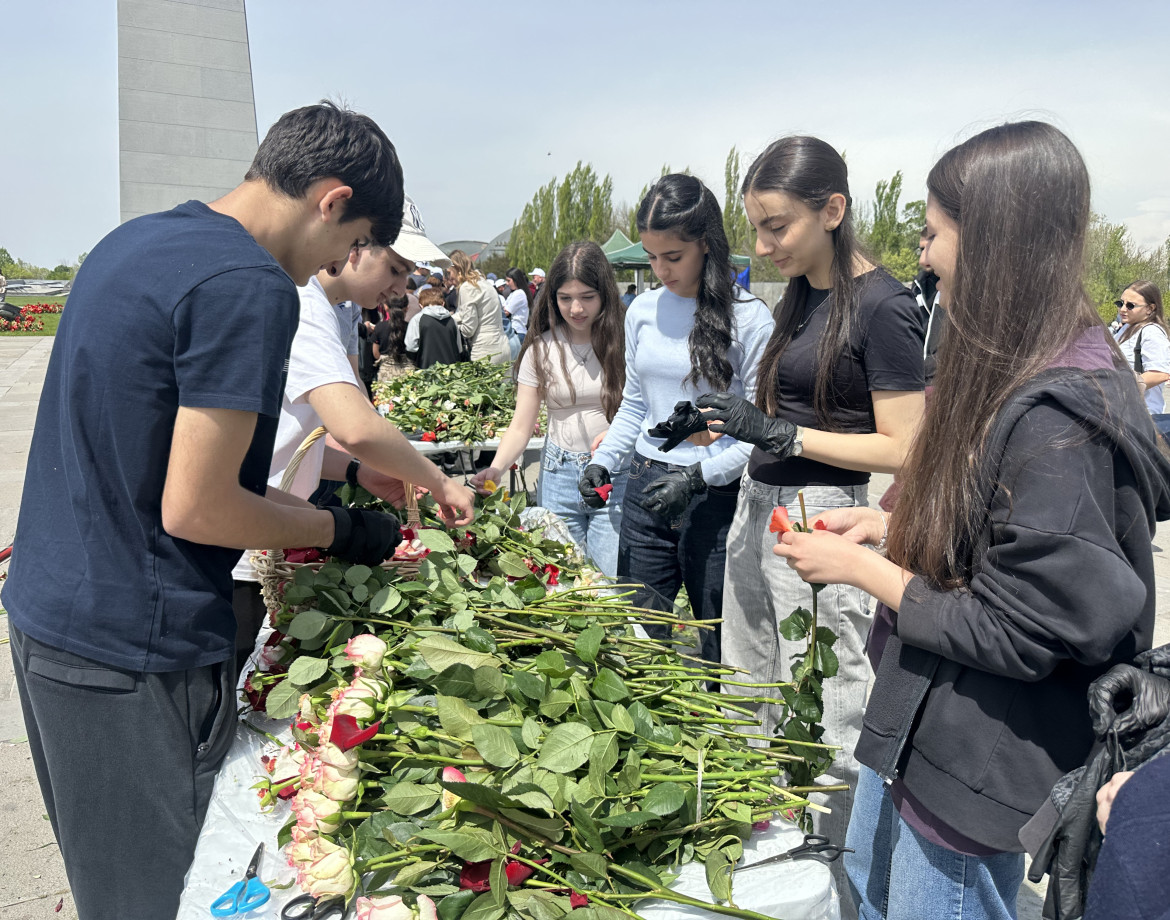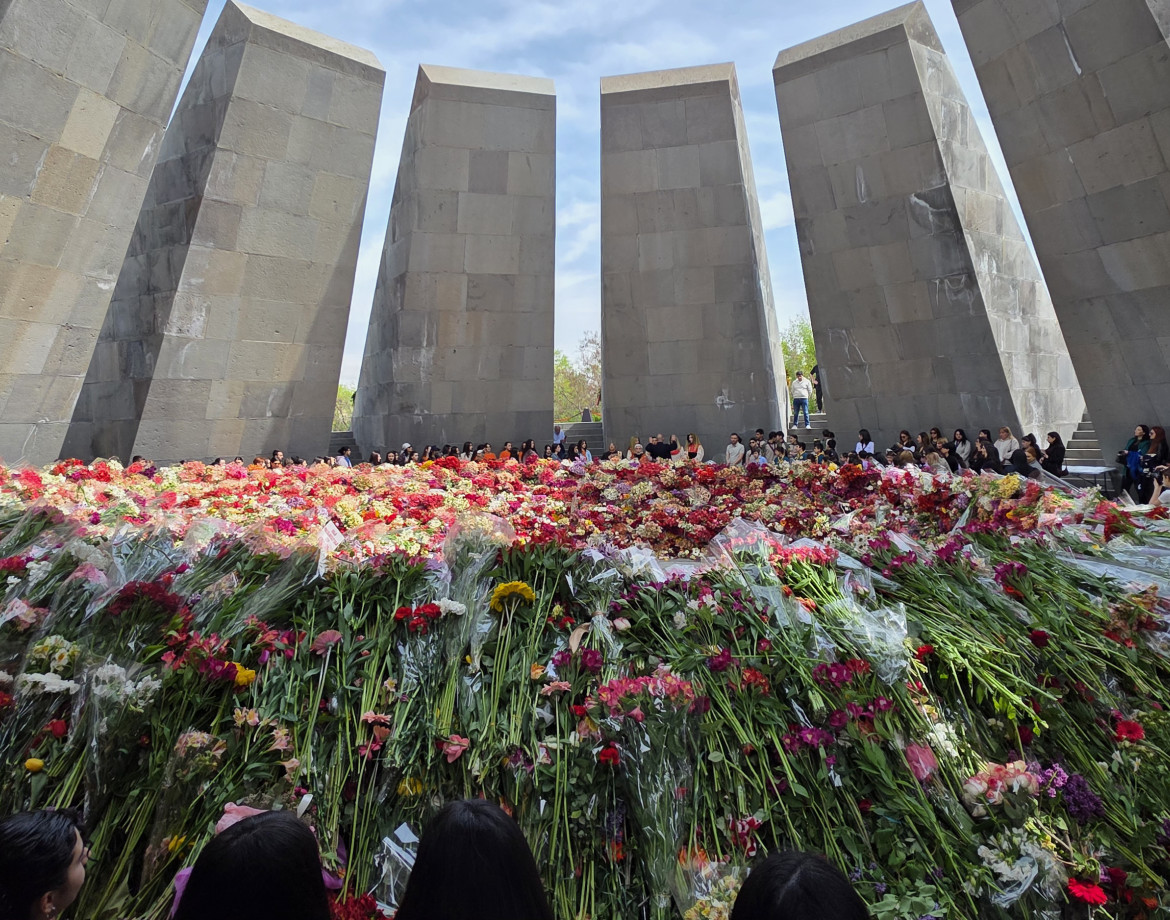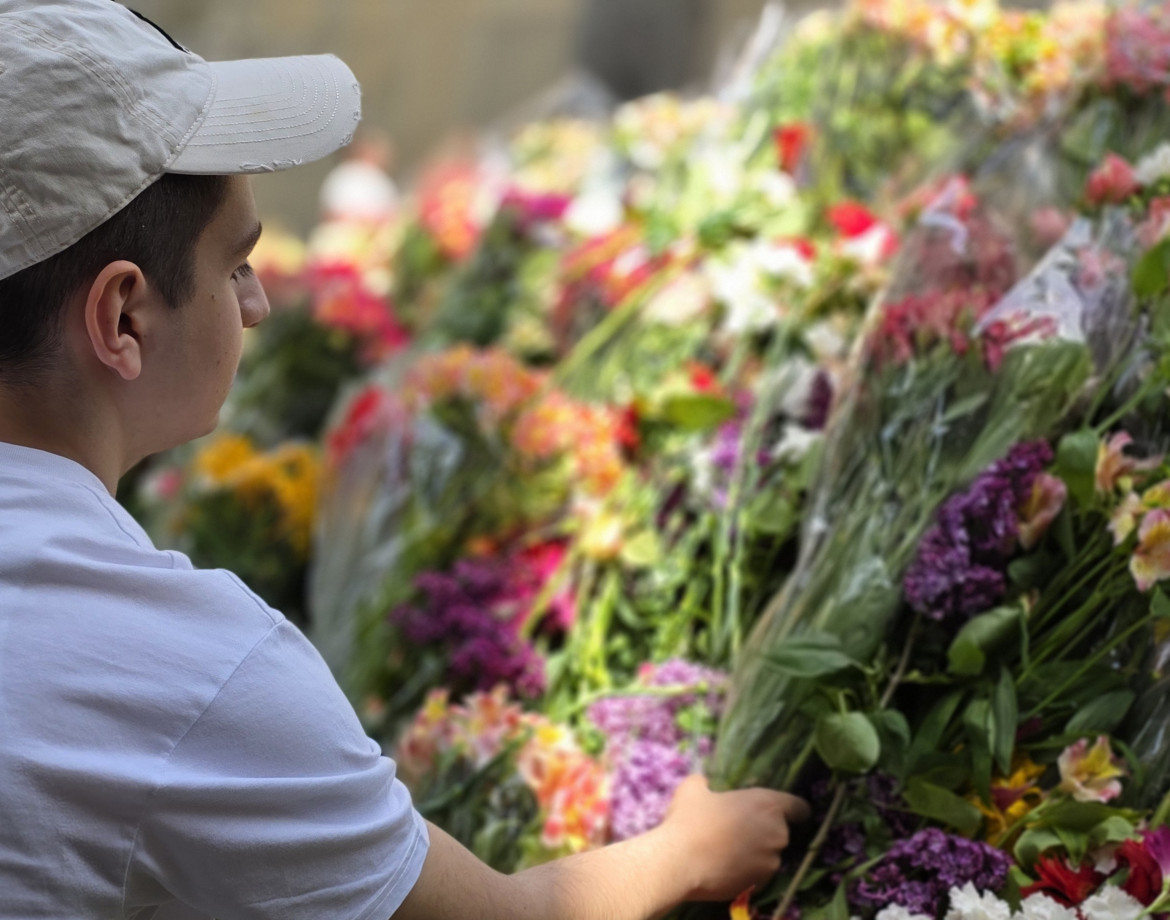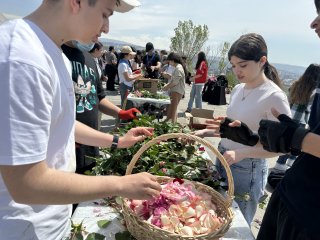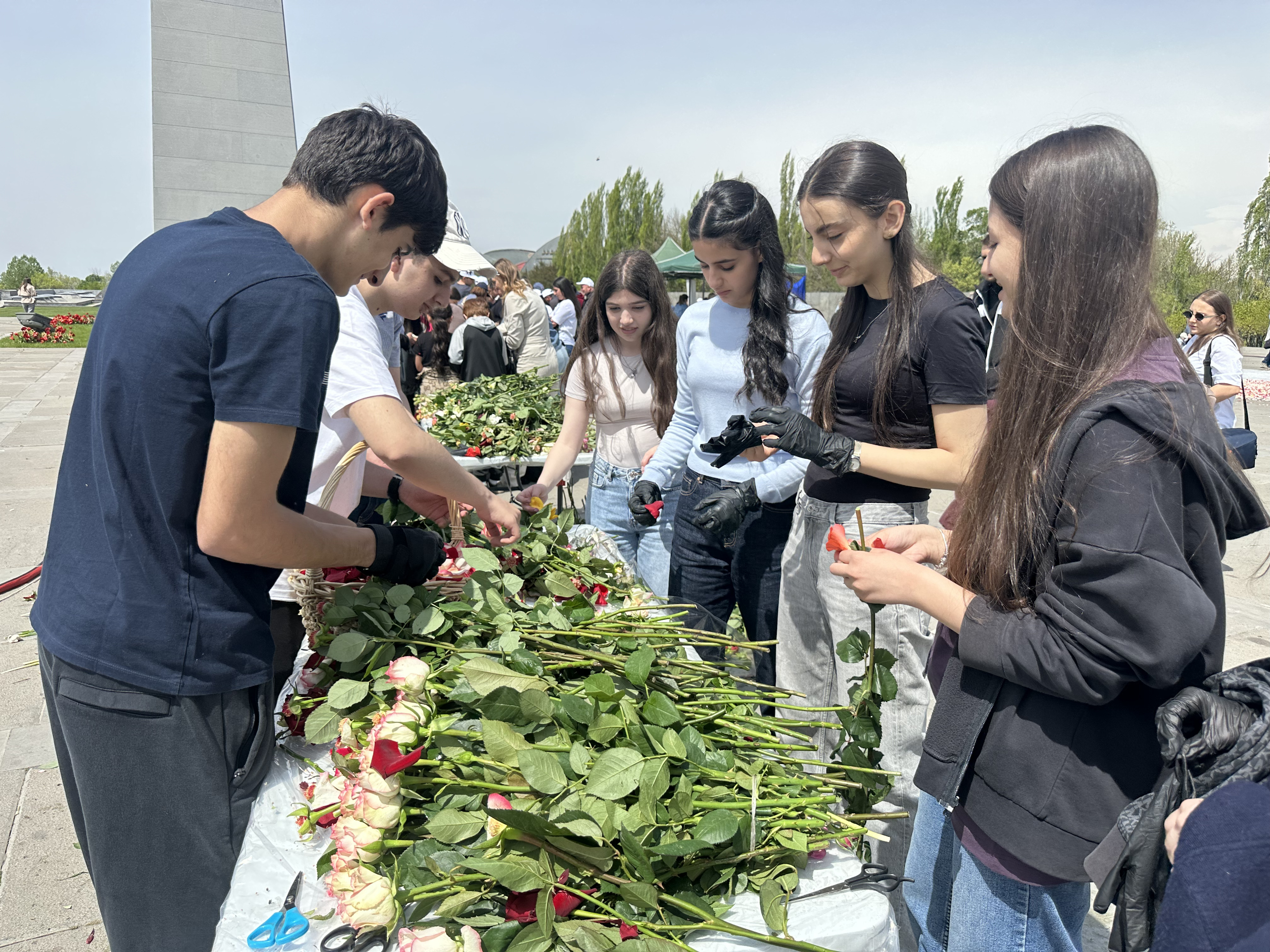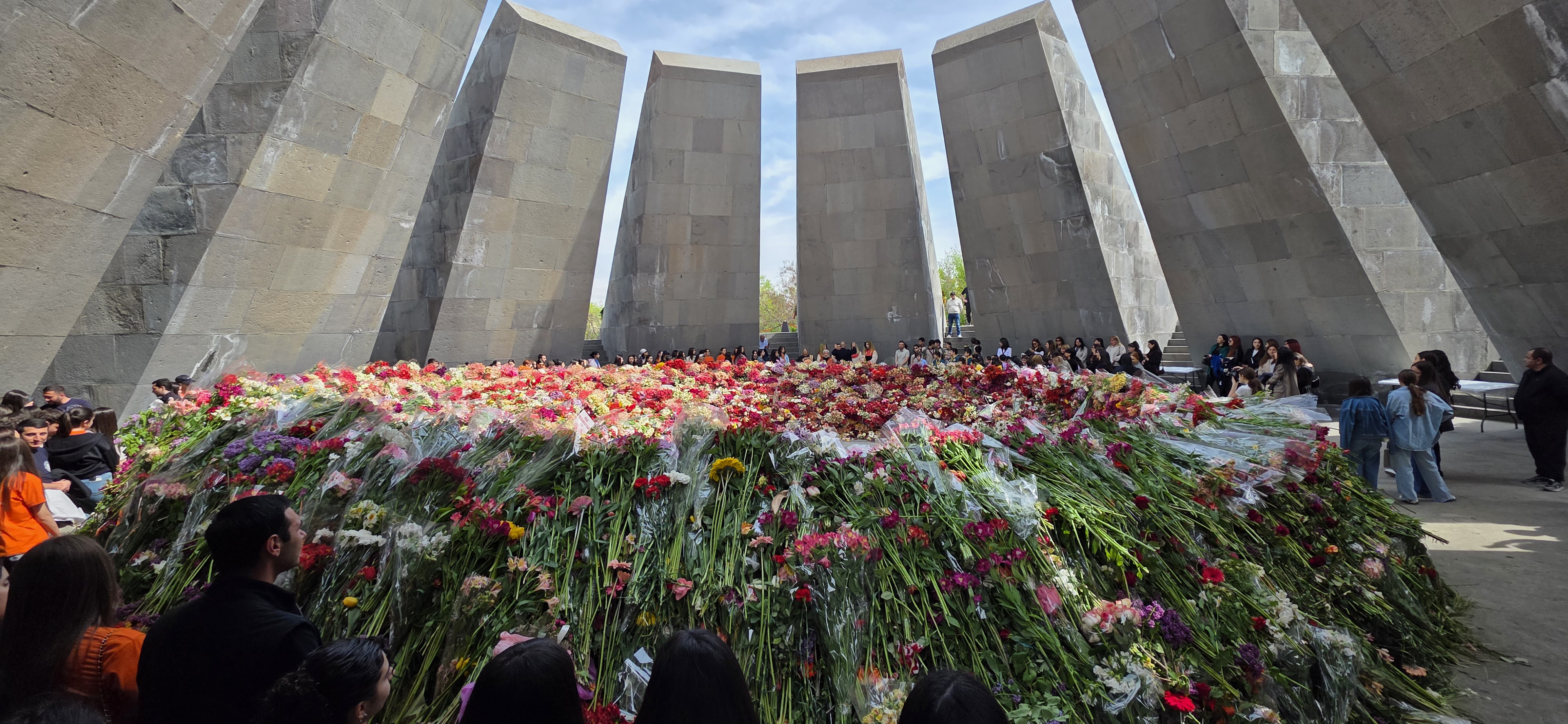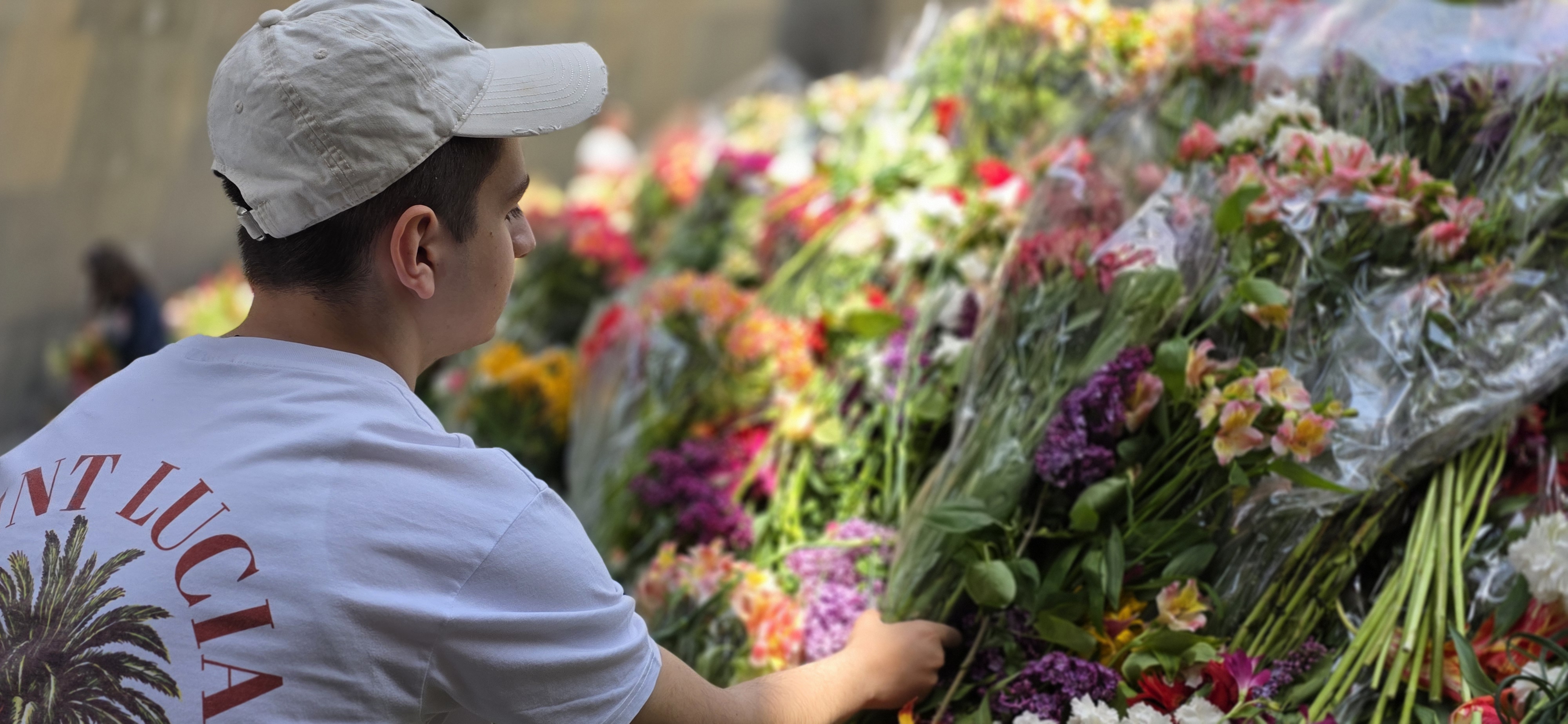

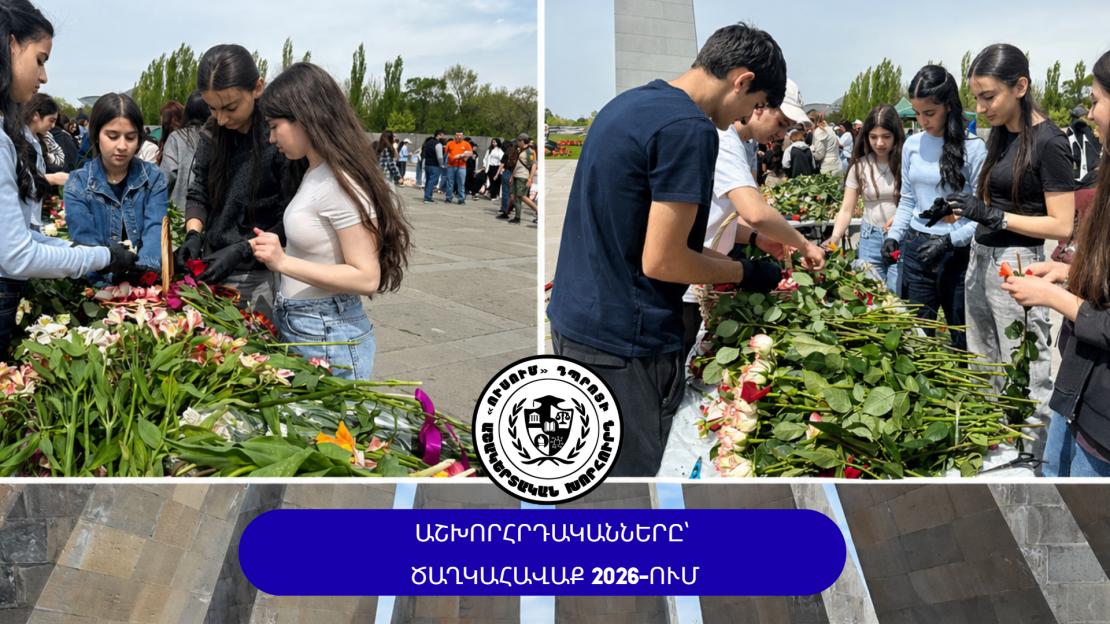
Giving new life to the flowers laid in memory of the innocent victims of the Armenian Genocide at the Tsitsernakaberd Memorial—this is the core purpose of the annual “Flower Gathering” initiative, organized with the support of the “Aralez” charitable NGO and the Foundation for the Preservation of Wildlife and Cultural Assets. This year as well, the initiative took place in an atmosphere of high participation and great interest.
Students from Usum School’s Student Council, who have been part of this initiative for six consecutive years, once again contributed to the implementation of this symbolic eco-spiritual project, joining around three thousand young participants.
The initiative, which has a history of more than a decade, has evolved over time. About ten years ago, the flowers laid around the Eternal Flame were burned. However, a new approach gradually emerged—one rooted not only in environmental awareness but also in deep symbolic meaning. Today, these flowers are recycled, given a “second life,” and continue their historical mission.
In a conversation with us, Student Council President S. Martirosyan noted that this year the initiative was more organized than ever. According to her, the young participants become more aware each year and better understand the significance of their involvement.
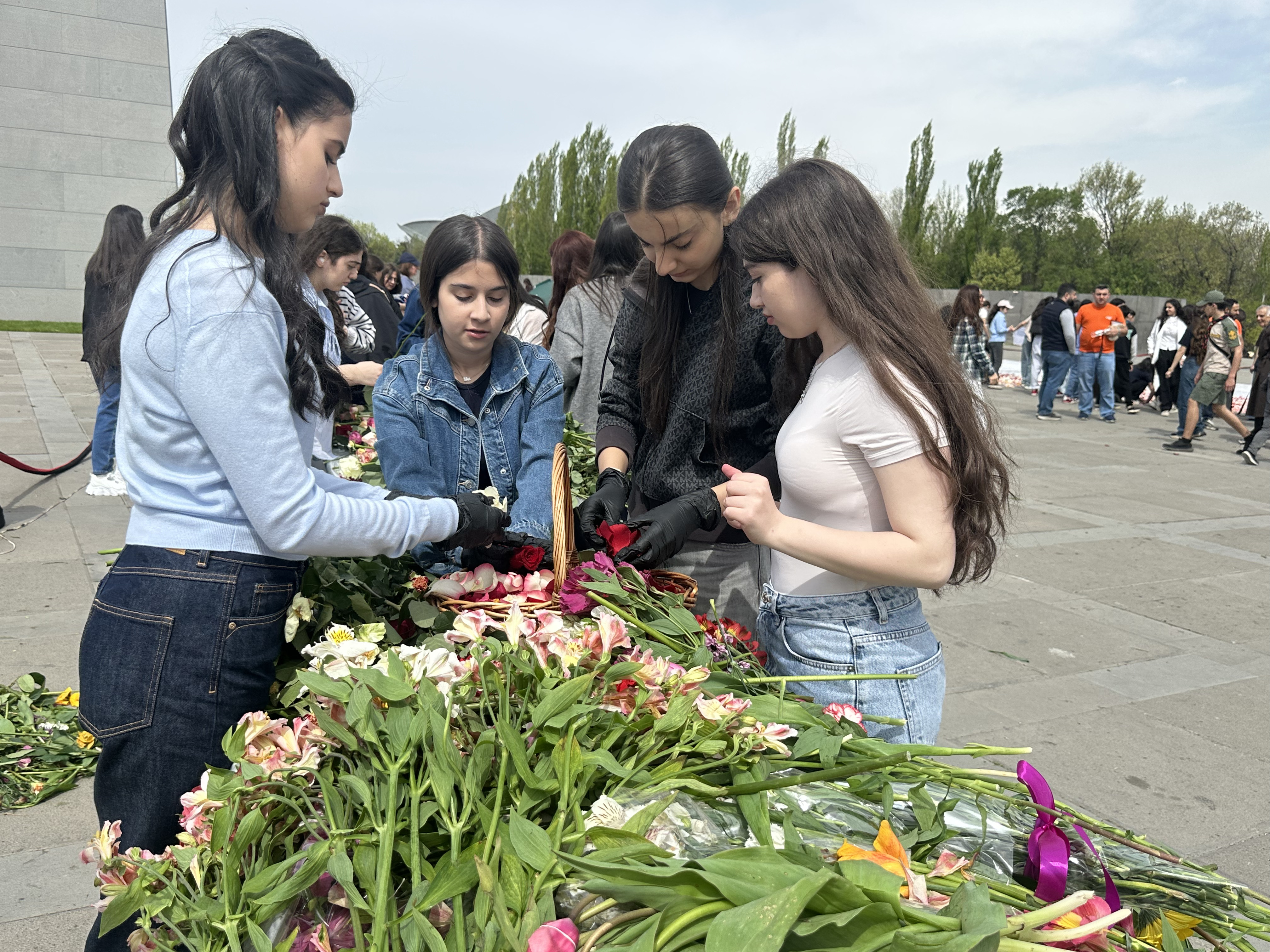
Throughout the day on April 24, from early morning until evening, the flowers placed at the Tsitsernakaberd Memorial are collected. Their petals are separated from the stems: the petals are used to create handmade recycled paper and candles, while the remaining parts are turned into compost. Alongside the Flower Gathering, the paper recycling process is carried out on-site.
Vice President of the Student Council, Narek Khachatryan, added that as committed participants of the initiative, they had the opportunity this year to learn about and take part in the recycling process, personally giving a second life to the flower petals.
According to the organizers, the paper made from these petals becomes a kind of “ambassador,” as handwritten messages about the Armenian Genocide are later inscribed on them and sent to different countries, helping spread historical memory worldwide.
The initiative continues to grow each year by incorporating new ideas. For the third year in a row, traditional Armenian apron ornaments are created using flower petals arranged on a red ribbon. Additionally, some rose stems are planted and, once they grow, are transferred and replanted at the Yerablur Military Pantheon, ensuring the continuity of memory in another symbolic space.
Thus, the “Flower Gathering” has become a modern tradition that unites remembrance, renewal, and environmental responsibility—transforming laid flowers into a symbol of enduring life.
To not think freely is to not think at all!