
When we talk about independence, we usually remember historical dates, state documents, referendums, national symbols, and political events. However, independence is not merely a topic found in history textbooks. It is an idea that is closely connected to everyday life—the ability to make choices, think independently, express one’s opinion, take responsibility, and respect the rights of others.
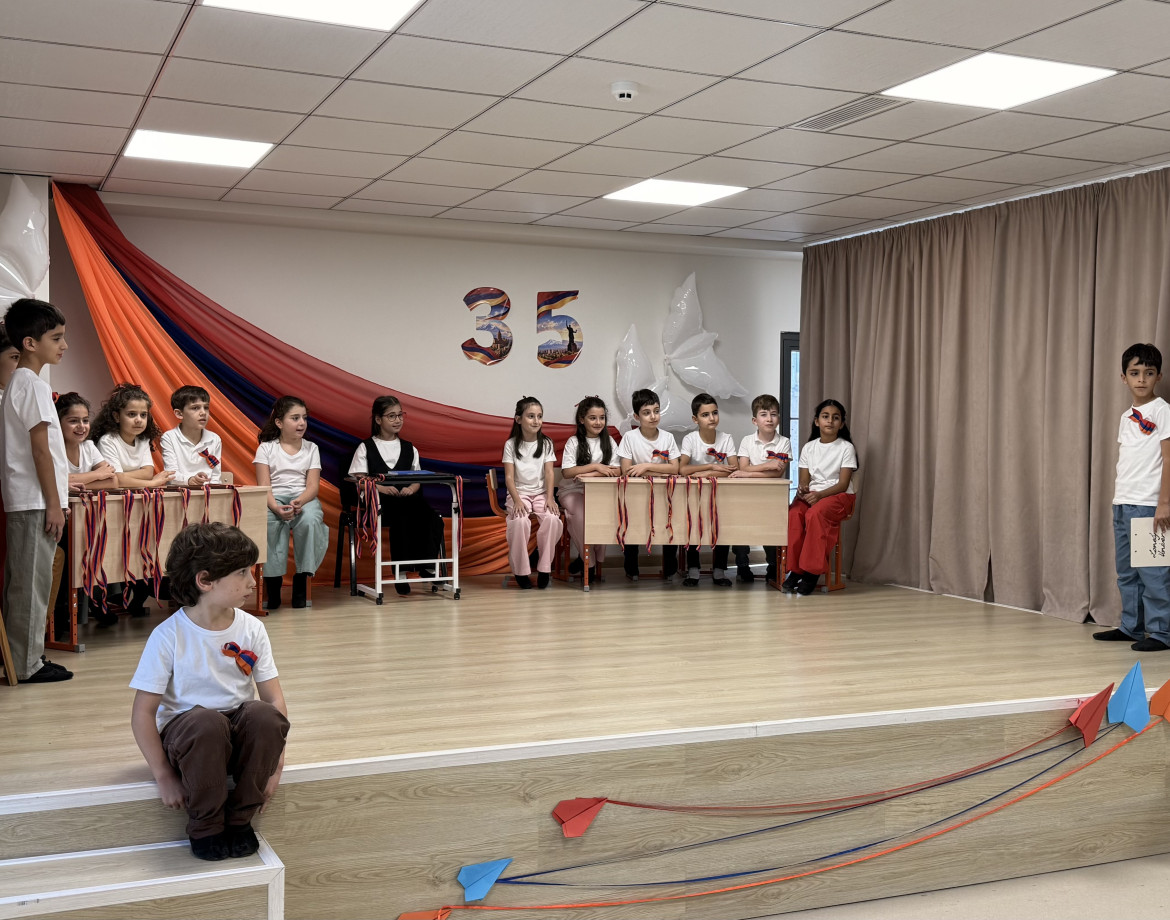
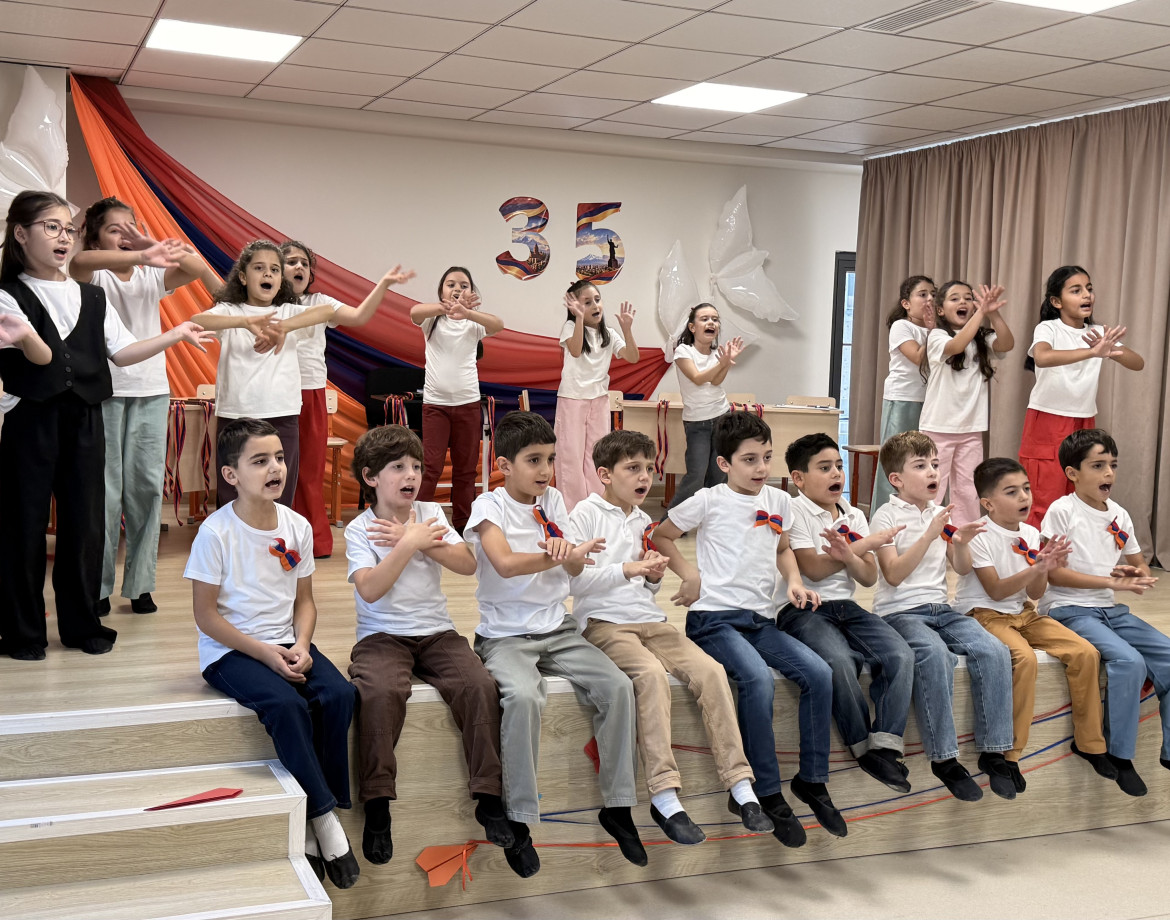
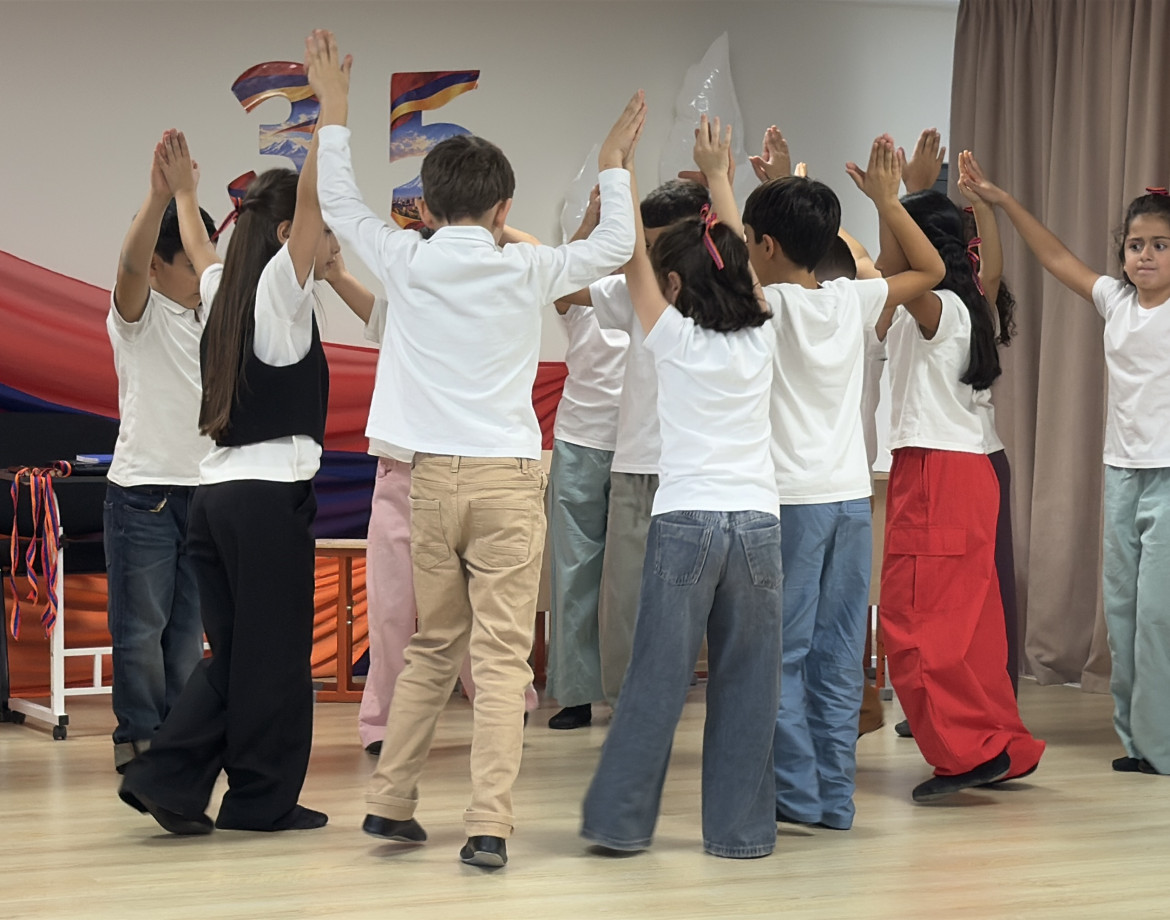
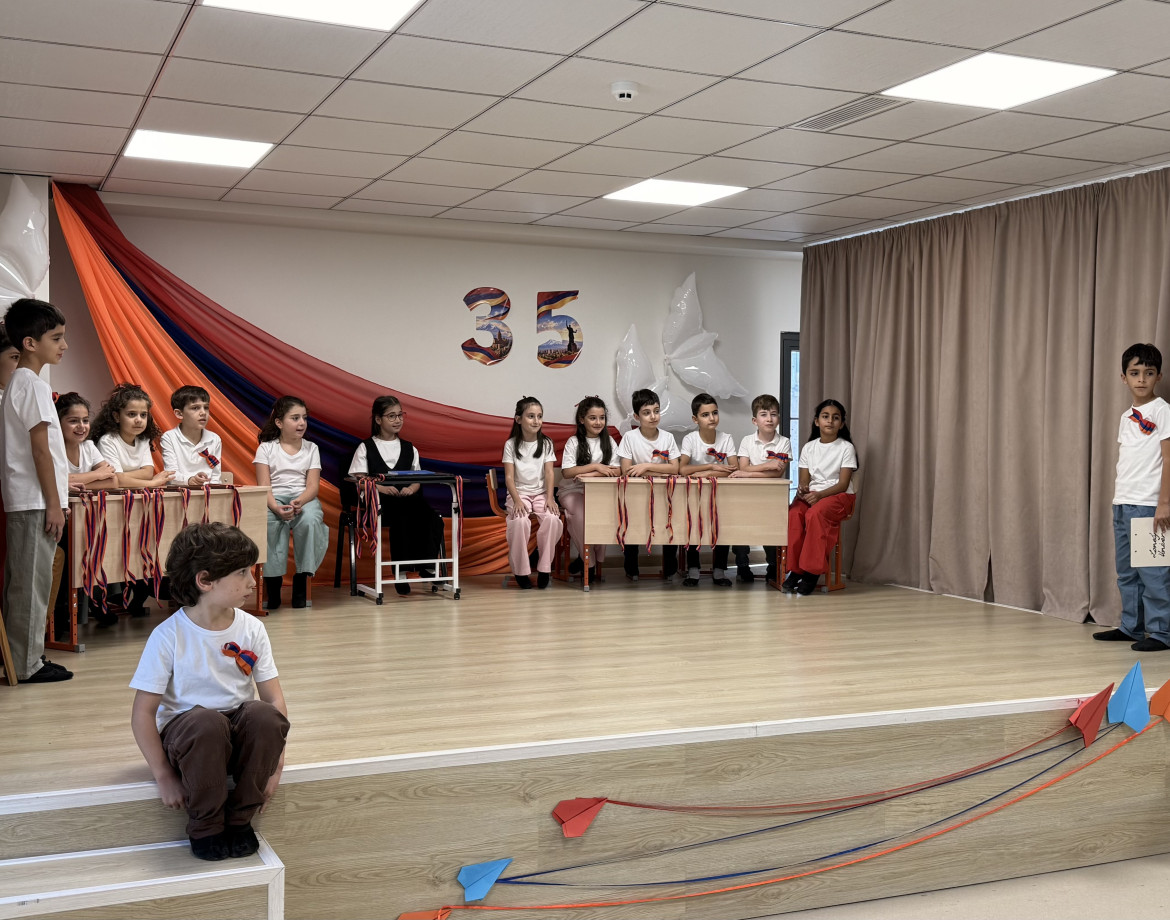
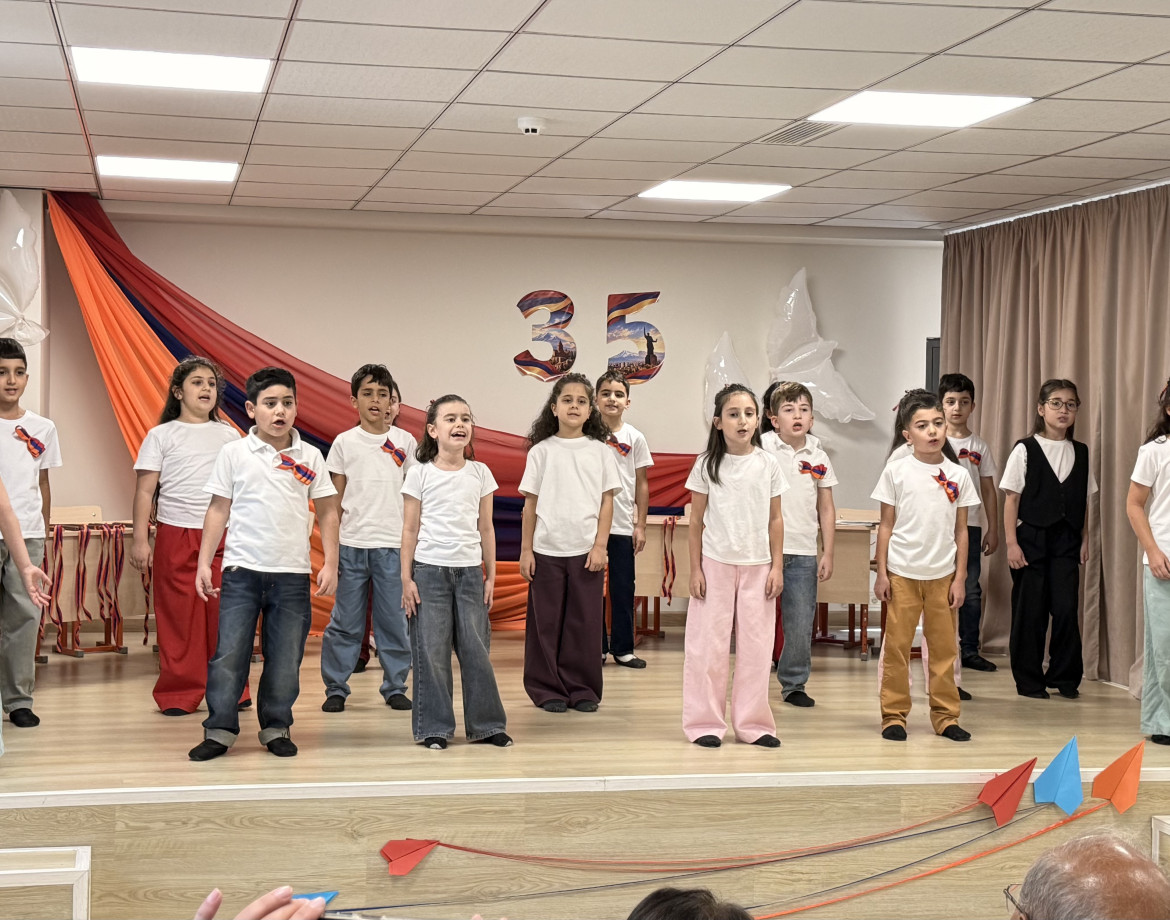
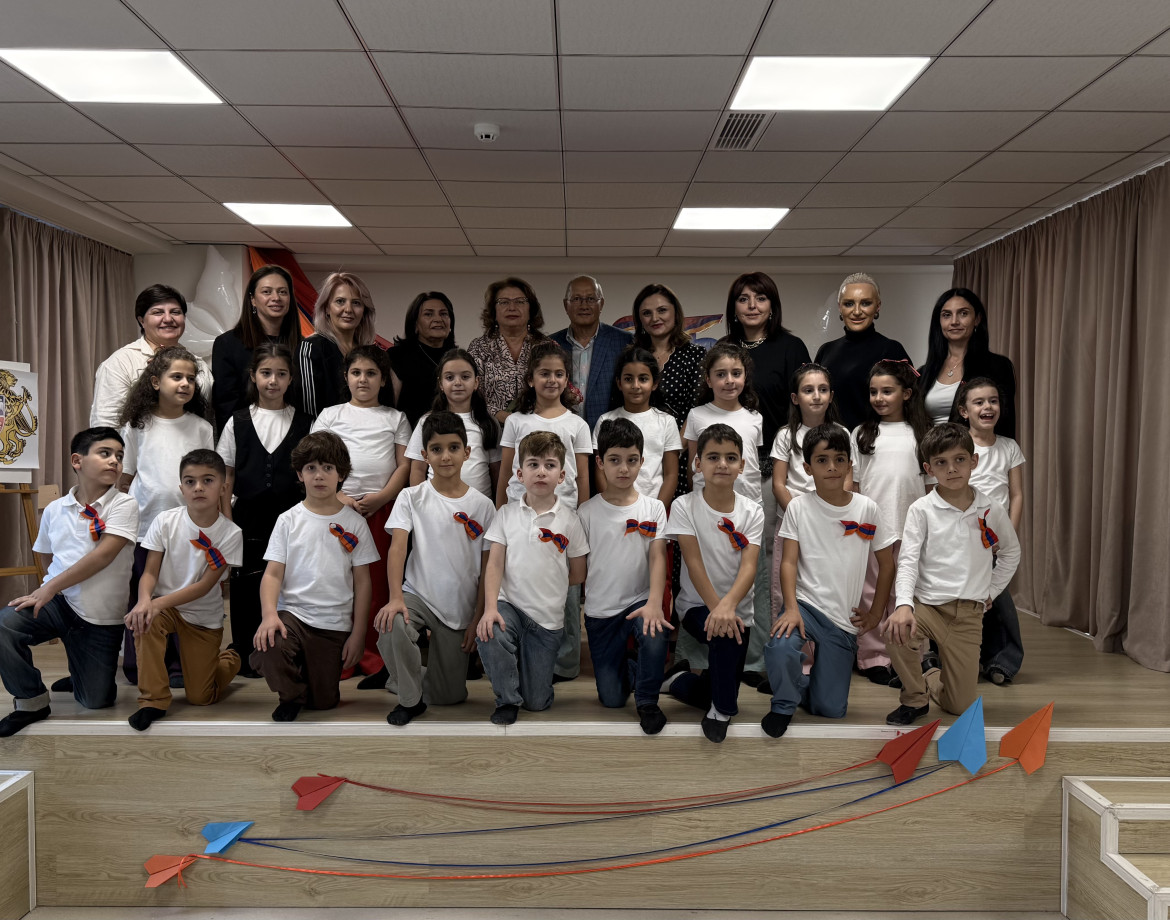
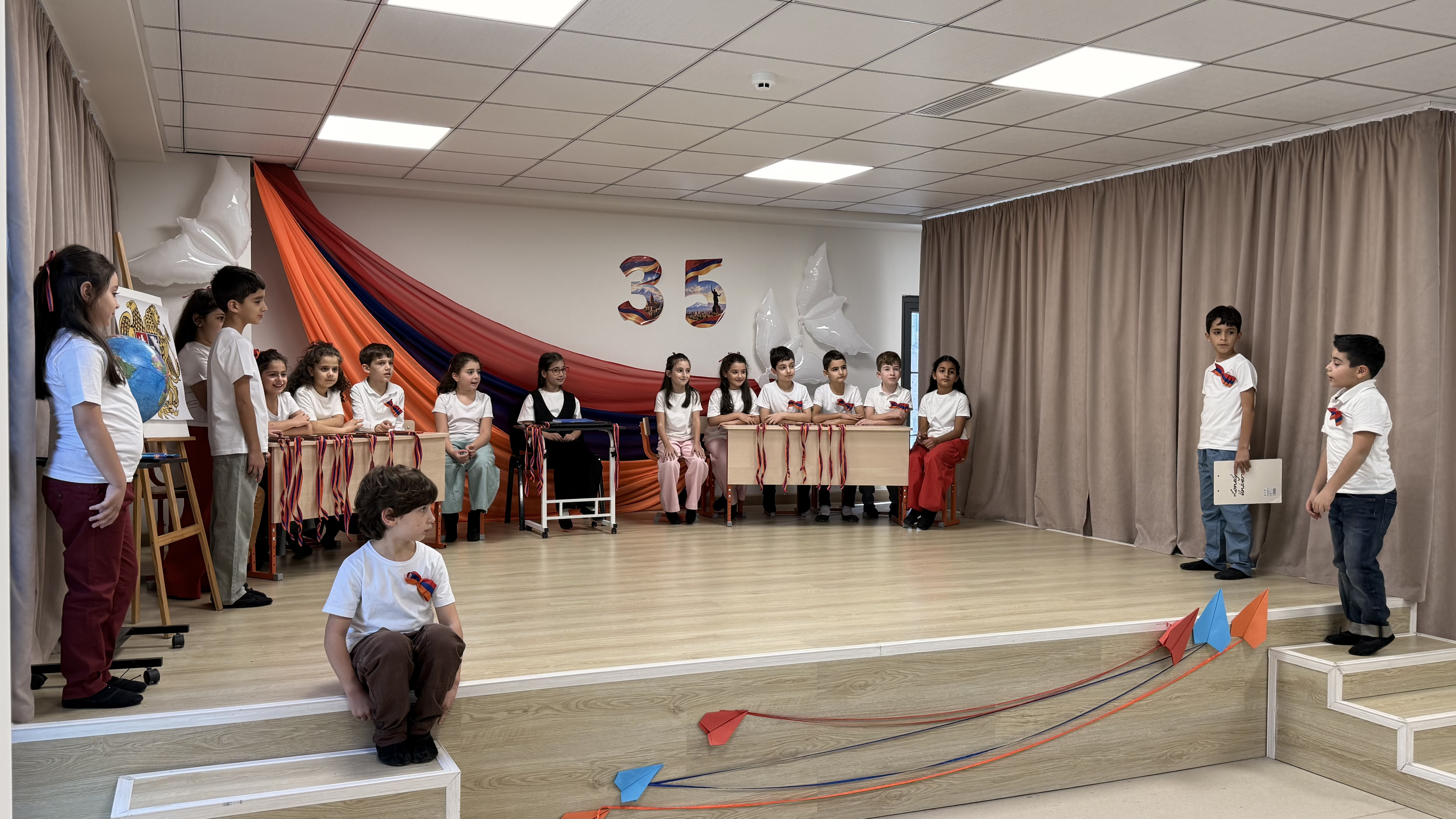
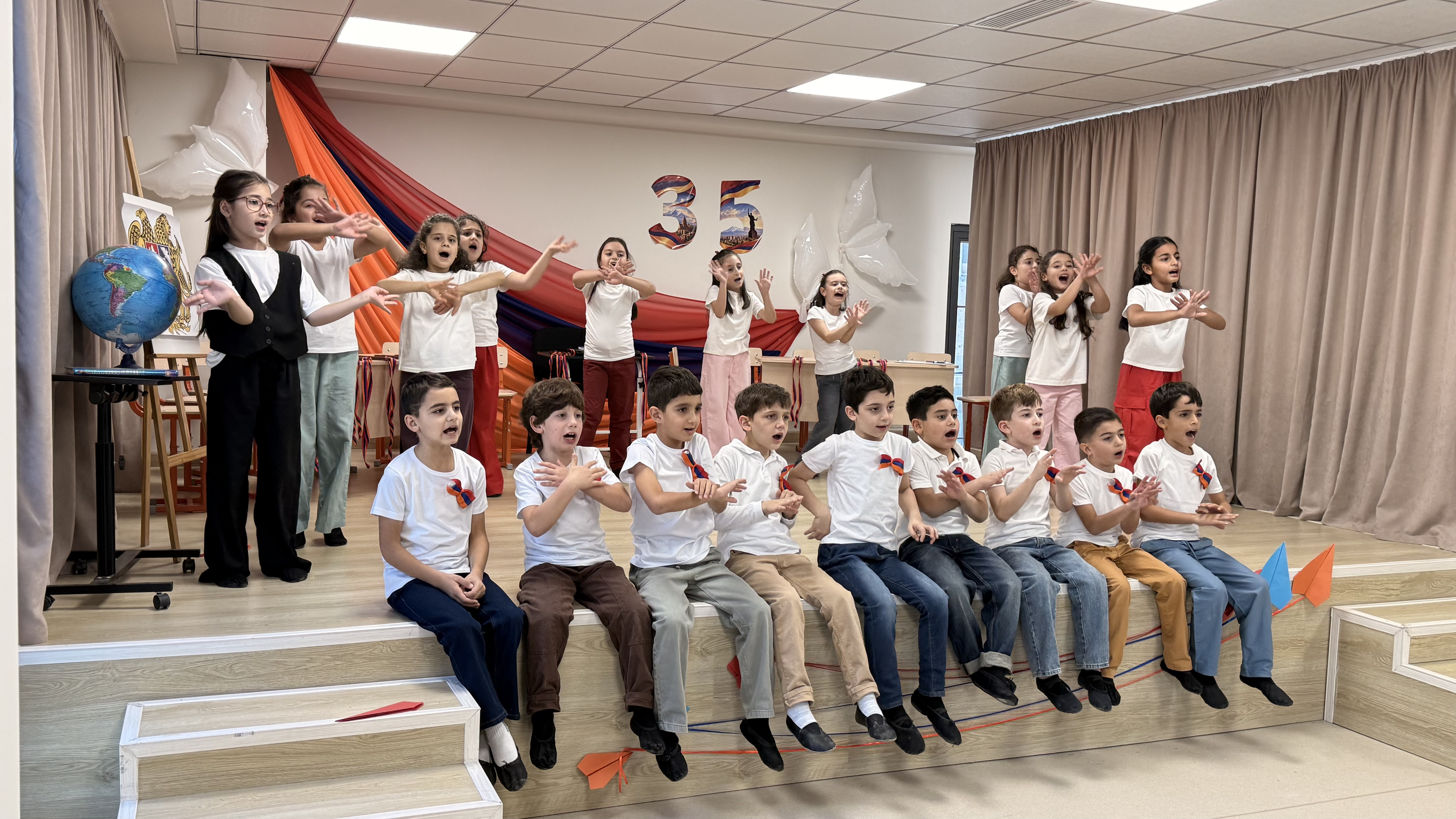
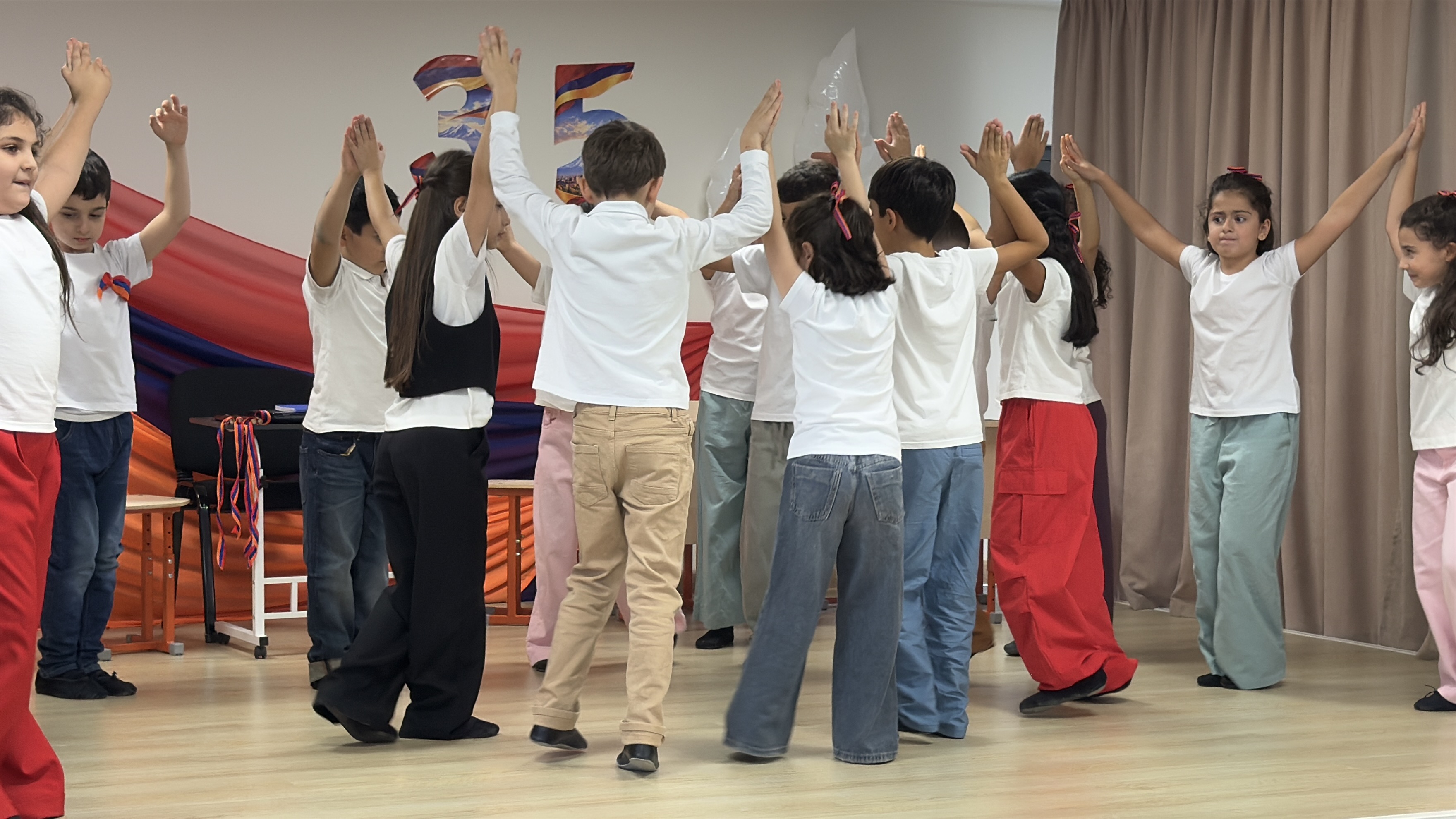
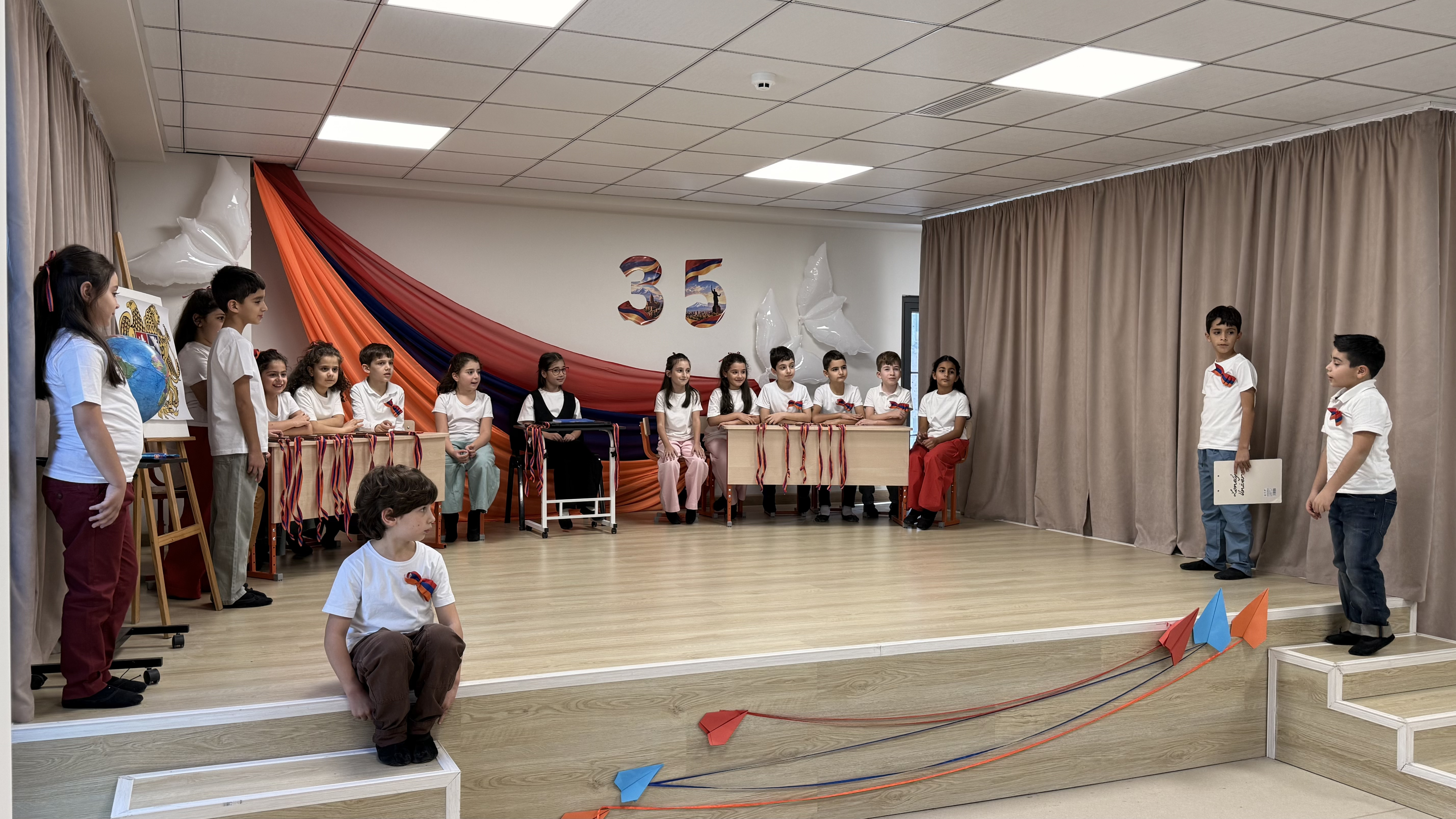
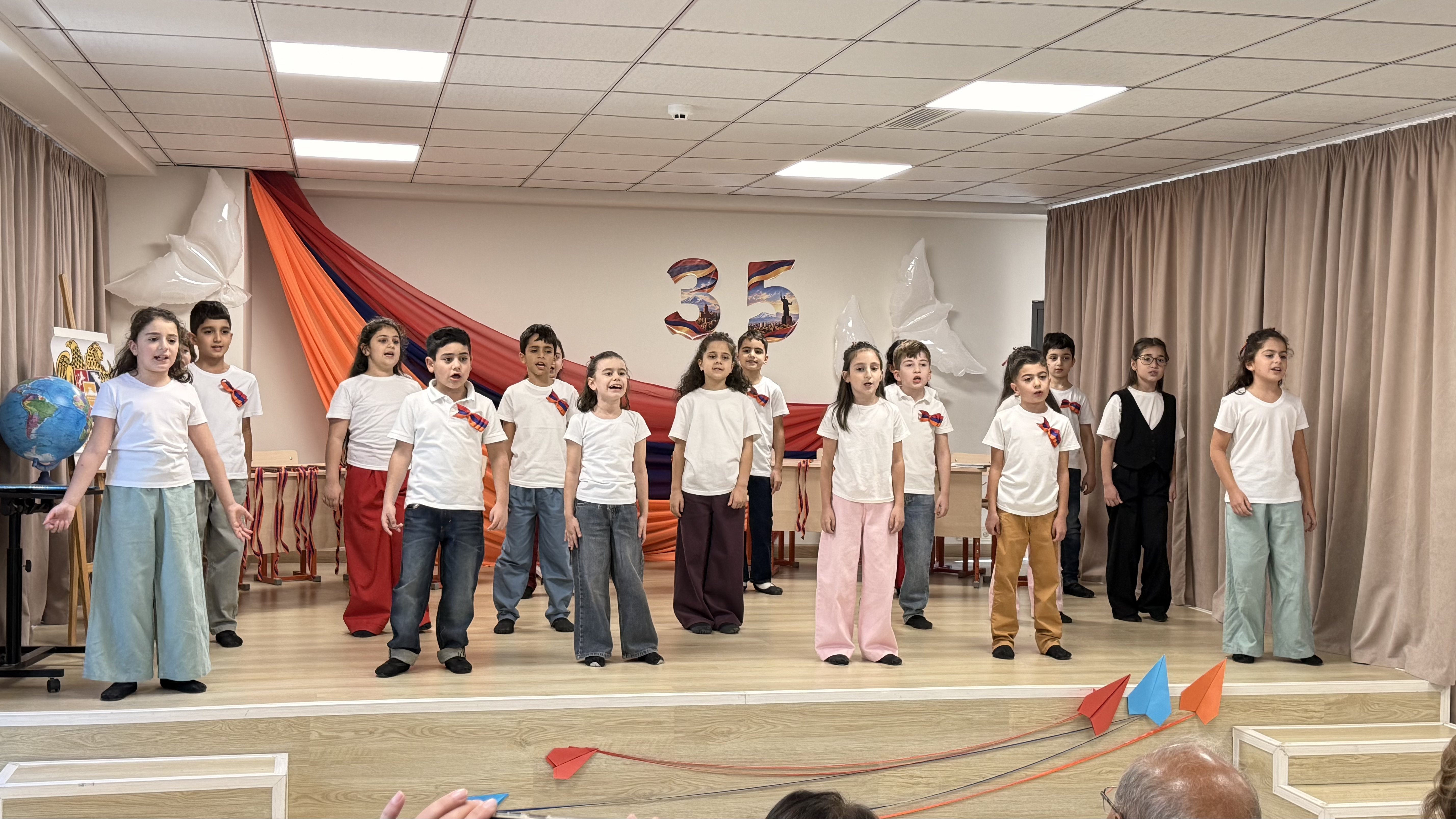
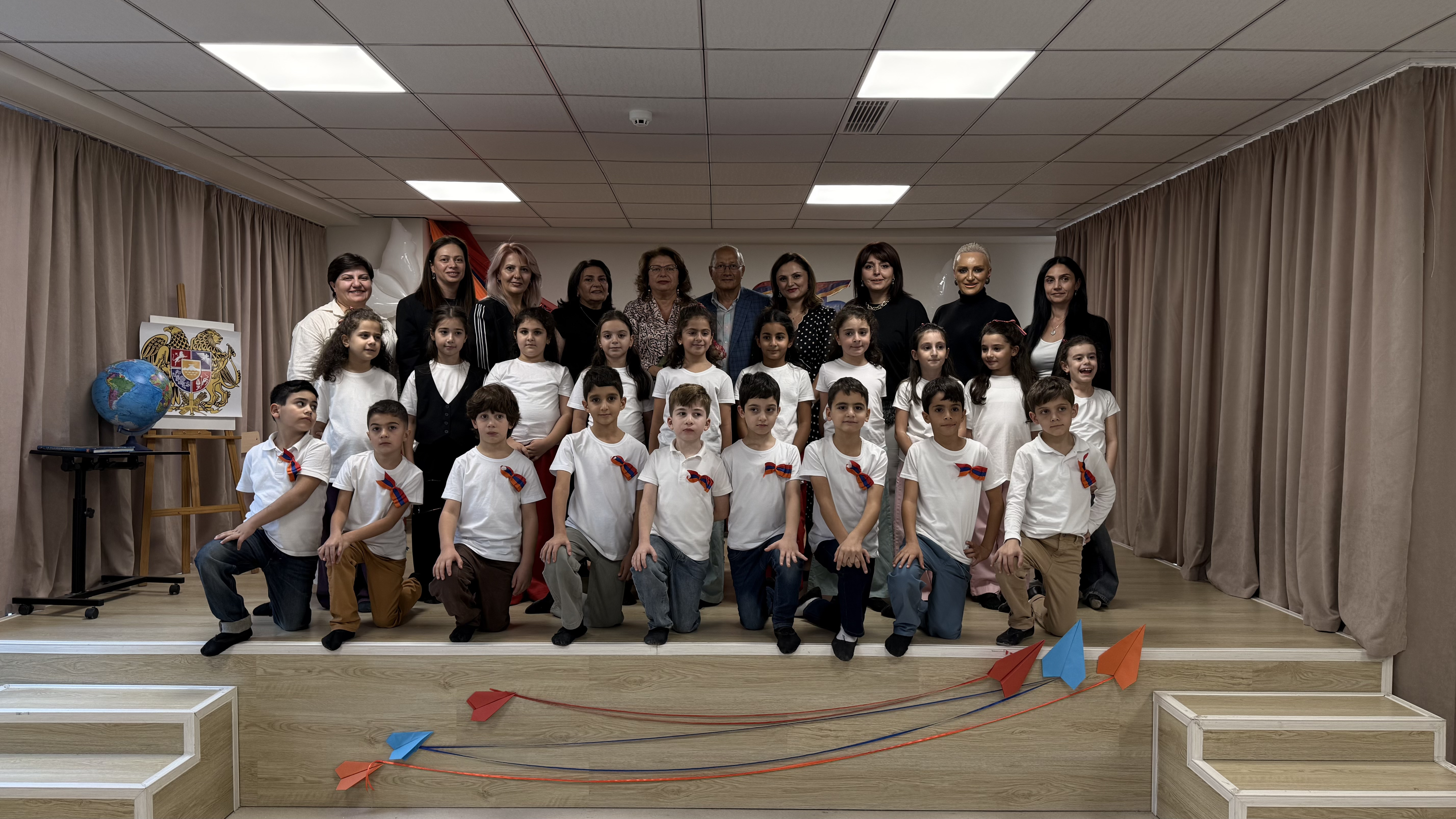
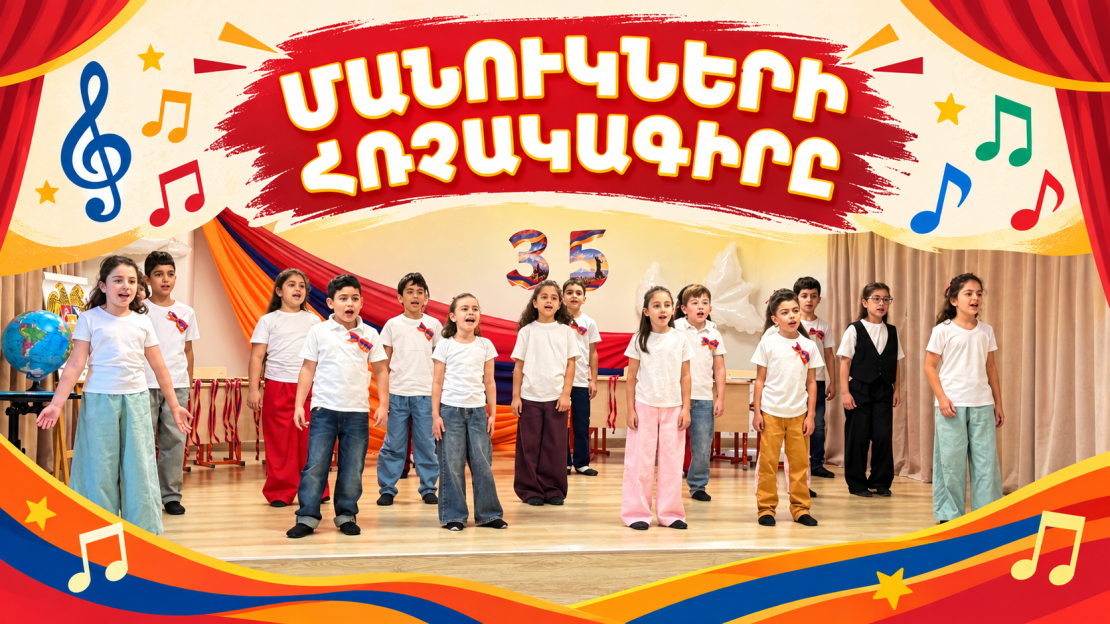
It was precisely from this perspective that the performance “The Declaration of the Planet of Childhood,” presented by the young students of USUM School, was created. Through play, imagination, questions, humor, and collaborative work, the children approached the idea of independence from the perspective of their own world.
The performance began with a children’s game. The students were playing games based on “freeing” one another, and what initially seemed like a simple childhood game gradually turned into an important question: why are so many children’s games built around the idea of freeing someone?
This question gave the children an opportunity to talk about freedom not as an abstract concept, but as one of the fundamental aspirations of both individuals and peoples. Throughout Armenian history, the ideas of freedom and self-determination have been deeply intertwined with national life. The desire to be the owner of one’s own land, home, culture, and future has taken different forms throughout history, but the fundamental aspiration has remained the same.
In the performance, however, freedom was not limited to the simple idea of “doing whatever you want.” The children gradually came to understand that freedom is also the right to think, make choices, have an opinion, and express it. At the same time, every right comes with responsibility. One person’s freedom cannot infringe upon another person’s freedom.
This idea is particularly important from the perspective of civic education. A child should not only know that they have rights, but also understand how to exercise those rights responsibly, how to listen to others, accept different opinions, and protect not only their own rights but also the rights of others.
The conversation about freedom naturally led the performance to the topic of independence. The children tried to understand how Armenia became independent and what it means to be an independent state.
On August 23, 1990, the Supreme Council of Armenia adopted the “Declaration of Independence of Armenia.” It became one of the most important legal and political steps toward the restoration of Armenia’s independent statehood. The next decisive event was the referendum held on September 21, 1991. The overwhelming majority of Armenian citizens voted in favor of independence, and on September 23, based on the results of the referendum, the Supreme Council declared Armenia an independent state.
In the performance, these historical events were presented in language accessible to children. Independence was compared to a person growing up and becoming self-reliant: just as an individual learns to make decisions independently, a state also has the right to determine its future and establish its own laws and state institutions.
This historical reflection was important because, for the children, independence ceased to be simply “September 21.” It became an expression of the people’s choice, responsibility, and continuous work.
As part of the theme of independence, the children also presented Armenia’s national symbols—the flag, the coat of arms, and the national anthem. The colors of the flag were presented as symbols of the Armenian people’s struggle, aspiration for independence, desire to live in peace, creativity, and diligence. The coat of arms was viewed as a representation of Armenia’s historical statehood and identity, bringing together symbols that bear witness to Armenian history and identity.
At the center of the performance was perhaps the most important question: “What kind of Armenia do we want to see in the future?”
The first answers were simple: strong, prosperous, and beautiful. But the discussion soon moved toward values.
The children wanted a peaceful Armenia. Here, peace was not understood merely as the absence of war. The students believed that a country is peaceful when children can go to school without fear, when different opinions do not turn into hostility, and when problems can be resolved through dialogue.
The idea of a clean Armenia was presented in the same way. A clean country is not simply one with clean streets. It is also about caring for nature, conserving water, protecting trees, taking responsibility for clean air, and, most importantly, maintaining a respectful attitude toward one another.
Thus, environmental cleanliness was connected with inner culture. Change begins with us—with our everyday small actions.
Another important emphasis of the performance was the idea of solidarity and collective effort. With humor, the children pointed out that in teamwork no one should say, “I’m not doing it,” but no one should say, “I’ll do everything” either.
This simple dialogue actually reflects one of the important principles of civic society: a common result is possible only through cooperation.
Unity does not mean that everyone must have the same opinion. On the contrary, it means bringing together different people, ideas, and abilities around a common goal.
At the end of the performance, the children presented their declaration. They announced that they wanted to live in a peaceful, clean, and united Armenia—a country where people can dream, learn, create, and face the future without fear.
Yet the most important idea came at the end: this Armenia is not merely a dream. It is also a responsibility.
The children called on adults not to limit patriotism to words, but to demonstrate it through their own example. They called for peace not only to be dreamed of, but to be created through listening, respect, and forgiveness.
And, most importantly, they asked adults not to tell them that they are still too young.
Because they may be small today, but tomorrow’s Armenia will grow in their hands.
To not think freely is to not think at all!