March 5, although not officially marked in our national calendar as a day of pride, has nevertheless become one. At the foundations of the Armenian Army stood a statesman and military leader, a devoted son of the nation, a Commander, the Minister of Defense of the Republic of Armenia — this list could be extended endlessly. Yet for Vazgen Sargsyan, the most important title was simply being Armenian.
“I am not God, I am a soldier, I am Armenian, I… they will not understand. That is why I do not say more. Every person must answer before himself who he is,” the Commander once said.
Vazgen Sargsyan’s legacy is defined by organizational determination, a profound sense of responsibility, and strong state-minded thinking. He viewed the army not merely as a military force, but as a pillar of statehood, a guarantor of national identity, and a source of pride. And so, what better way is there to honor a great son of the nation than by once again glorifying the Armenian Army?
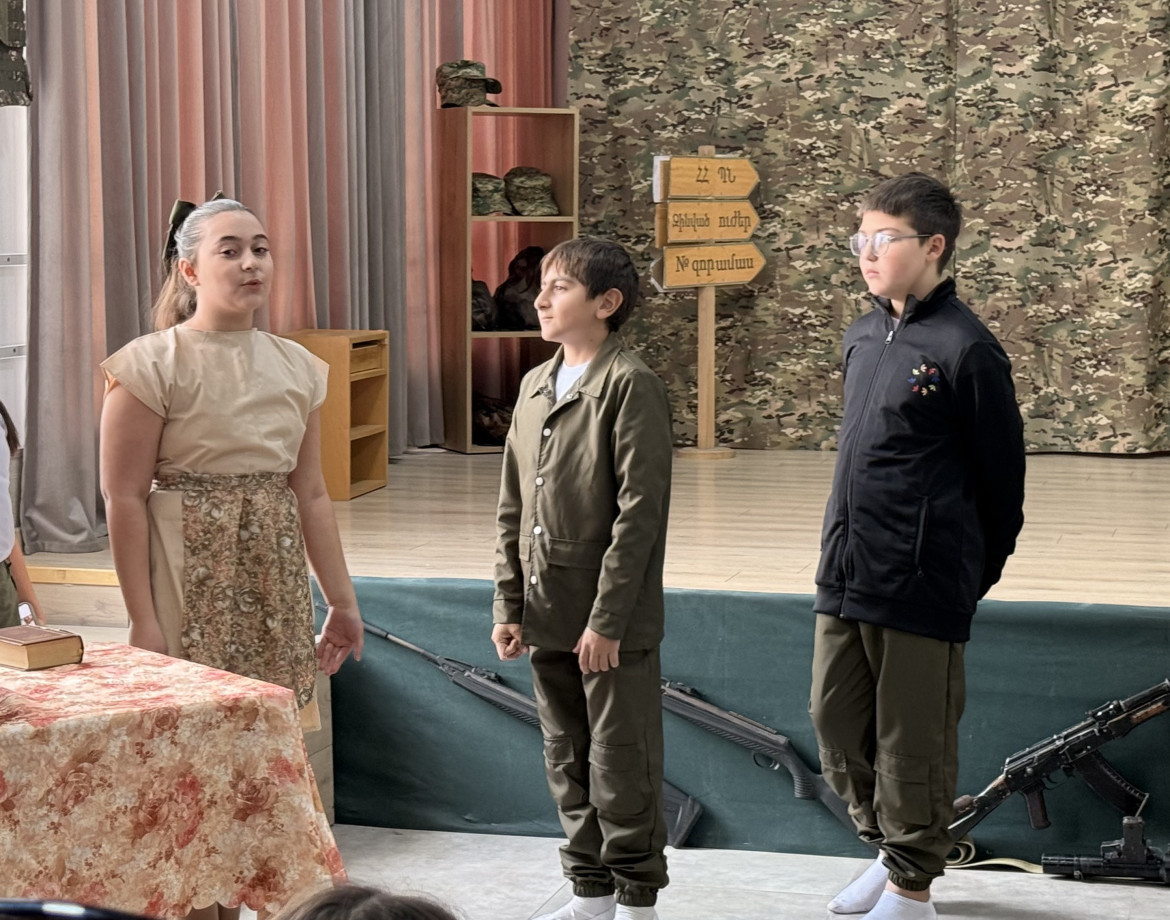
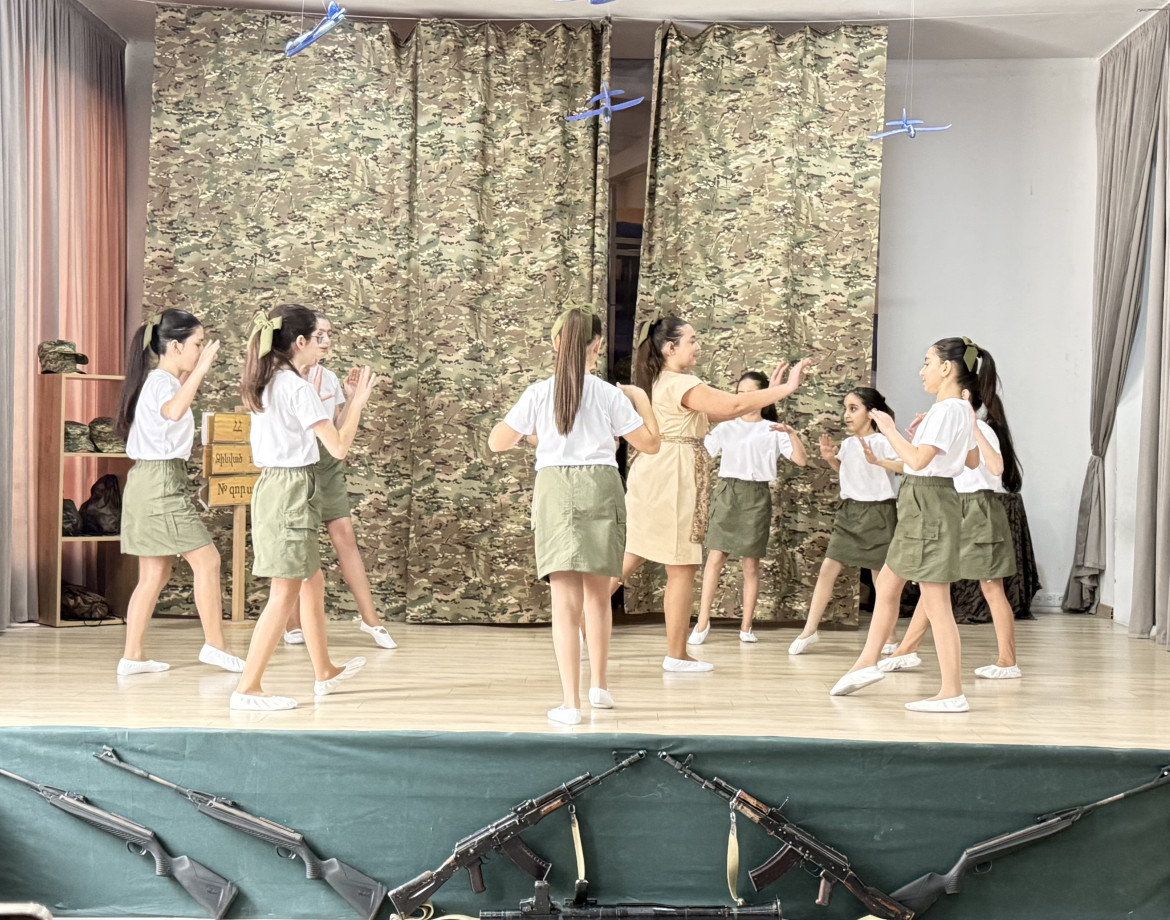
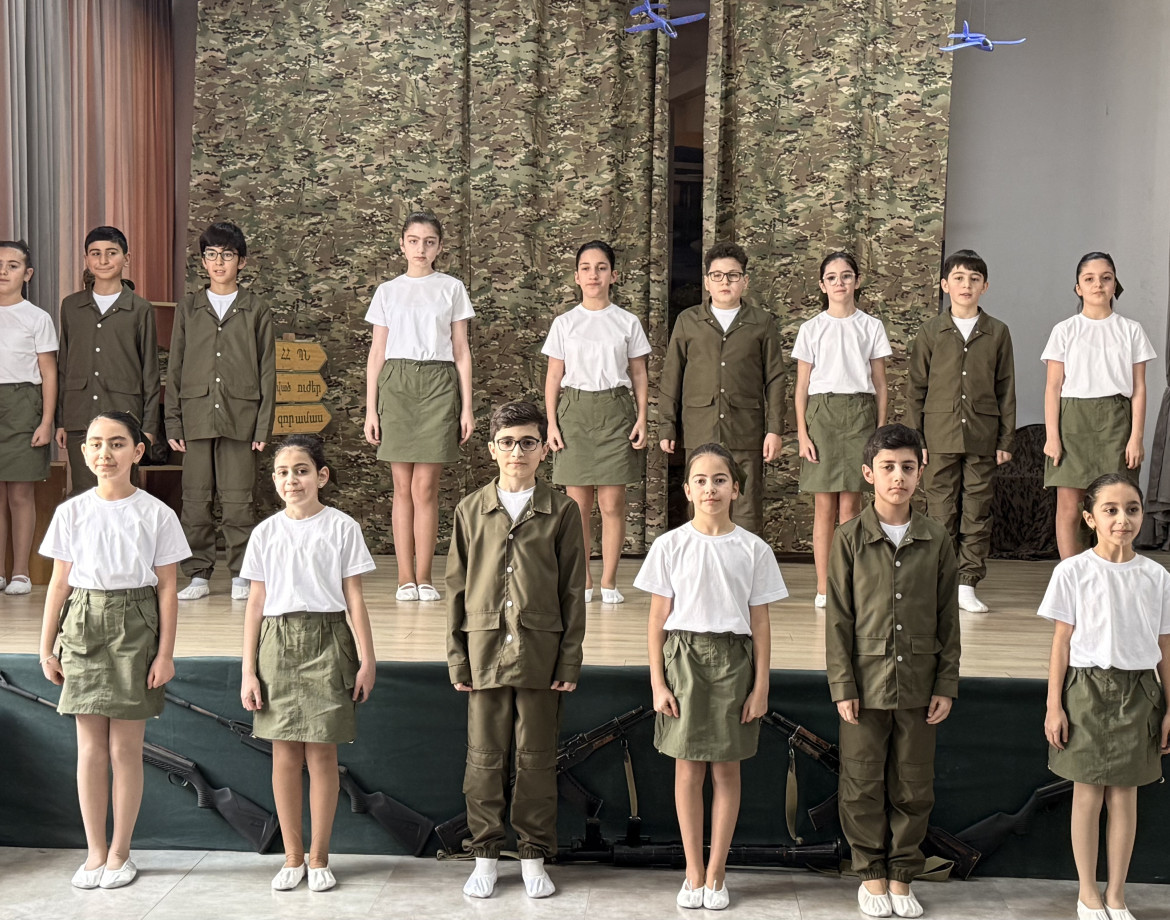
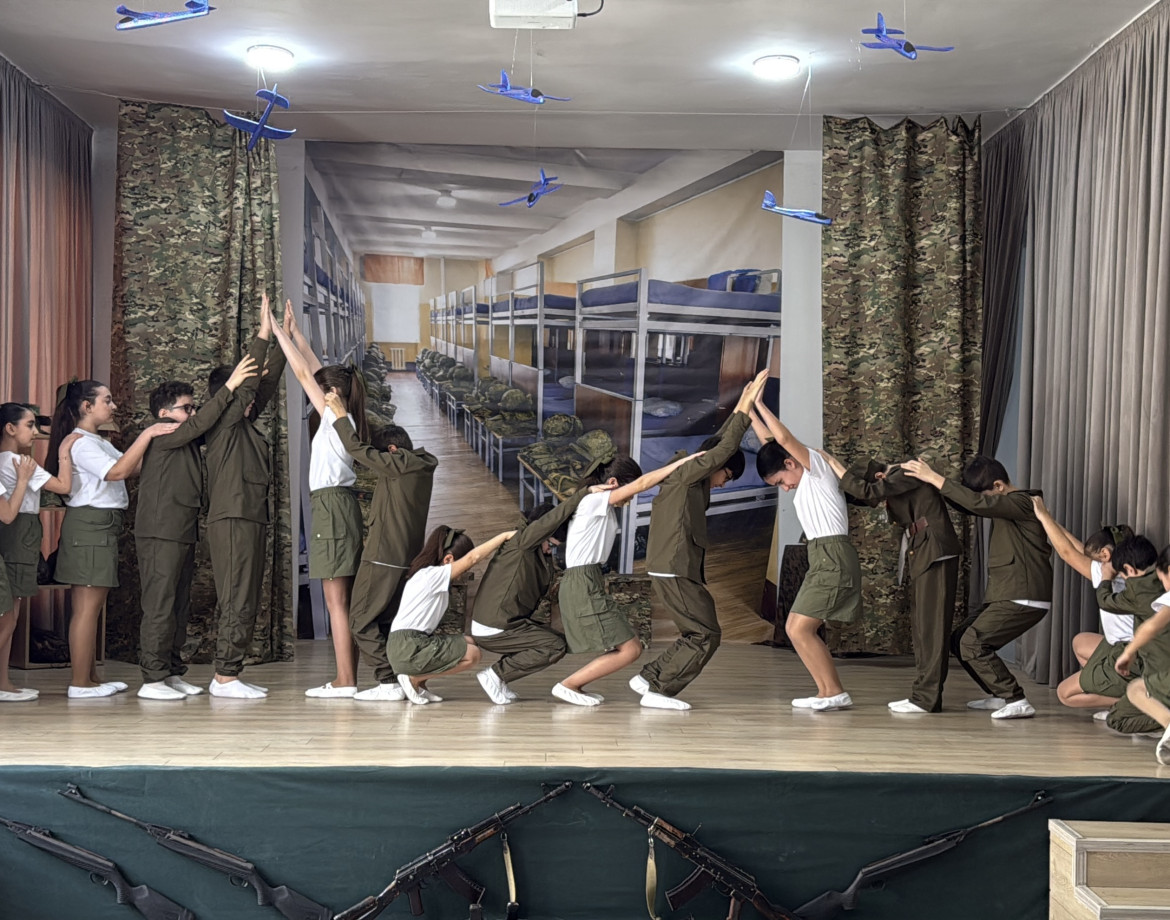
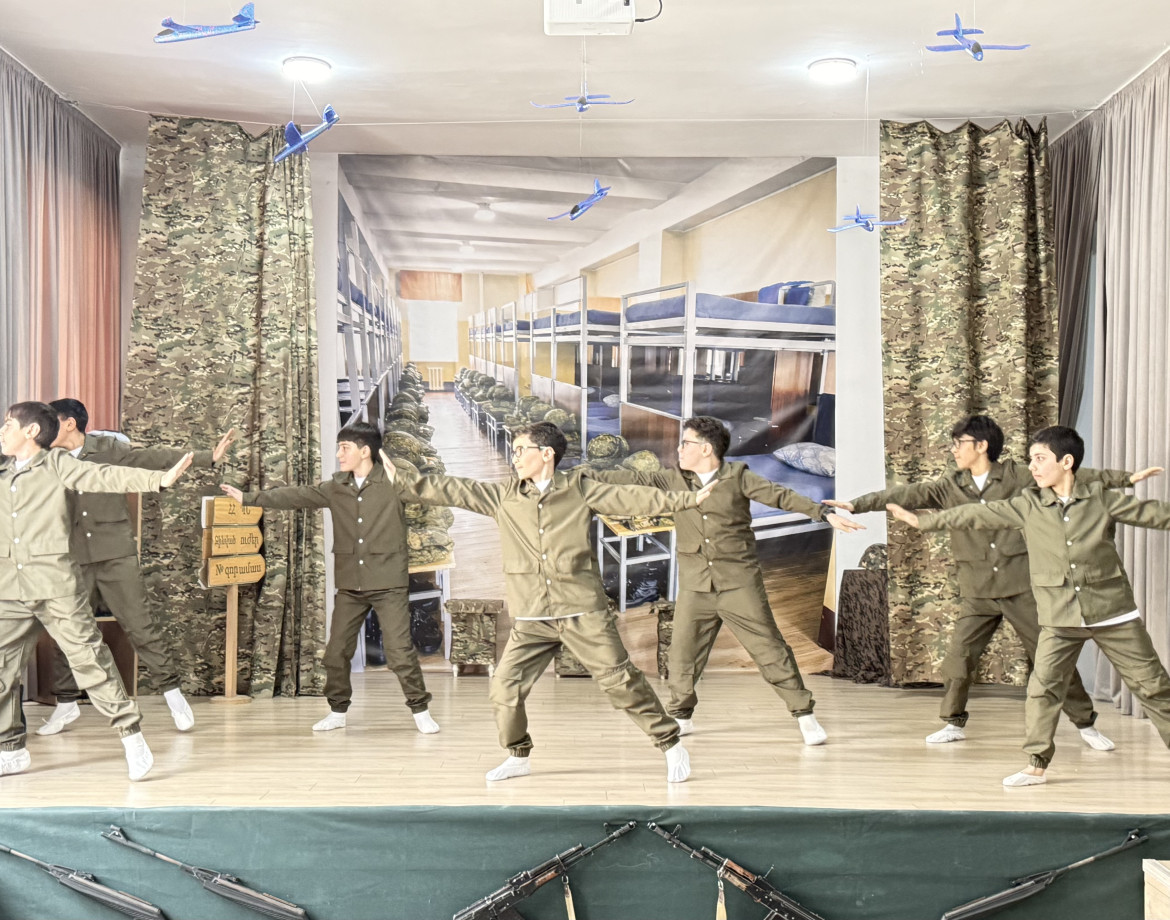
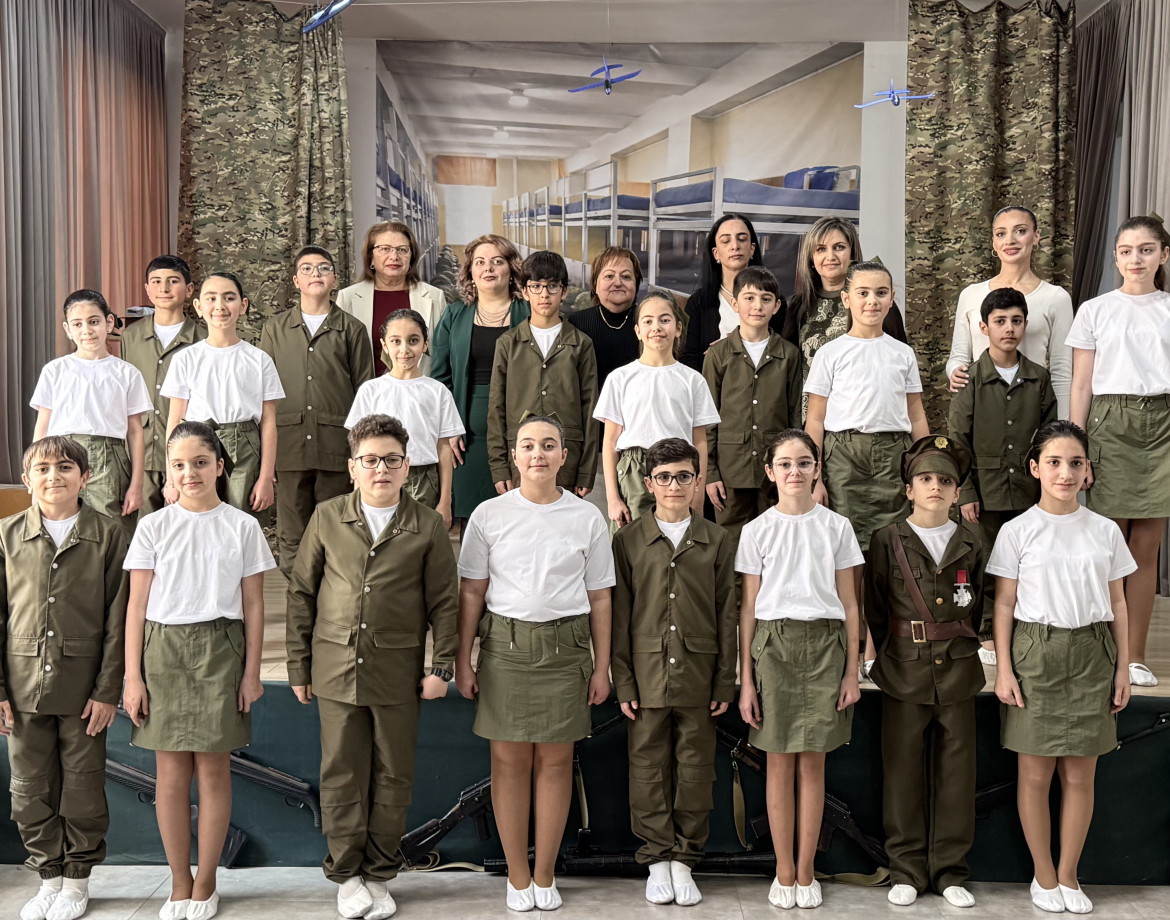
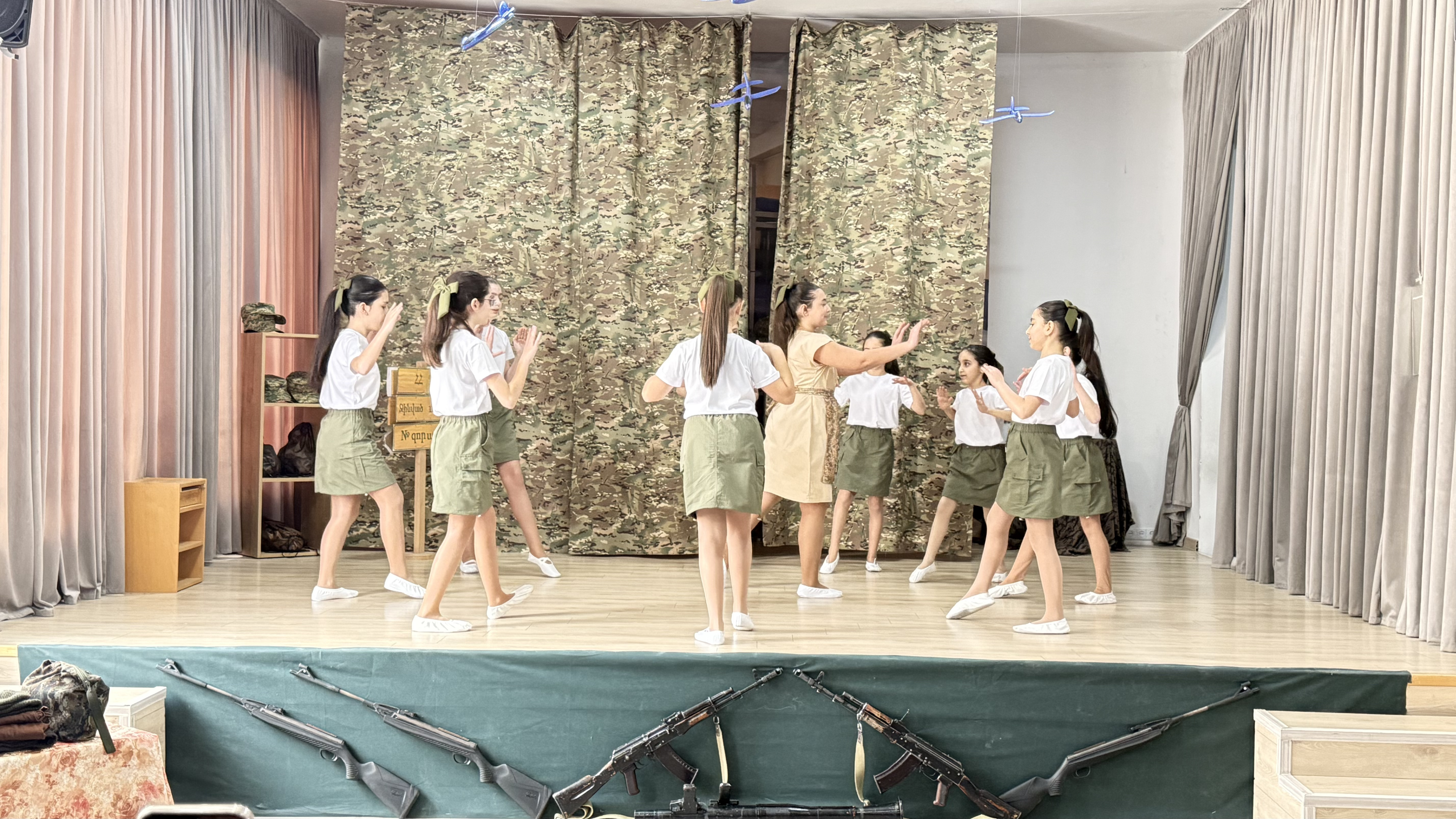
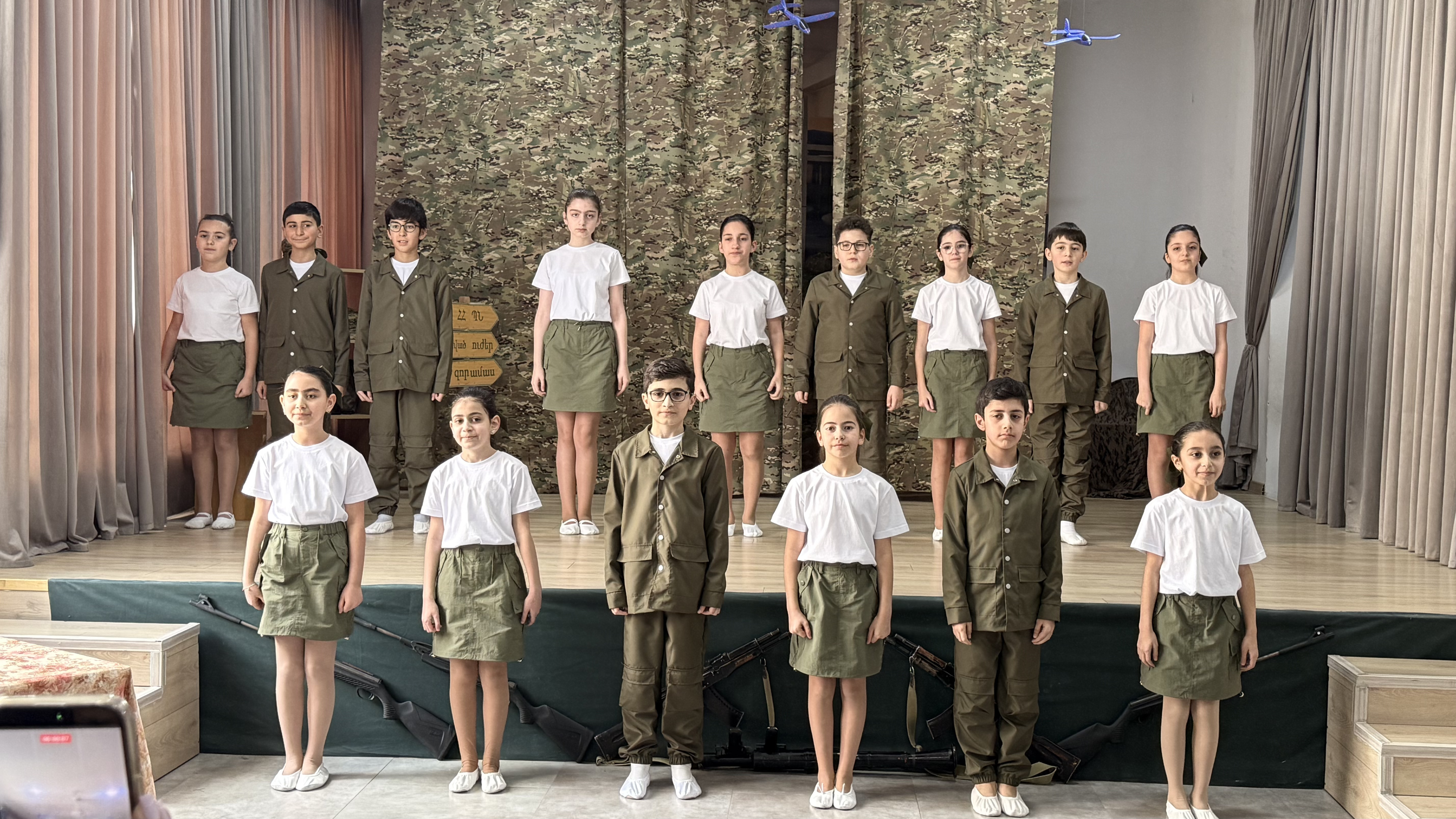
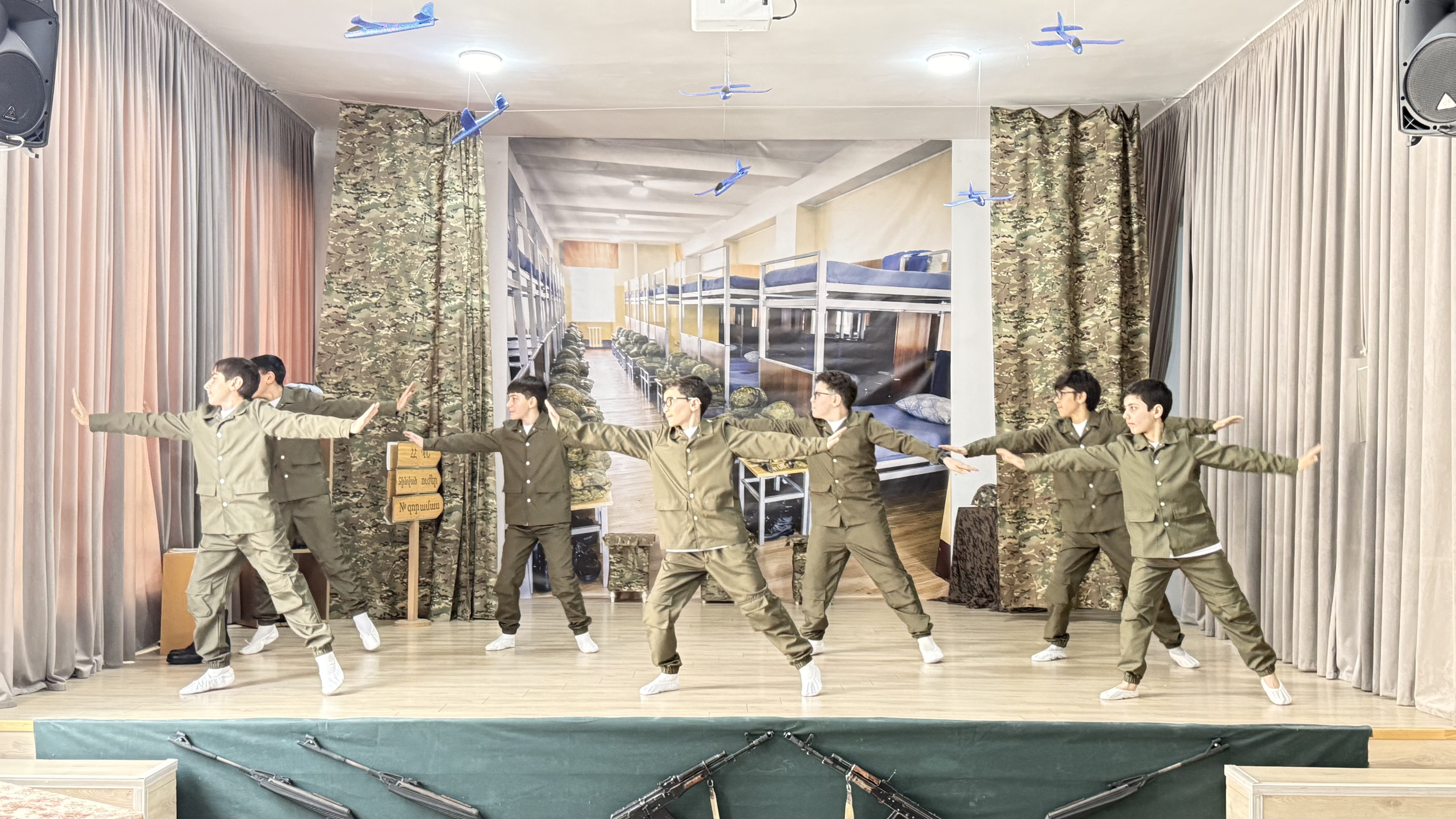
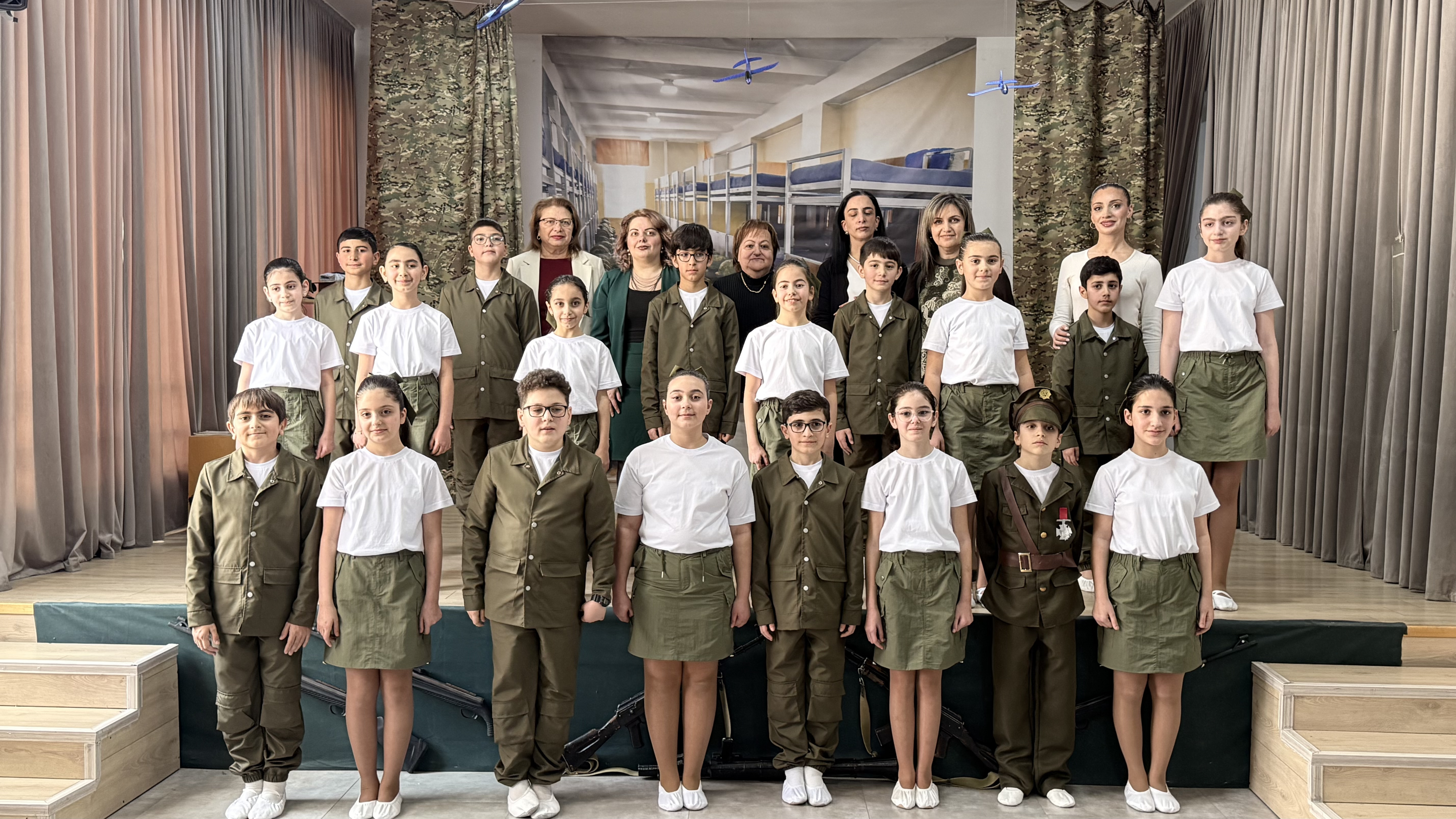
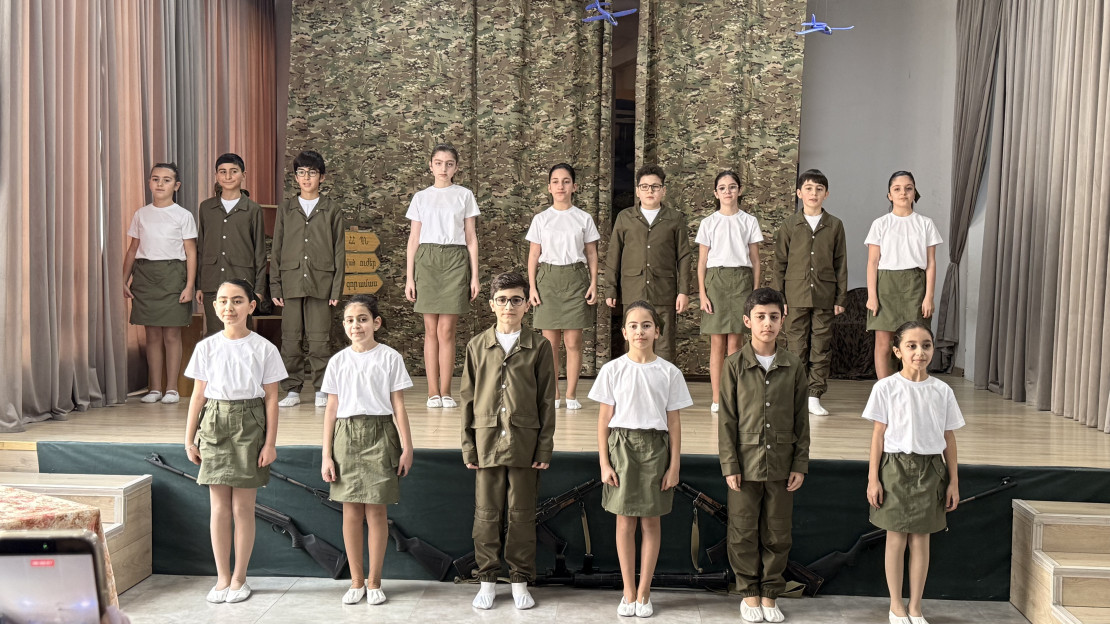
With this very purpose, today the fifth graders of “Usum” School took the stage to “call upon the living.” The performance was not only an artistic presentation but also a thoughtful message about generational responsibility, historical memory, and the conscious choice to live with dignity.
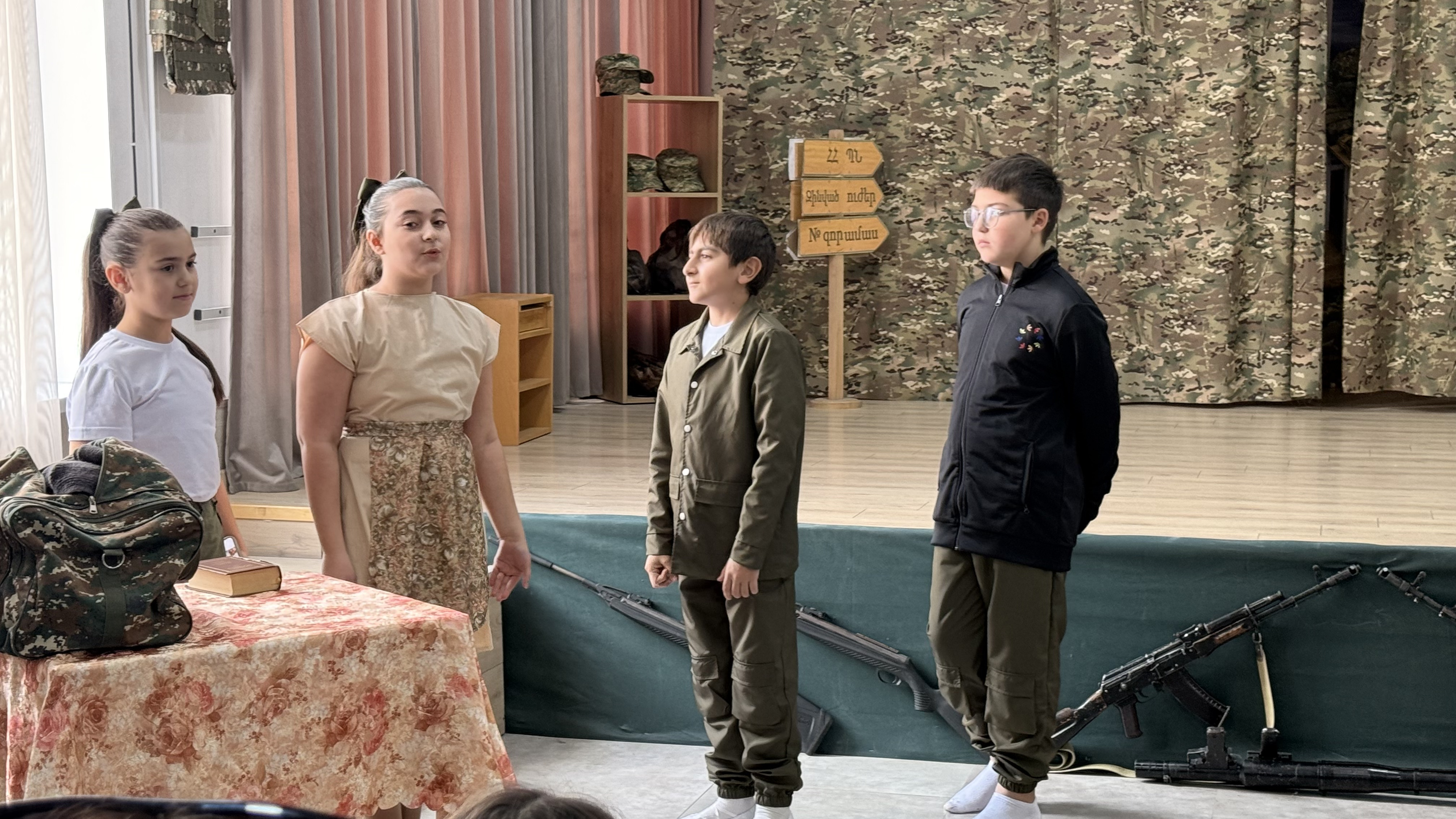
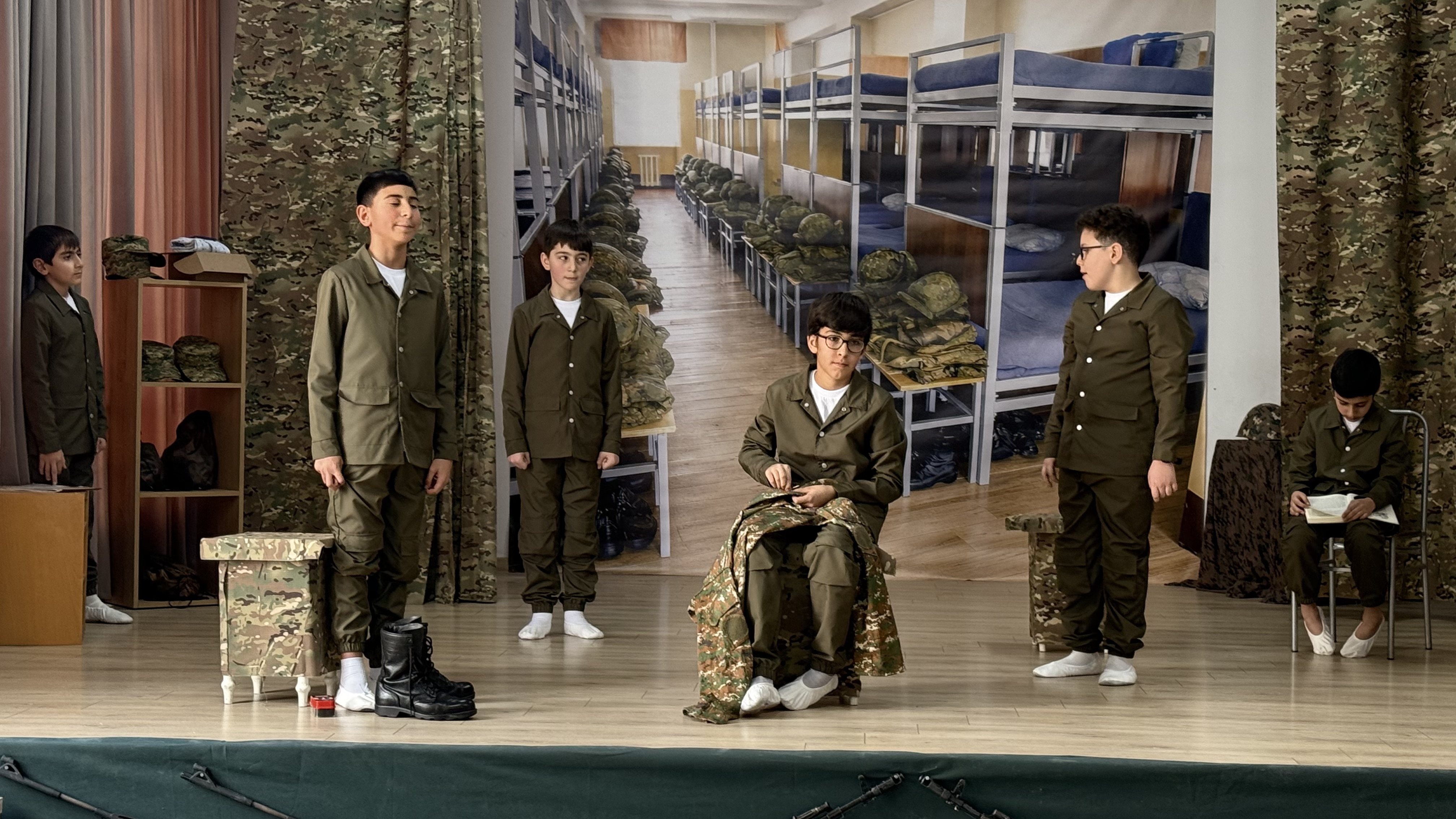
Opening with a scene of a family sending their beloved son to the army, the performance reflected a traditional Armenian household, where warm, sometimes humorous, sometimes emotional dialogue clearly conveyed the central idea: the army is not merely a place to become a hero, but a place to serve responsibly and return home alive.
The symbolic name of the main character — Hayk — was especially meaningful. In his reflections, military service was presented as a path toward maturity, a duty accepted with inner peace. His character embodied the young man who consciously chooses service as a school of life.
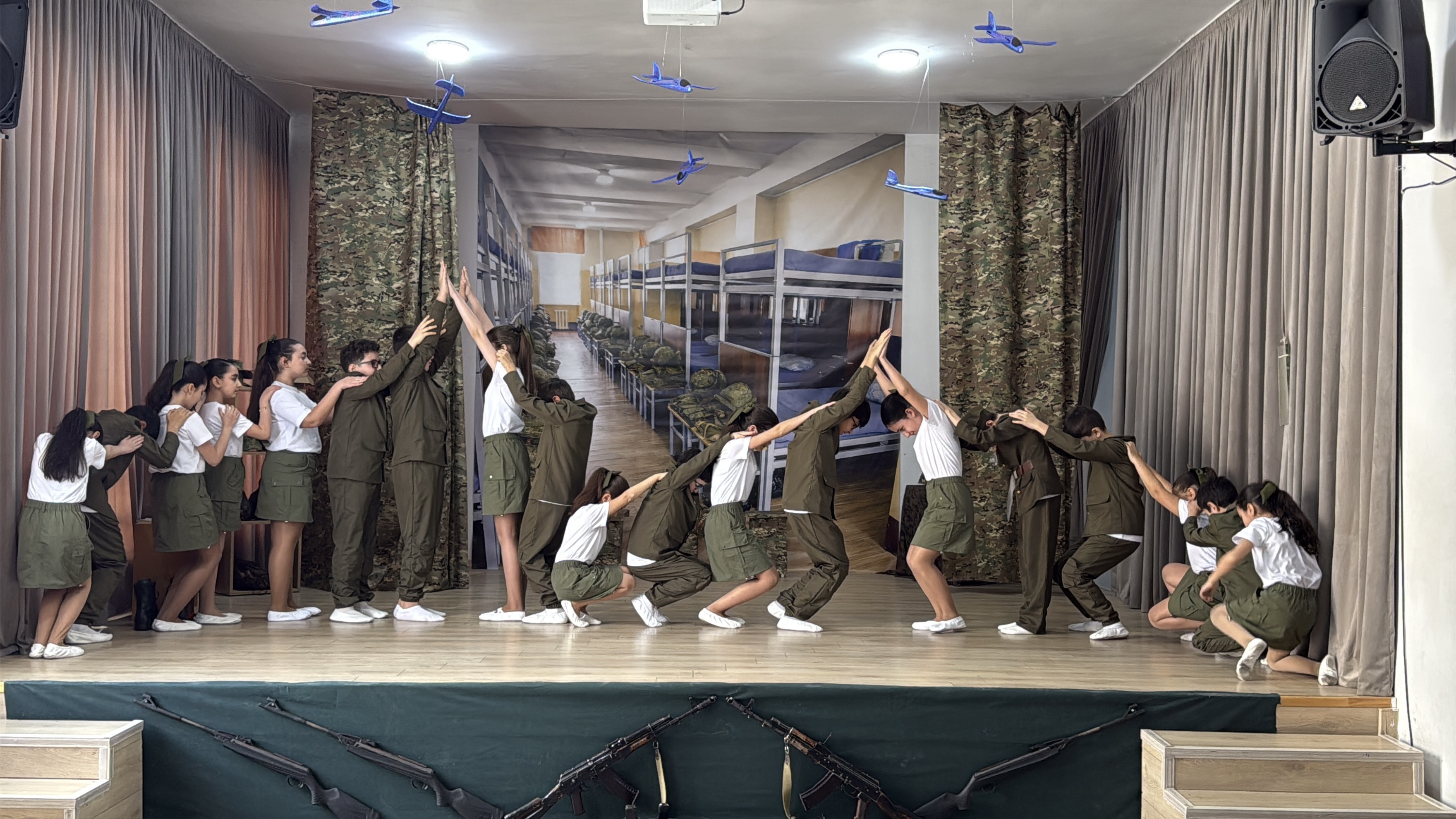
The next act revealed the ideological background of this choice, presenting concepts such as war, security, existence, choice, and duty within a historical context. It emphasized the vital necessity of having an organized armed force, regardless of the era, the disposition of neighbors, or the number of allies. Beginning with the praise of the freedom-loving spirit of Hayk Nahapet, the performance also addressed the redefinition of the army’s mission after the adoption of Christianity — “for faith and homeland” — and carried that struggle through Babshen, Aigestan, Sardarapat, and the national awakening of the 1980s.
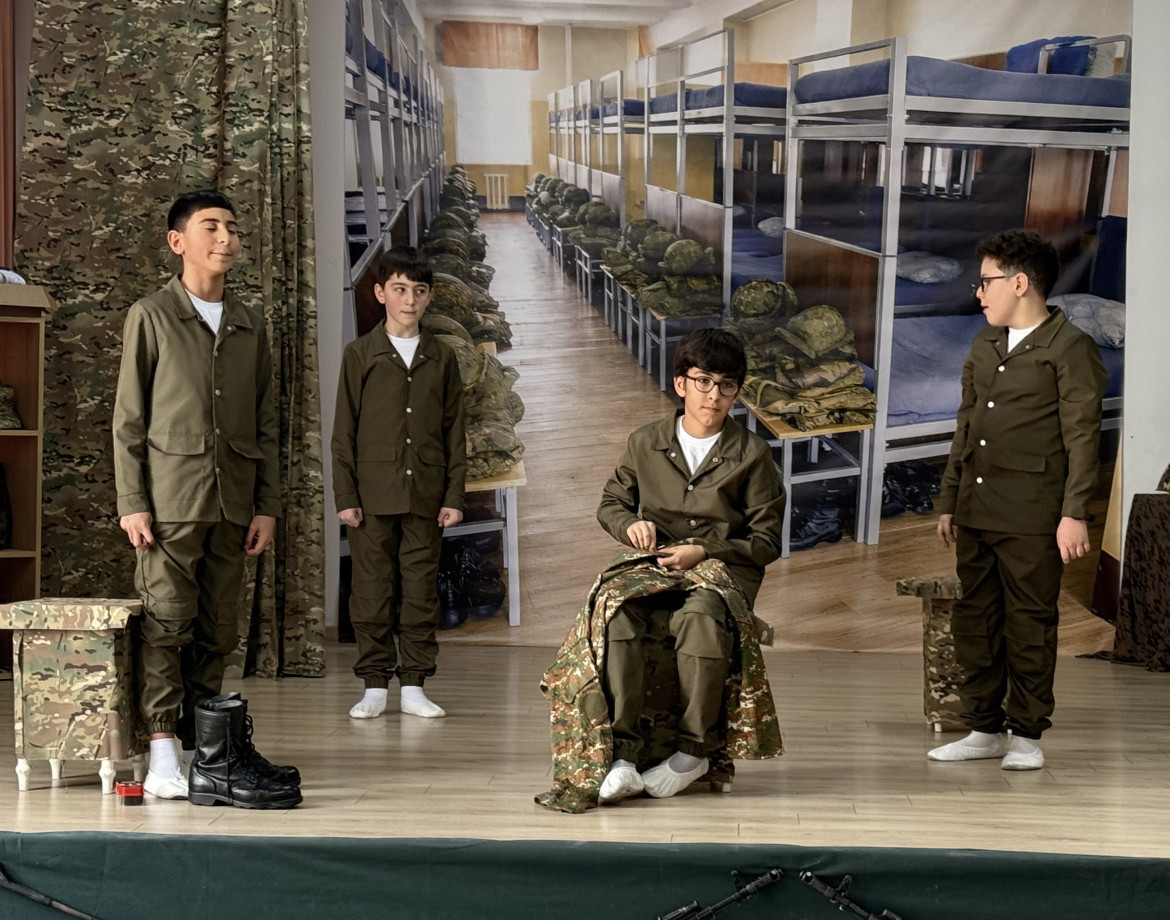
Beyond true lessons of patriotism, the event also highlighted other values. These were illustrated through the depiction of everyday military life, enriched with lively humor and sincere dialogue. The soldiers spoke about discipline, friendship, patience, and mutual support, showing how the army shapes character and value systems.
The culmination of the performance was the students’ appeal to their peers and to all those concerned about the future of the homeland: one must live for the homeland — live with dignity, be responsible, not yield to difficulties, create, protect, and write a prouder chapter of our history.

To not think freely is to not think at all!