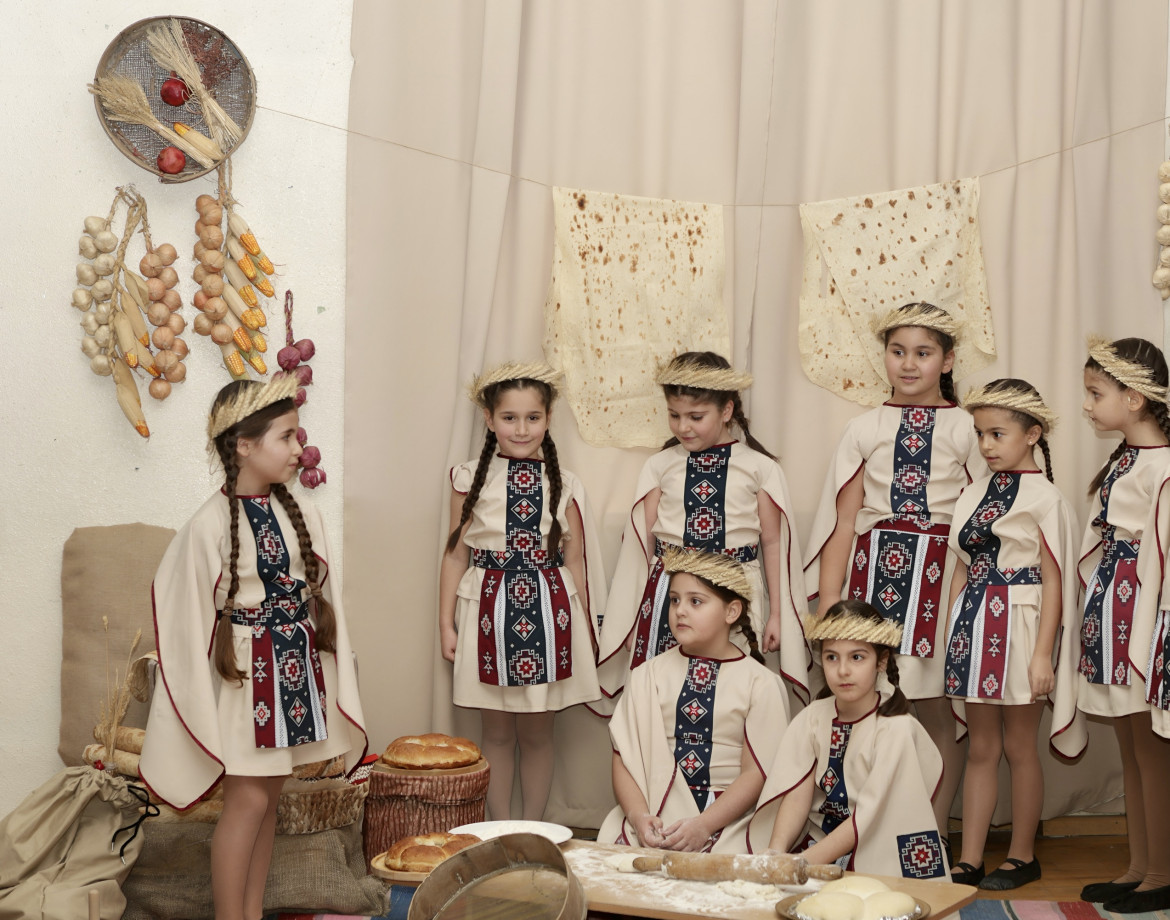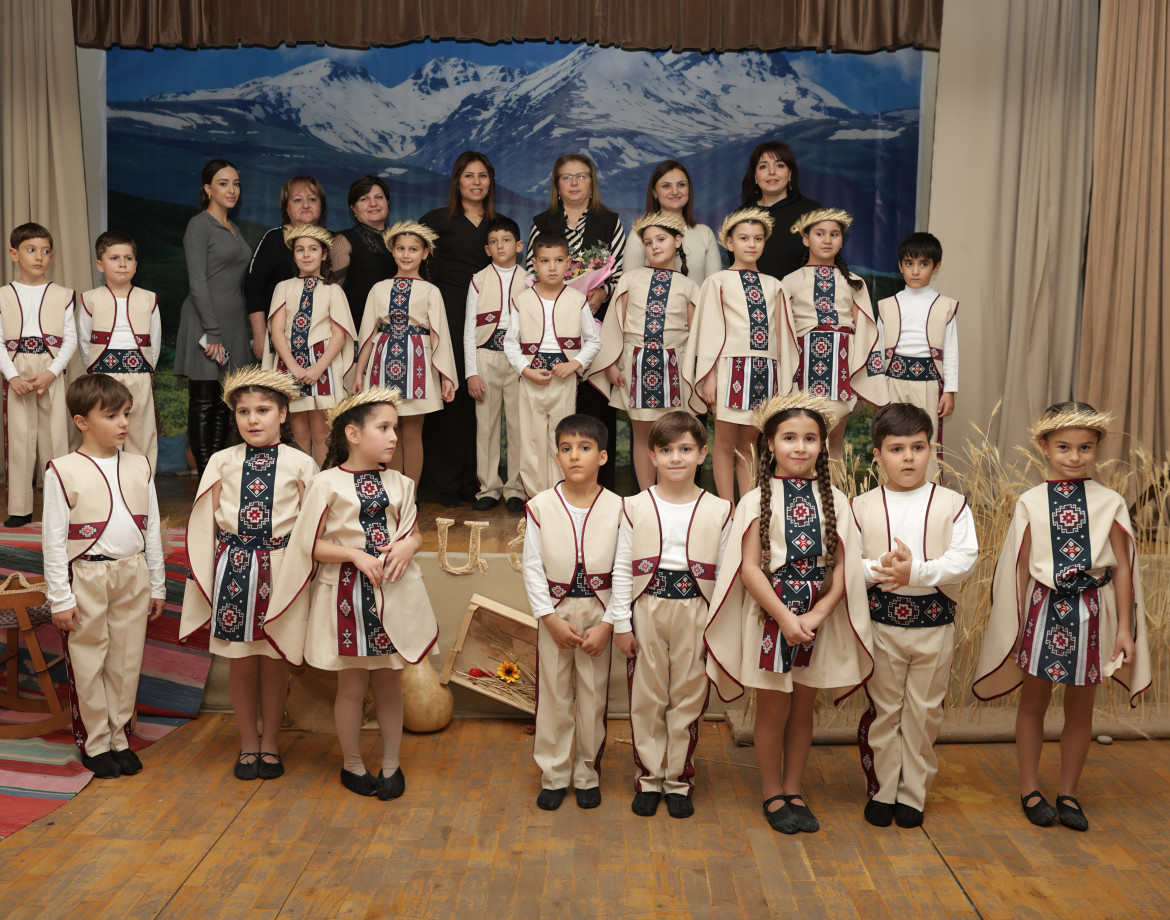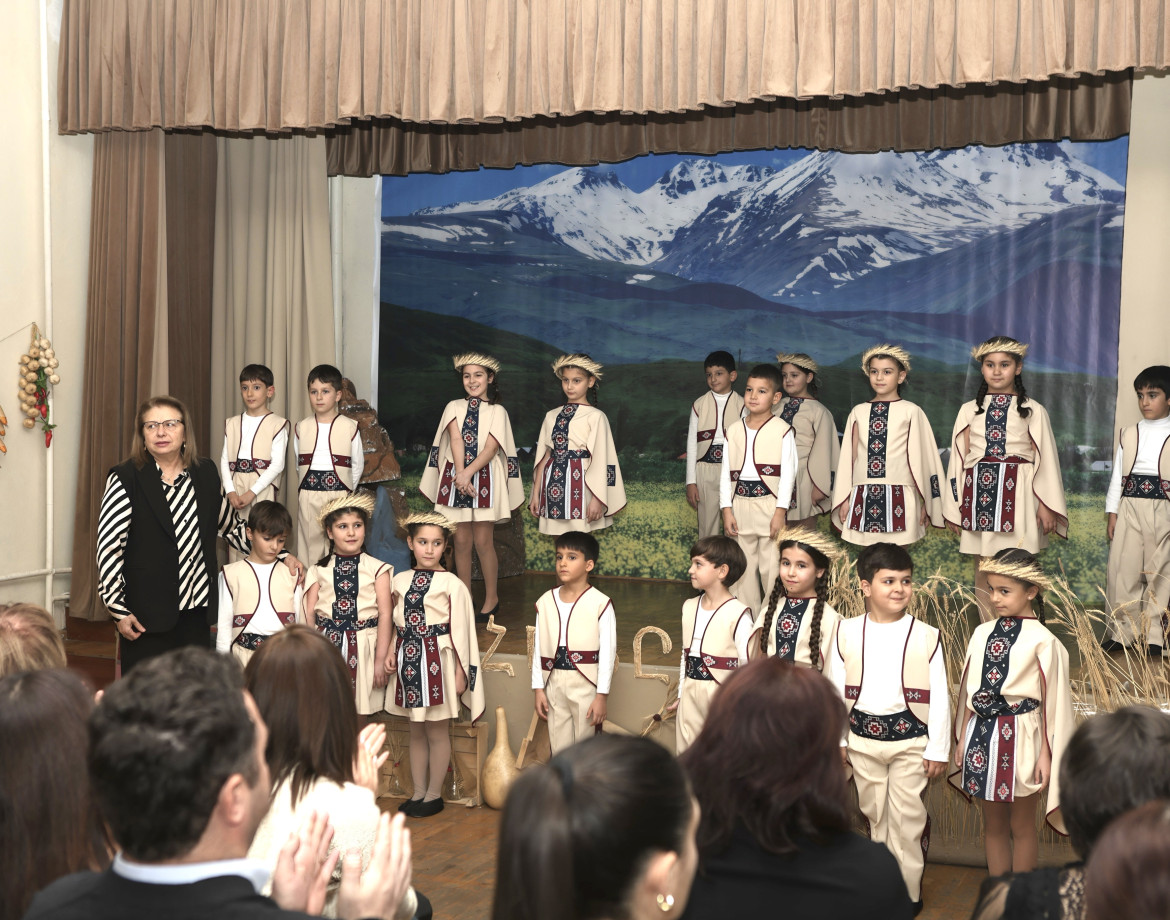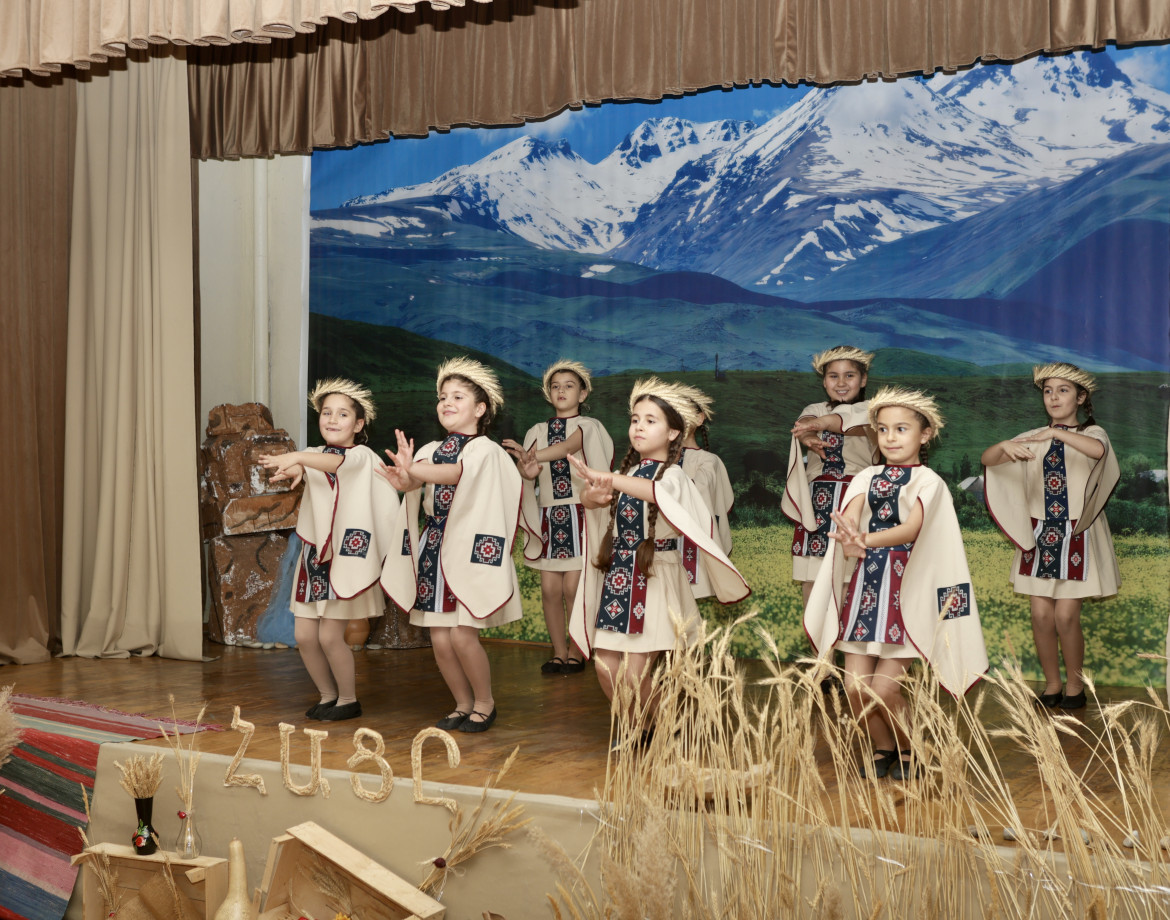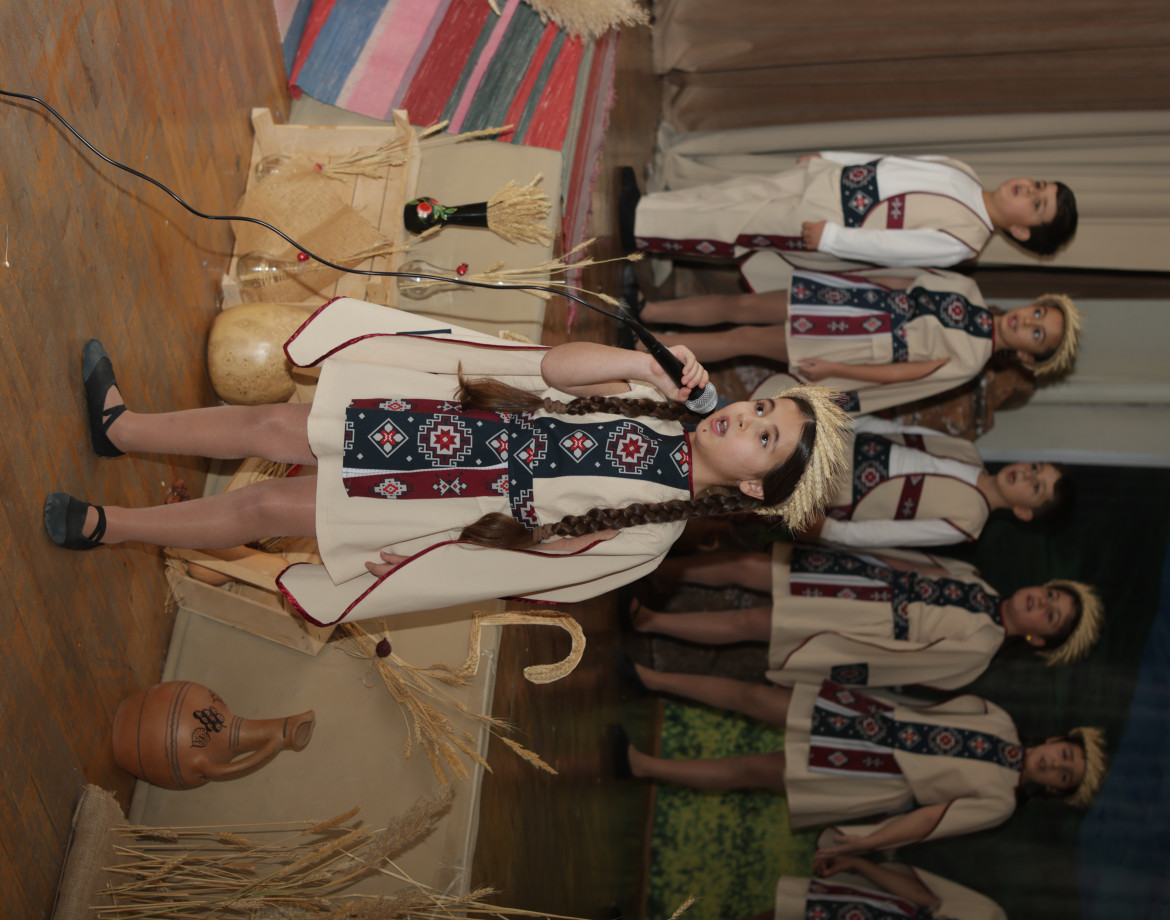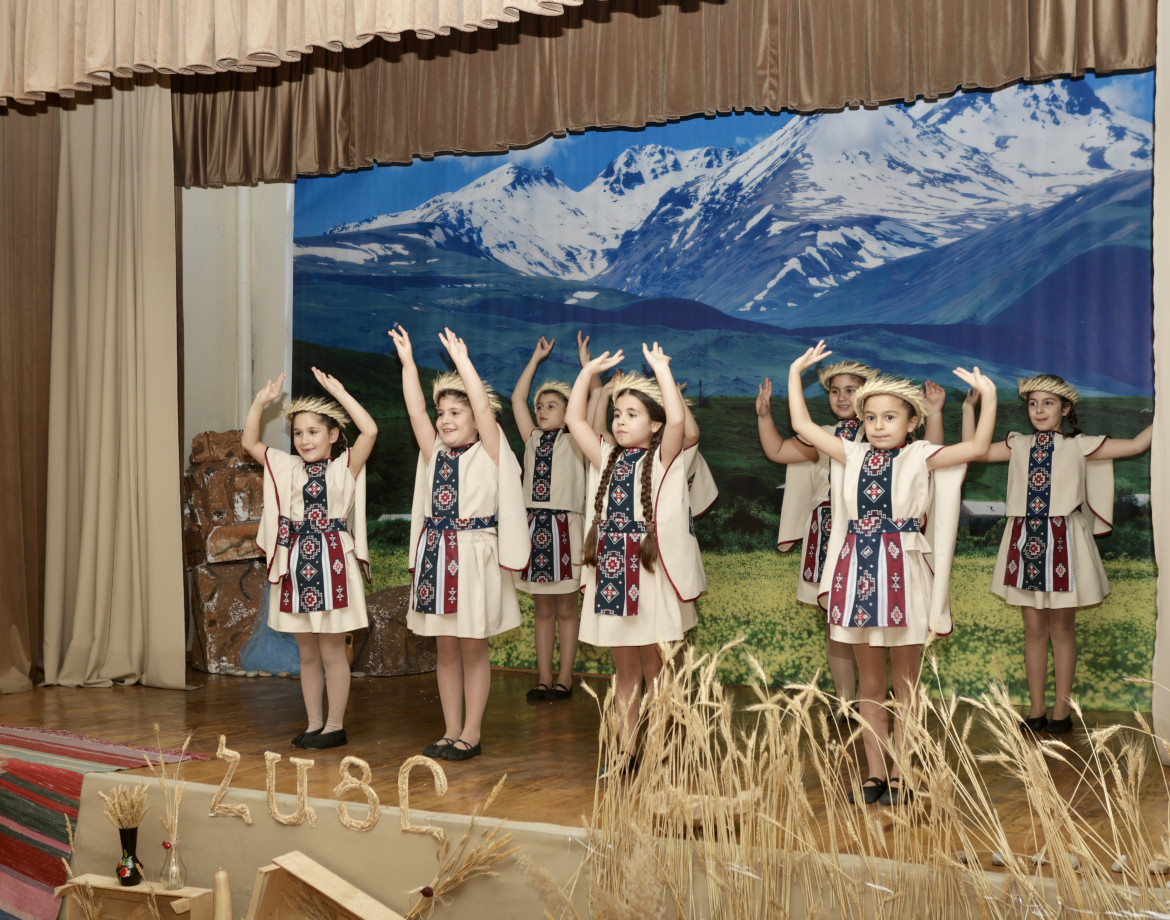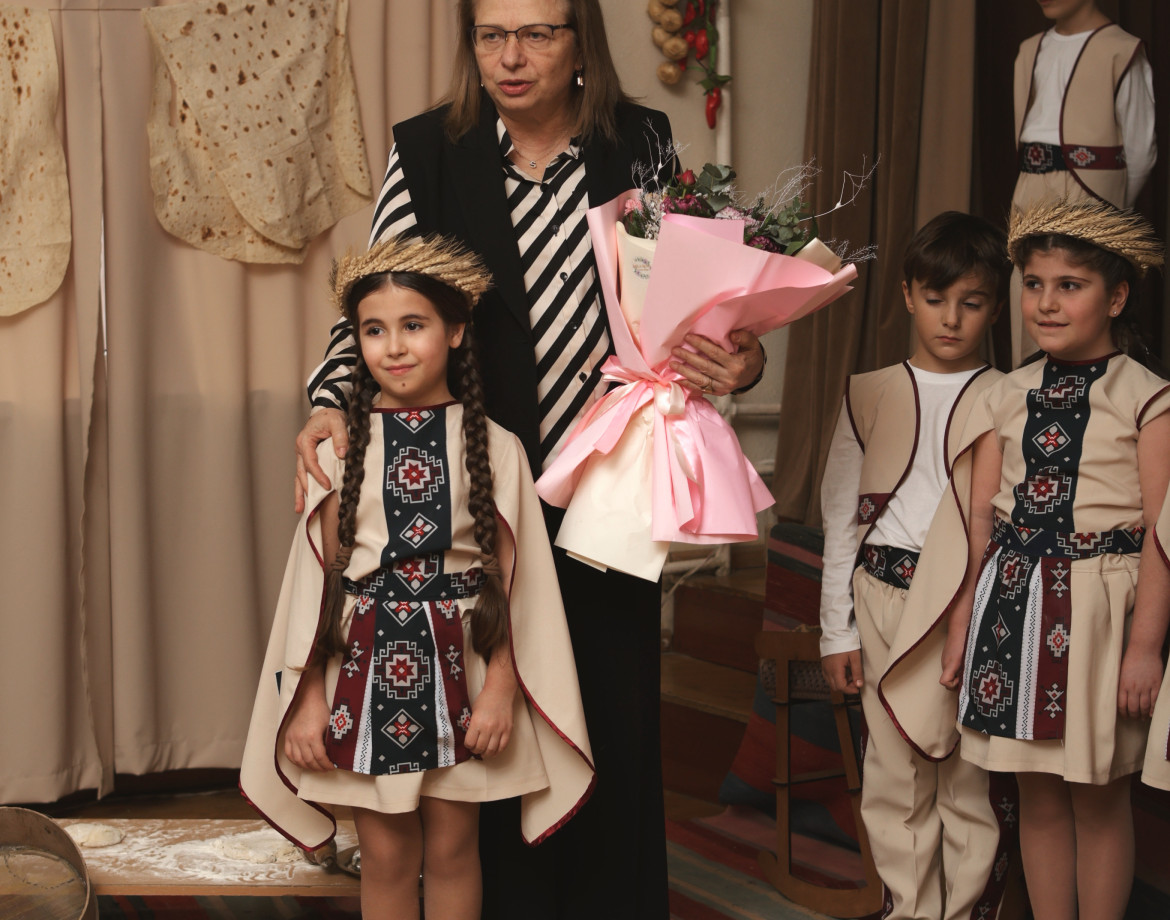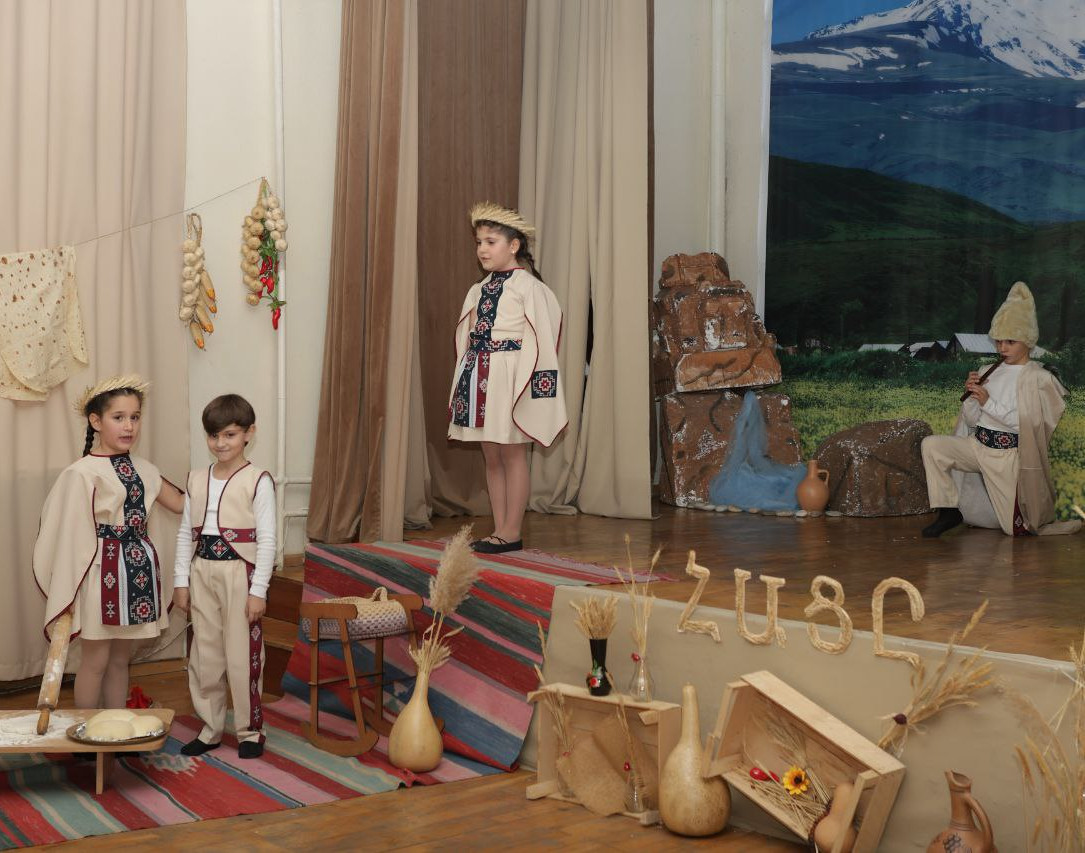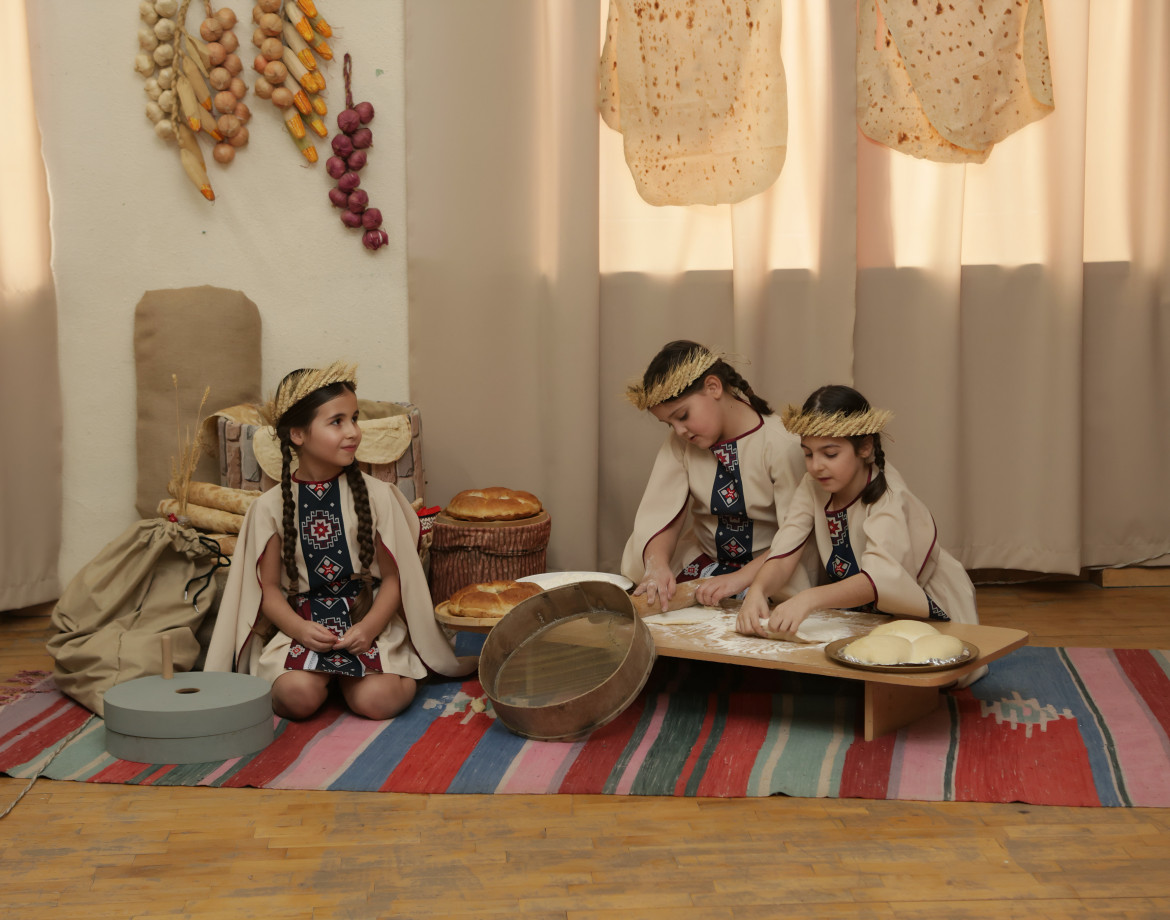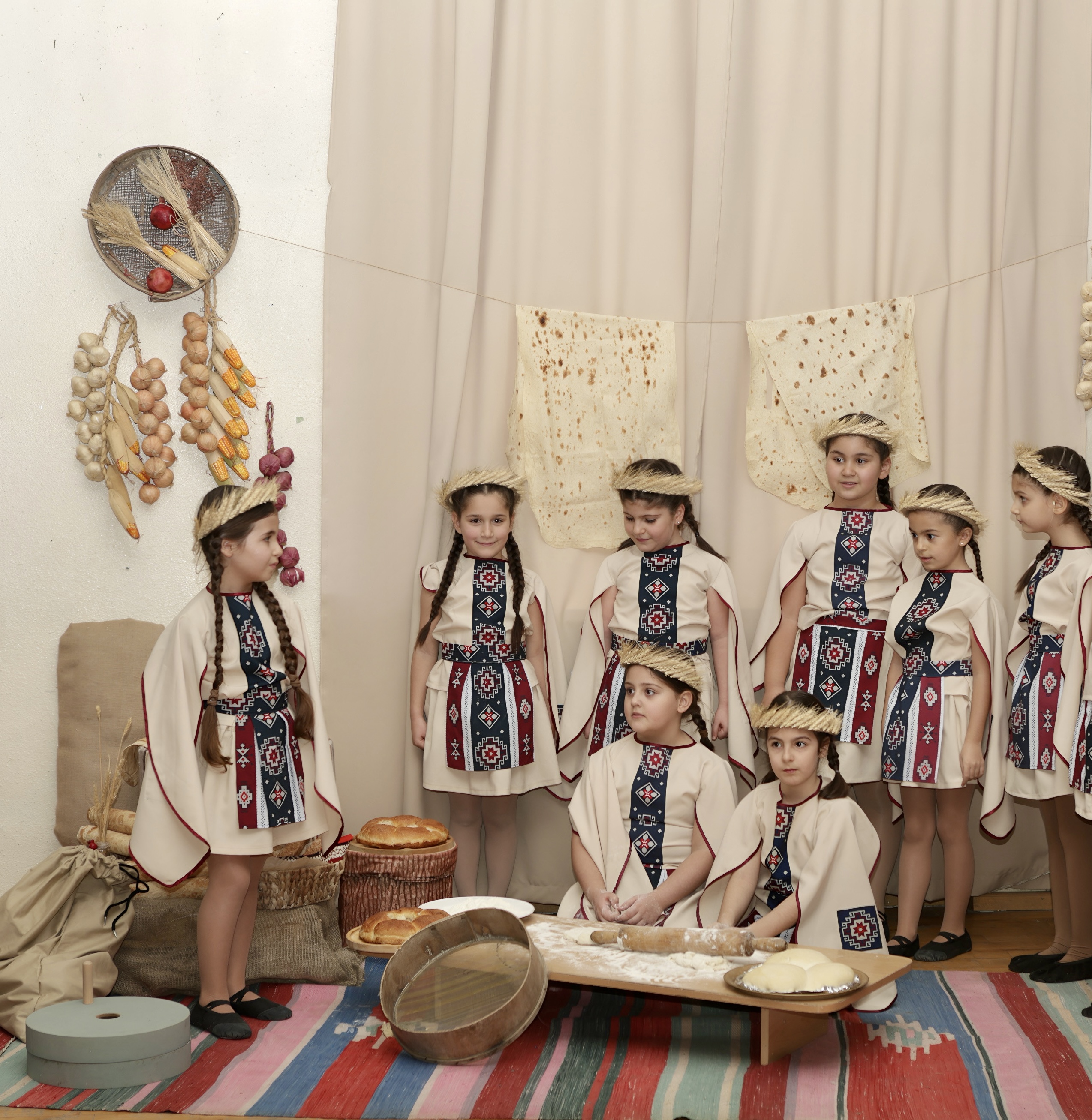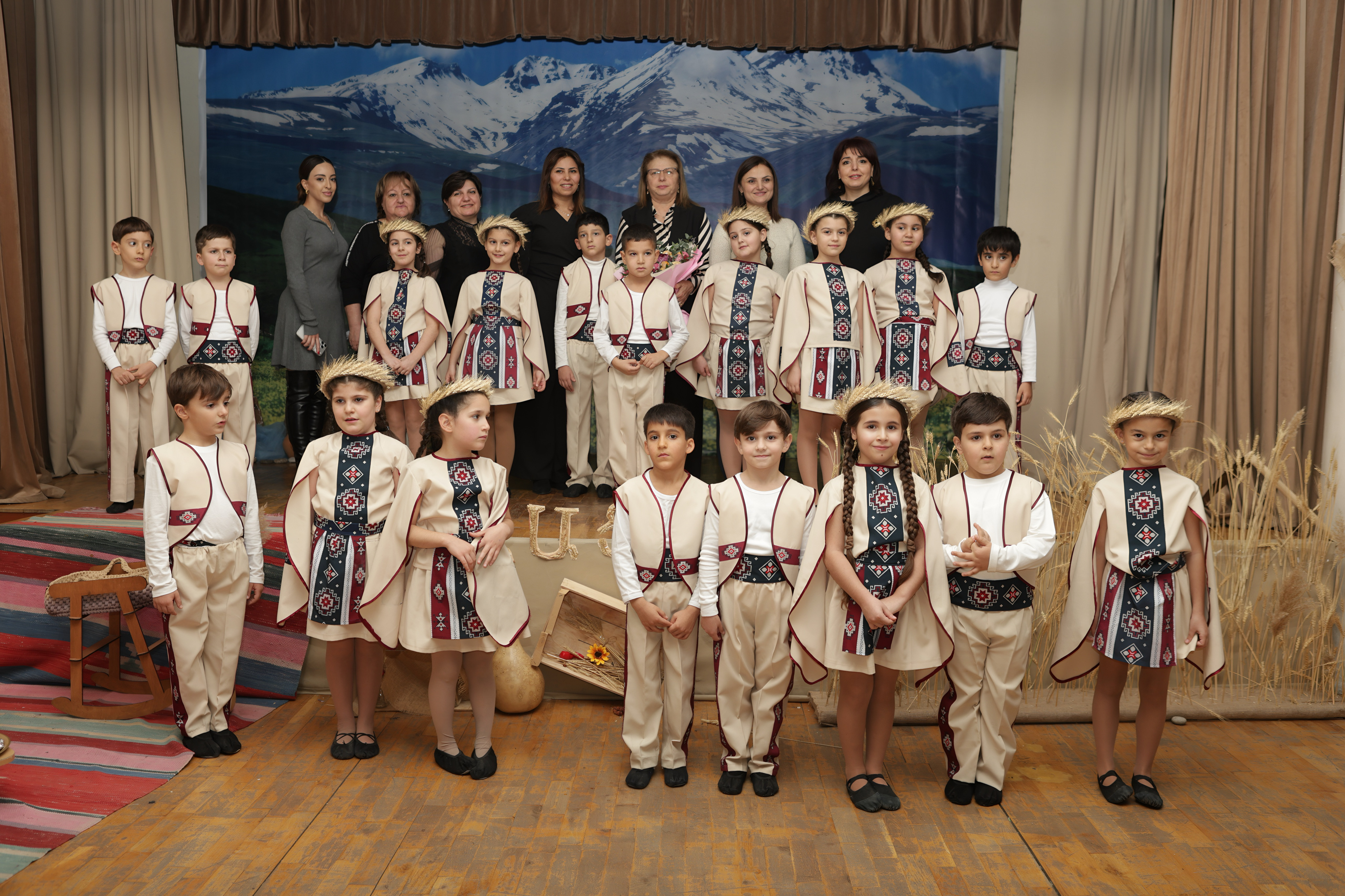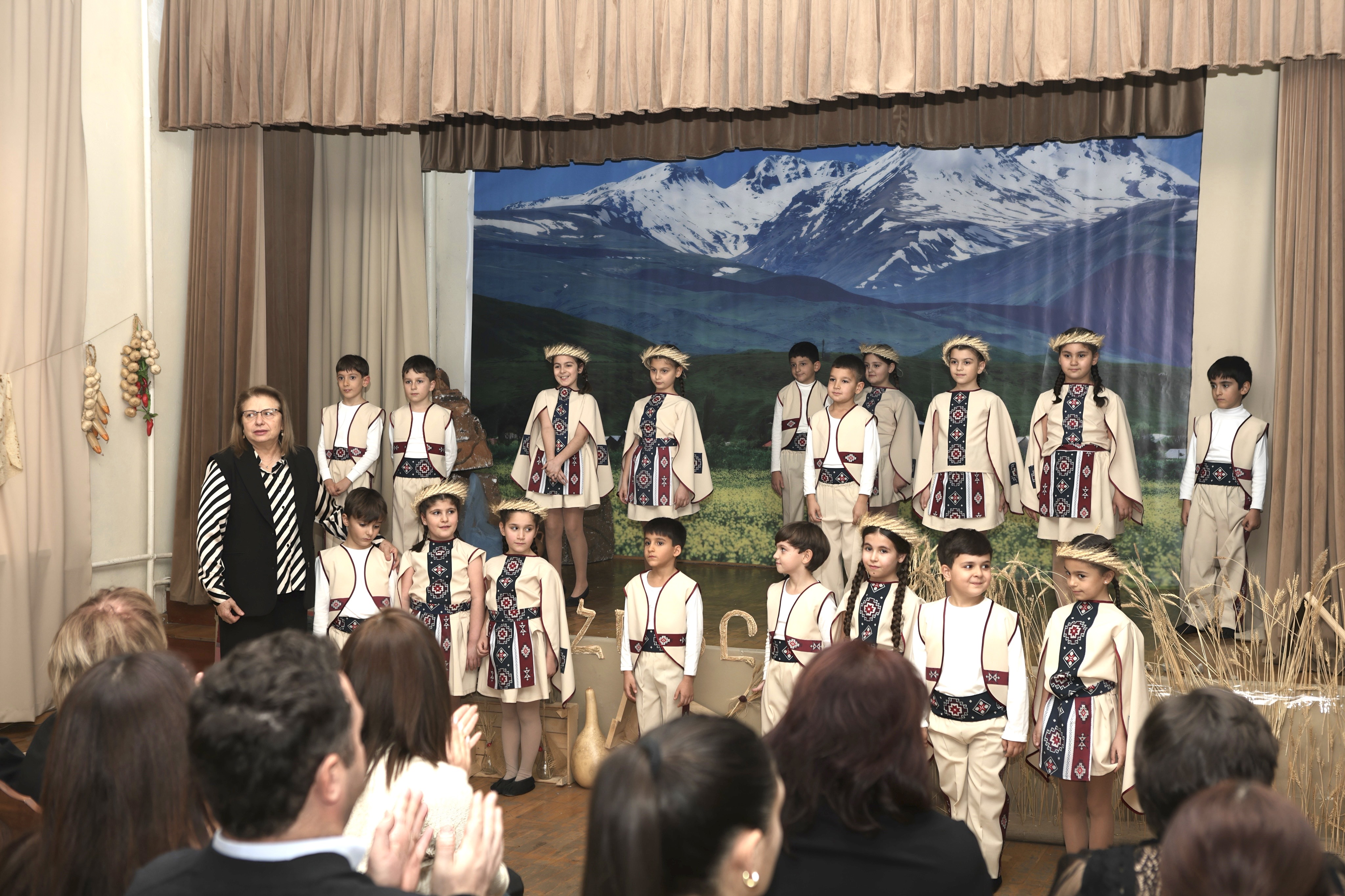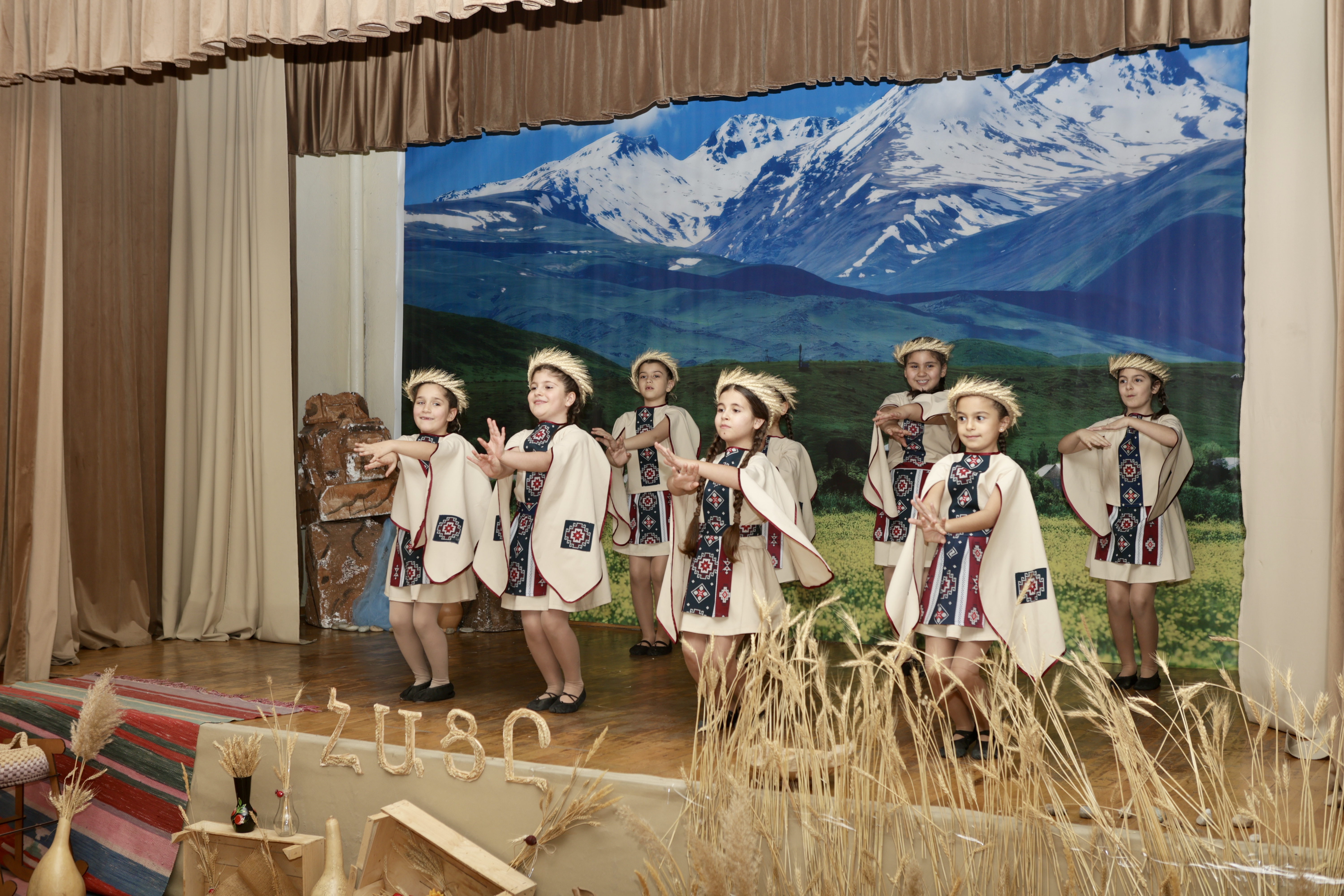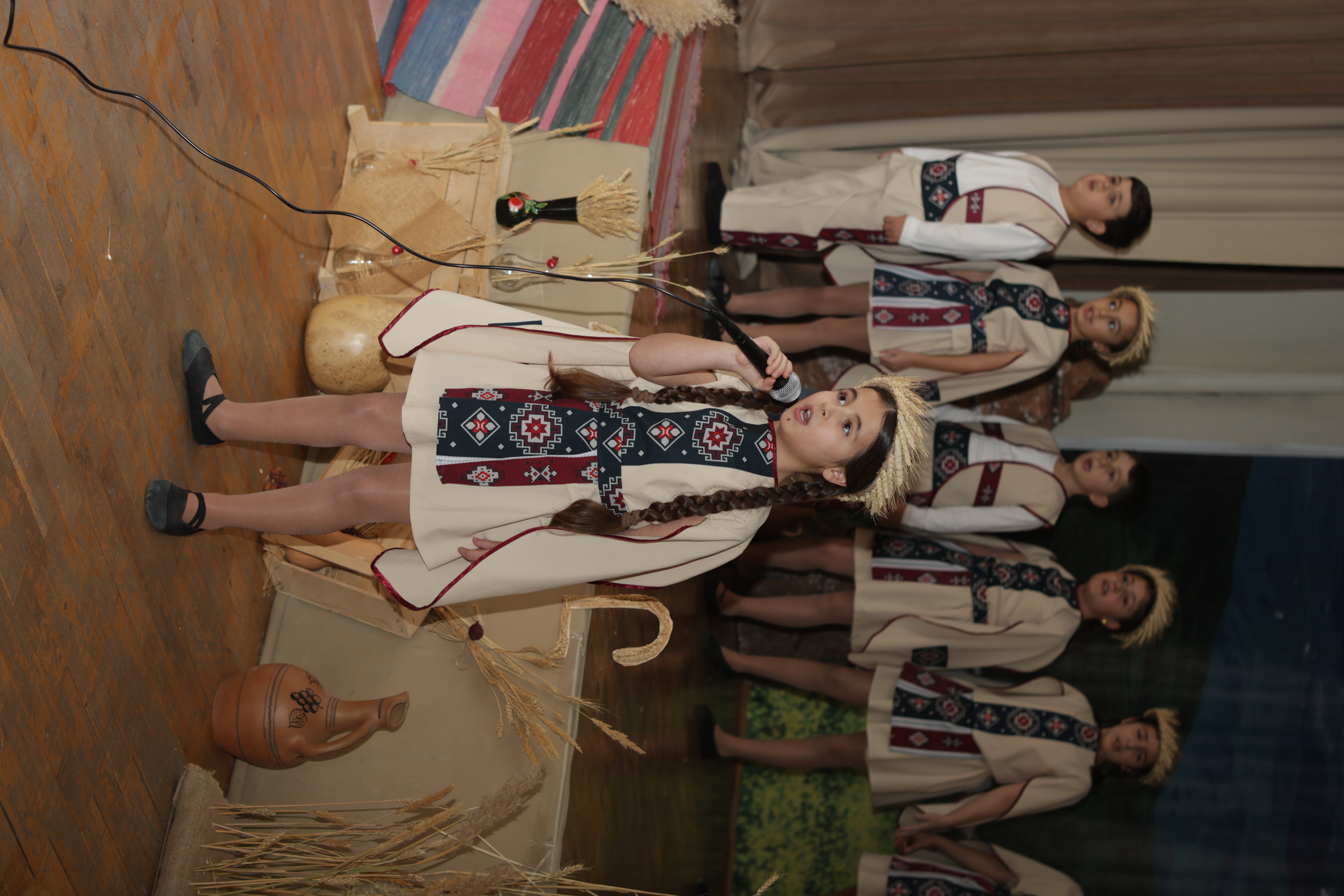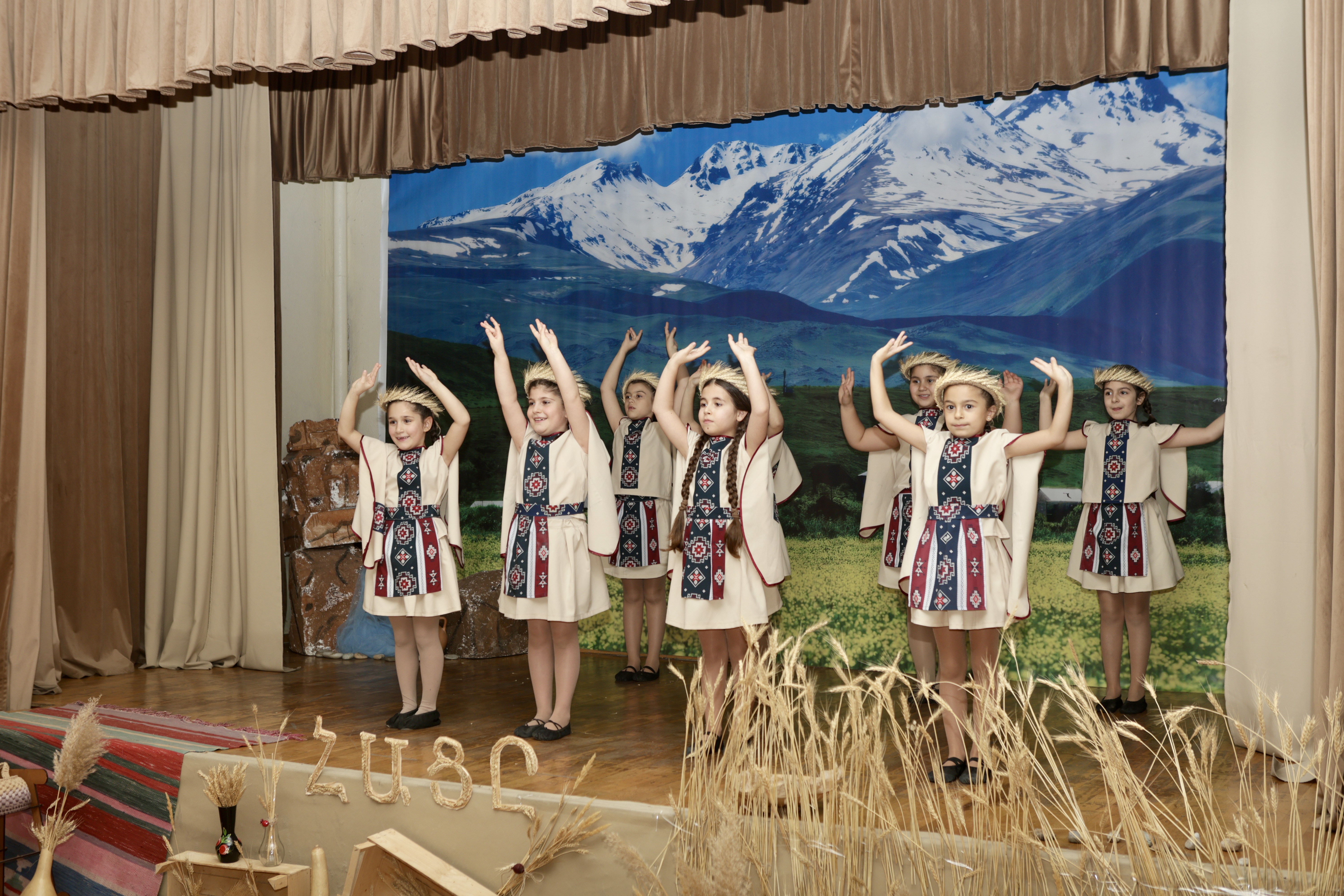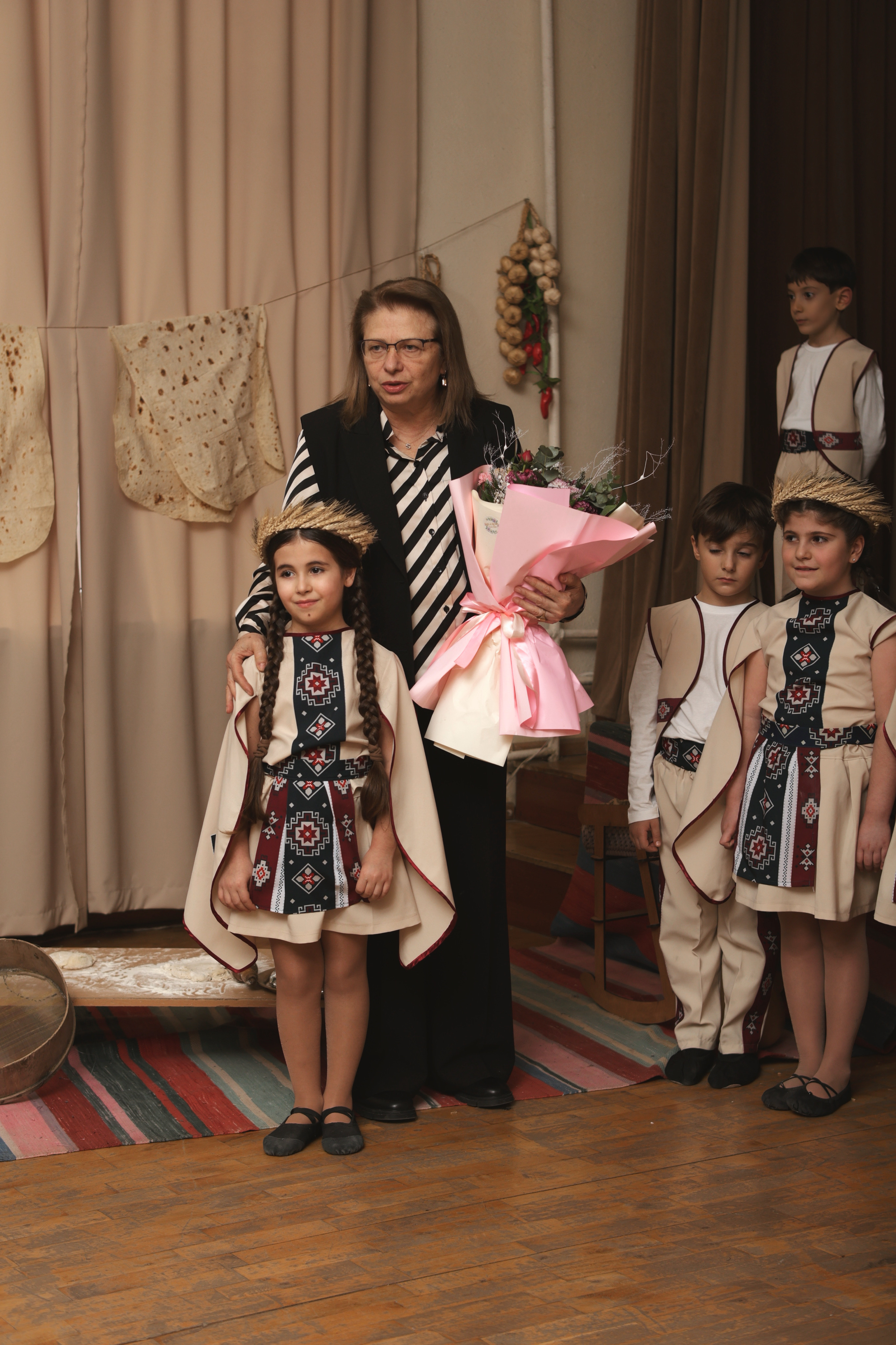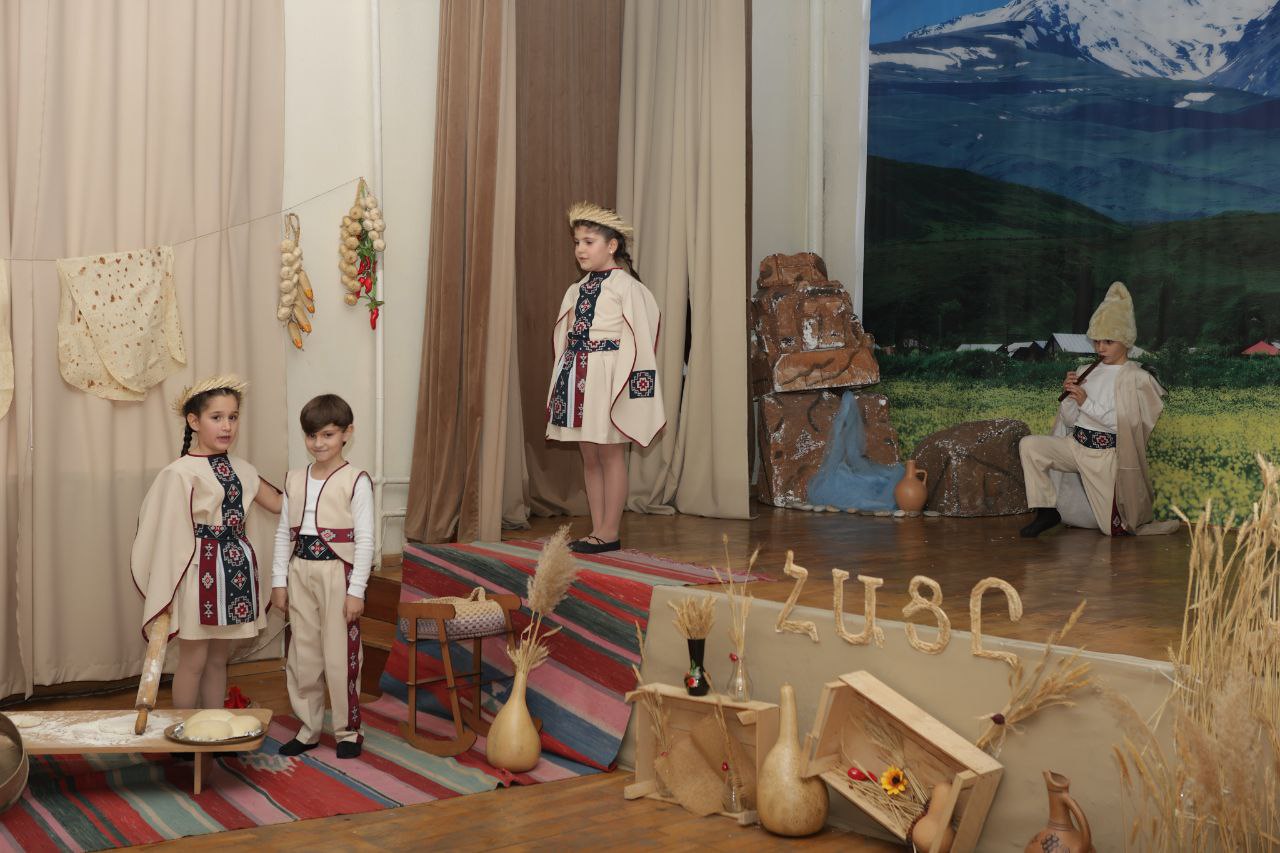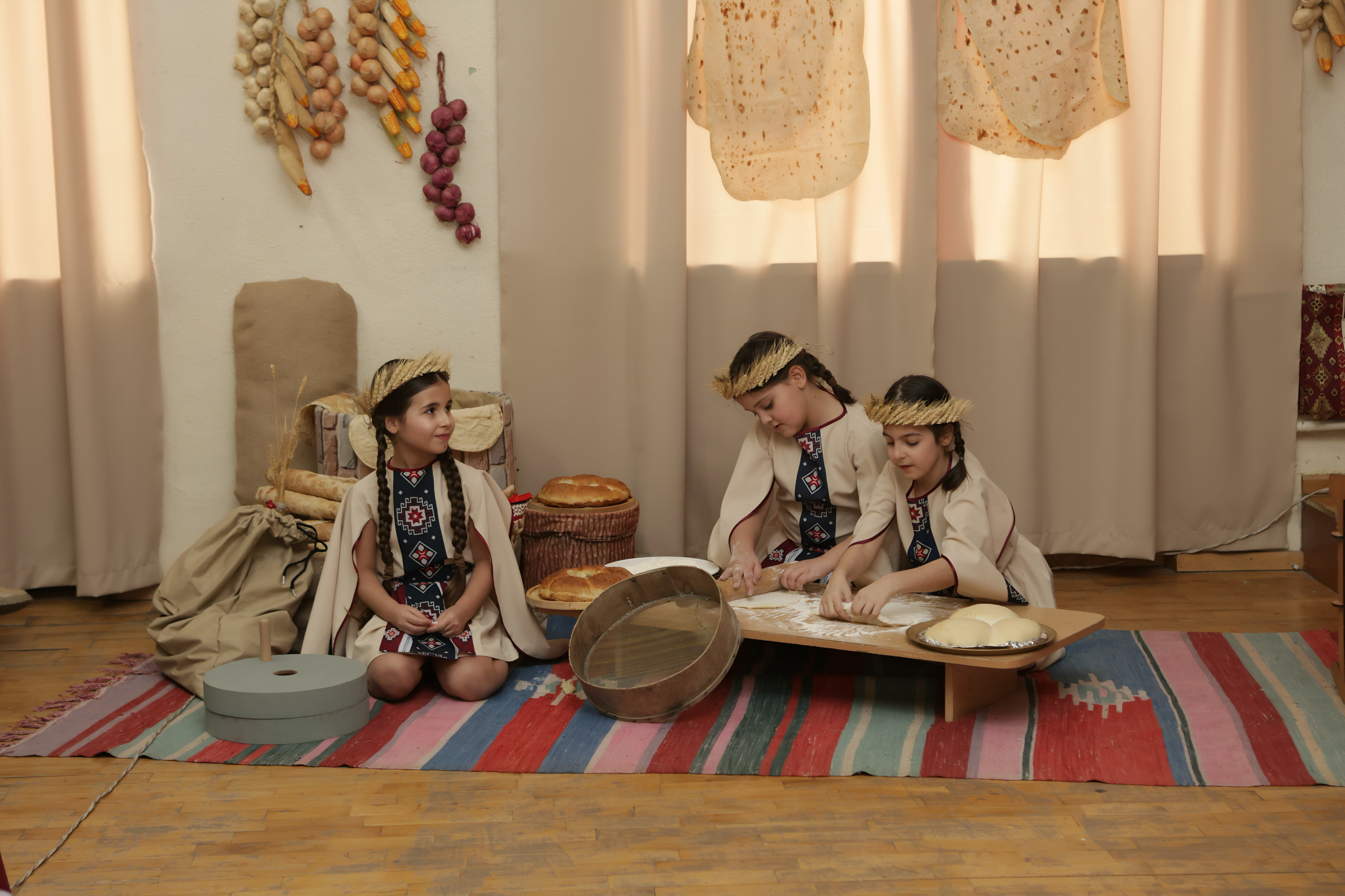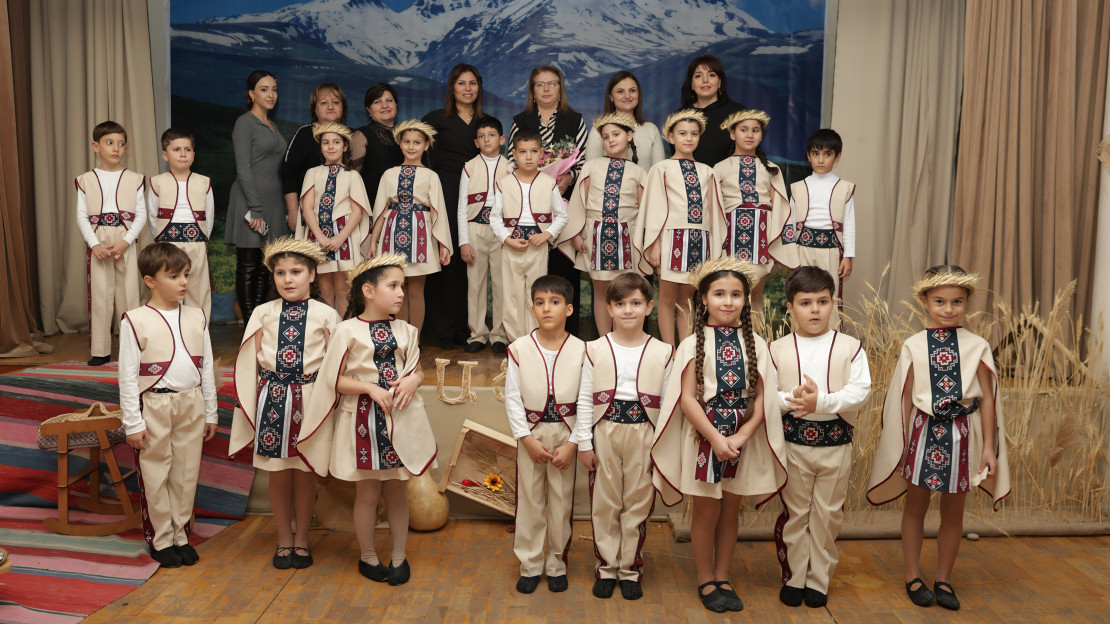
The stage of Usum School is once again filled with joy, decoration, warmth, and bread. Within the framework of yet another traditional event, the second-grade students paid tribute to bread.
Perhaps no other food, nor any treasure of Armenian cuisine, has ever been honored as greatly as bread. And this is no coincidence. Bread is one of the oldest foods known to sedentary humanity, dating back to the Neolithic era. According to scholars, the very first form of bread was a completely unleavened baked mixture made from grains and water, nothing more than a randomly tested combination of flour and water. It is assumed that, due to the simplicity of its preparation, its descendants may include Mexican tortillas, Indian chapati, Chinese flatbreads, Scottish oatcakes, and others.
In the classical sense, the cradle of the first bread is Mesopotamia. Archaeological evidence shows that the Sumerians consumed barley bread very similar to ours about 2,100 years ago.
Since the making of bread was a privilege of sedentary peoples, we Armenians could not remain apart from it. Our history has handed down to us a wide variety of breads: wheat bread, barley bread, matnakash, pan, nakanak, lavash, losh, anek (unfermented dough), bagharj (unleavened), khukli (lightly fermented), kogi, loaf bread, and nearly thirty types in total.
However, our people were known not only for producing bread but also for venerating it. Settlements of Historical Armenia distinguished by abundant harvests and bread have preserved traces of bread culture in their names, such as Hatsashen (Taline region), Hatsarat (near the city of Gavar), Hatsavan (Abovyan and Sisian regions), Hatsi (Martuni region of Artsakh), Hatsik (Akhuryan region), and Hatsekats (Greater Armenia, Turuberan, Taron province).
The veneration of bread among our people even rose to the level of toasts and prayers and was enshrined in the epic Sasna Tsrer with the prayer-formula “Bread and wine, Lord of life.” It is also a foundation of the Christian value system; it is no coincidence that one of the lines of the Lord’s Prayer says, “Give us this day our daily bread.”
The Usum students’ event was a historical and cultural synthesis of these episodes honoring bread. The stage presented a journey through time aimed at revealing the sacred meaning of bread, wheat, and labor in the life of the Armenian people. At the center of the event was not only bread as food, but bread as value, faith, memory, and continuity. Accompanied by the gentle sounds of the shvi, the authors who appeared on stage led the audience back to ancient times, when humanity was still searching for its path of existence—until a simple discovery brought mankind the idea of labor, a bond with the land, and a creative way of life.
The dramatized scenes depicted the entire process of bread-making—from the blessing of the first harvest to the preparation of cross-shaped loaves, from taking the grain to the mill to baking lavash in the tonir. All of this was accompanied by national songs and dances that filled the stage with warmth and the breath of a living tradition.
Perhaps the most touching part of the performance was the story of Naghash, a boy who set out to find his fortune with a magical lavash baked by his mother’s sweat. His encounters with a shepherd, a robber, and a white-haired old man revealed the true power of bread: it becomes magical only when it is earned through one’s own labor. Naghash’s return to his native land and the cultivation of wheat with his own hands became the true formula for happiness and good fortune.
The belief of the Usum community is that every Armenian is a little like Naghash—someone who carries values inherited over centuries, yet often does not initially realize their significance or their own historical mission; but eventually, that realization comes․
To not think freely is to not think at all!