The mystery of the origin of languages is one of humanity’s most fascinating and at the same time most enigmatic stories. To this day, science has not given a definite answer to the question of when and how the first language was born, yet it offers a number of theories and historical stages.
It is generally accepted that around 2 million years ago early hominins (such as Homo habilis and later Homo erectus) did not yet possess a complete language. They communicated through sounds, cries, gestures, and facial expressions.
Over time, the development of the brain—especially the enlargement of areas responsible for speech—made more complex forms of communication possible. Human speech became achievable thanks to several important factors: changes in the structure of the larynx, the development of the vocal cords, and the formation of language centers in the brain.
Scientists believe that a fully developed linguistic system emerged approximately 100,000–200,000 years ago, during the rise of Homo sapiens. As humans began settling in different geographical regions, language began to divide. Territorial isolation led to changes in pronunciation, vocabulary developed in different directions, and new languages were formed. For example, from the Proto-Indo-European language eventually emerged Greek, Latin, Sanskrit, and many others—including our pride, the Armenian language.
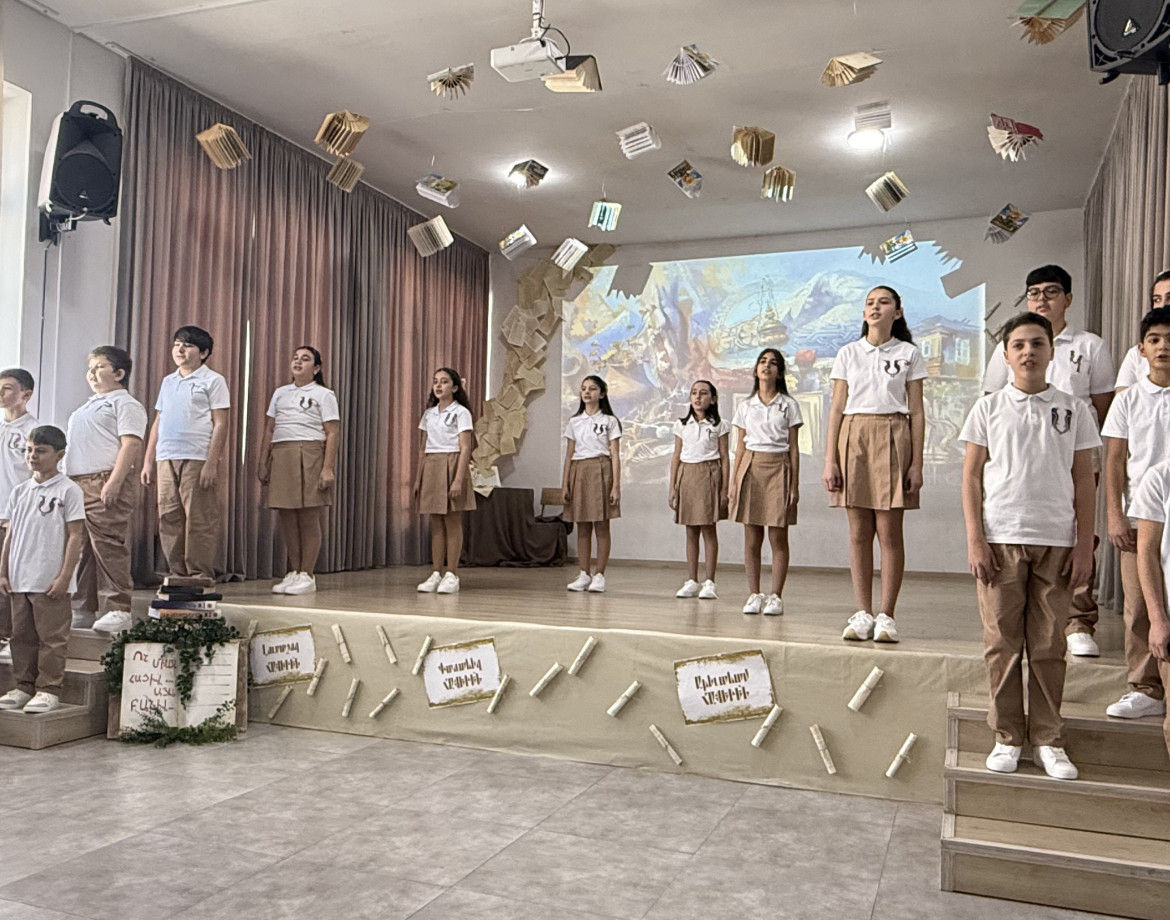
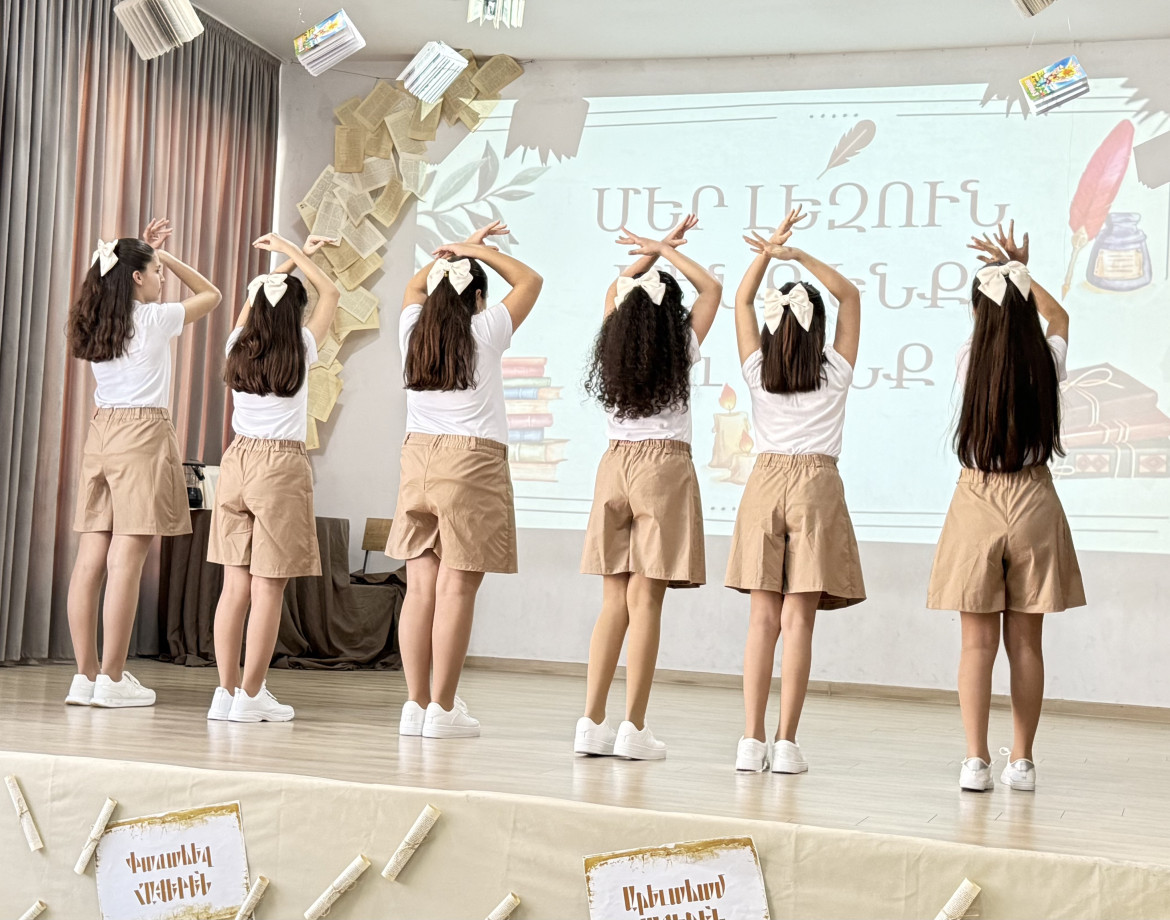
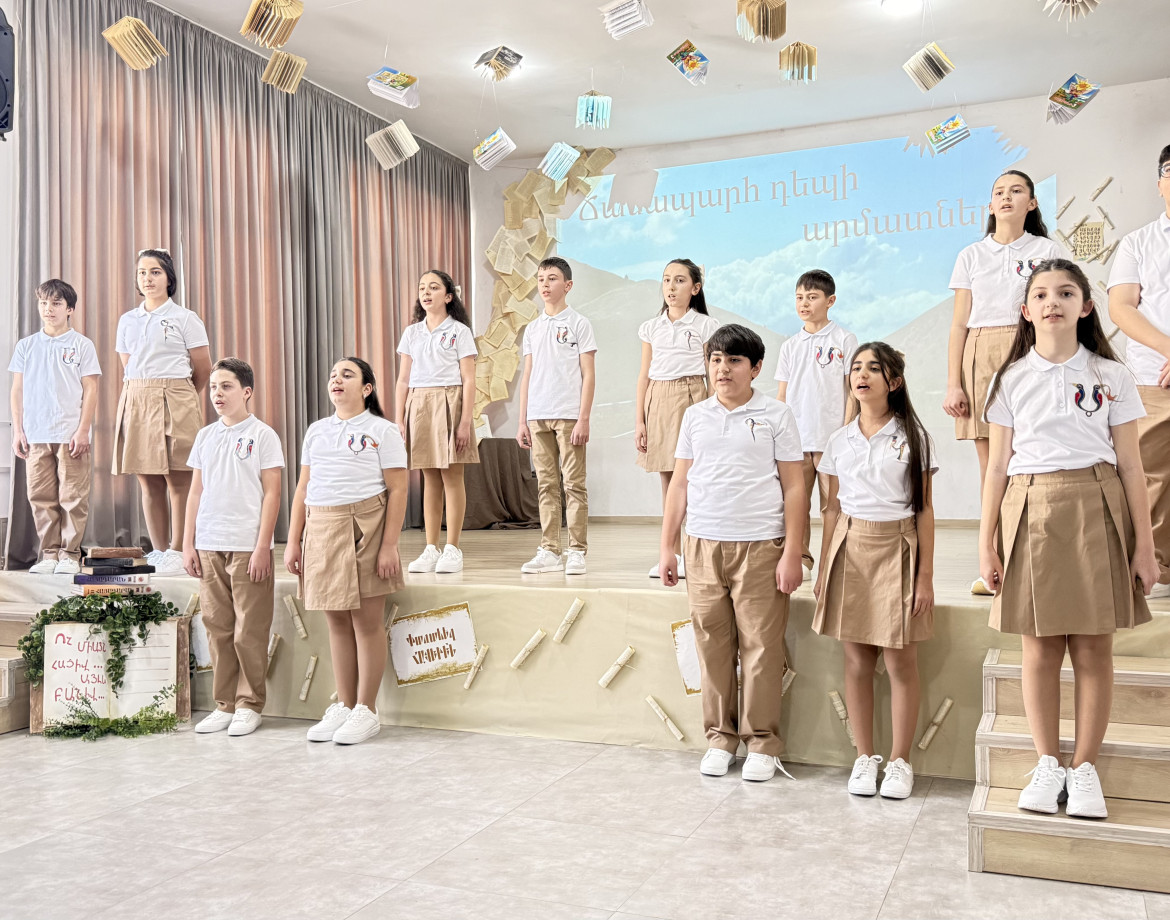
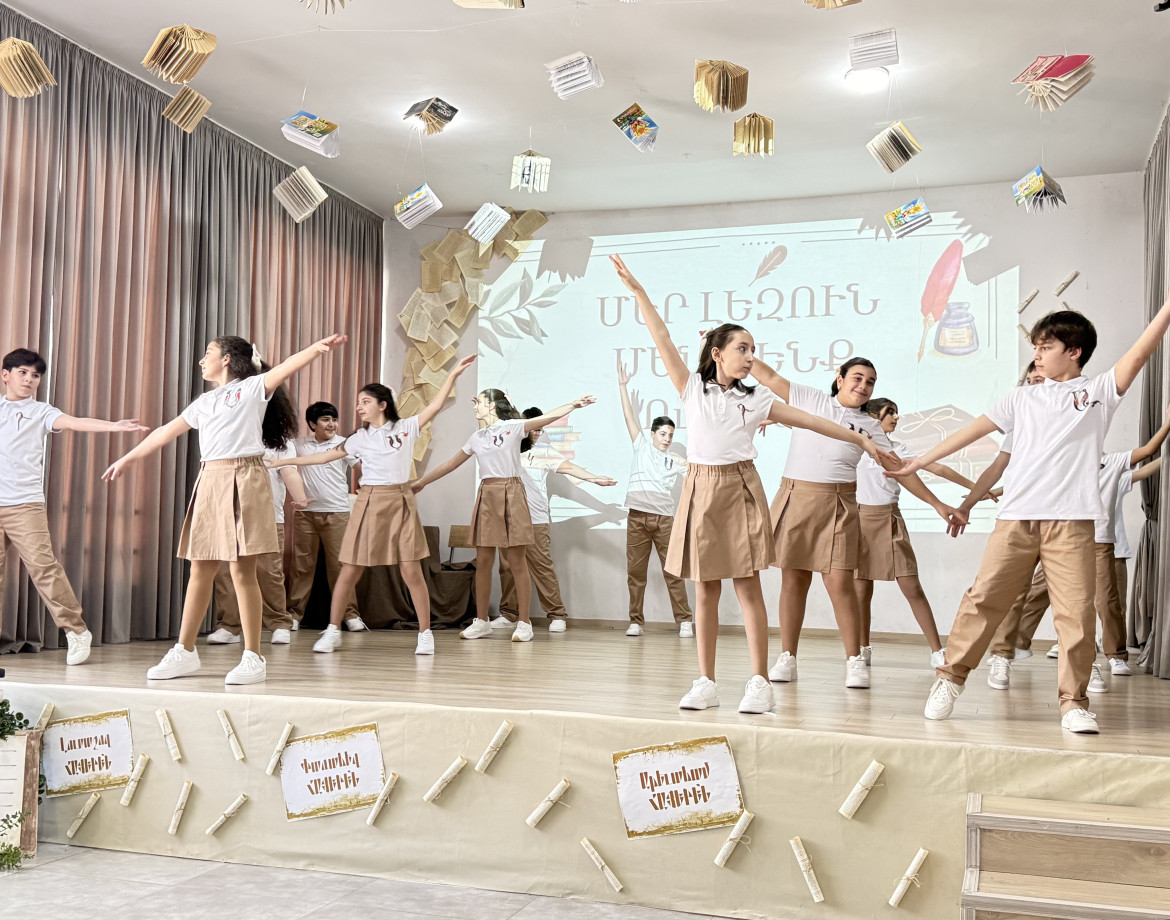
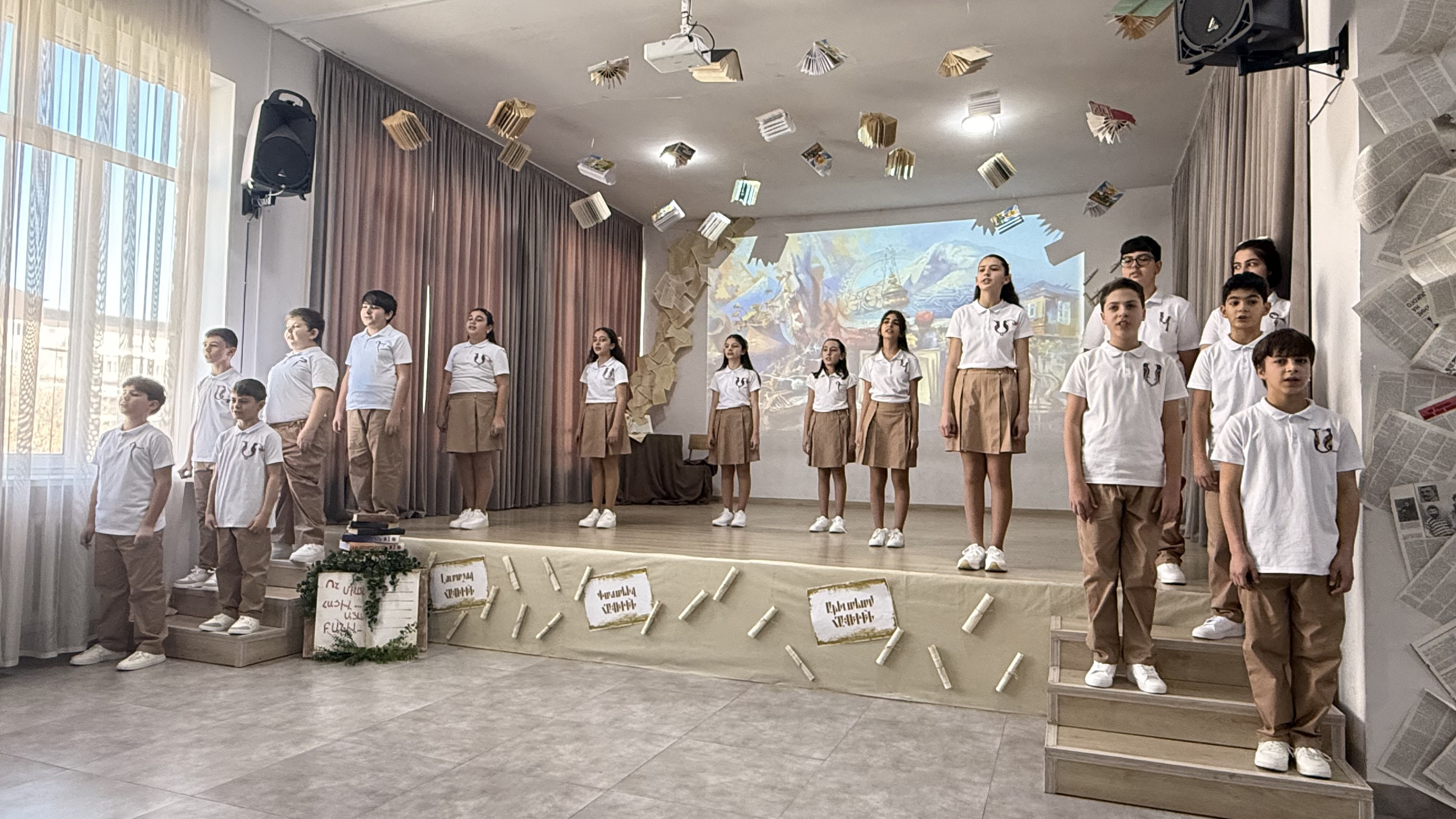
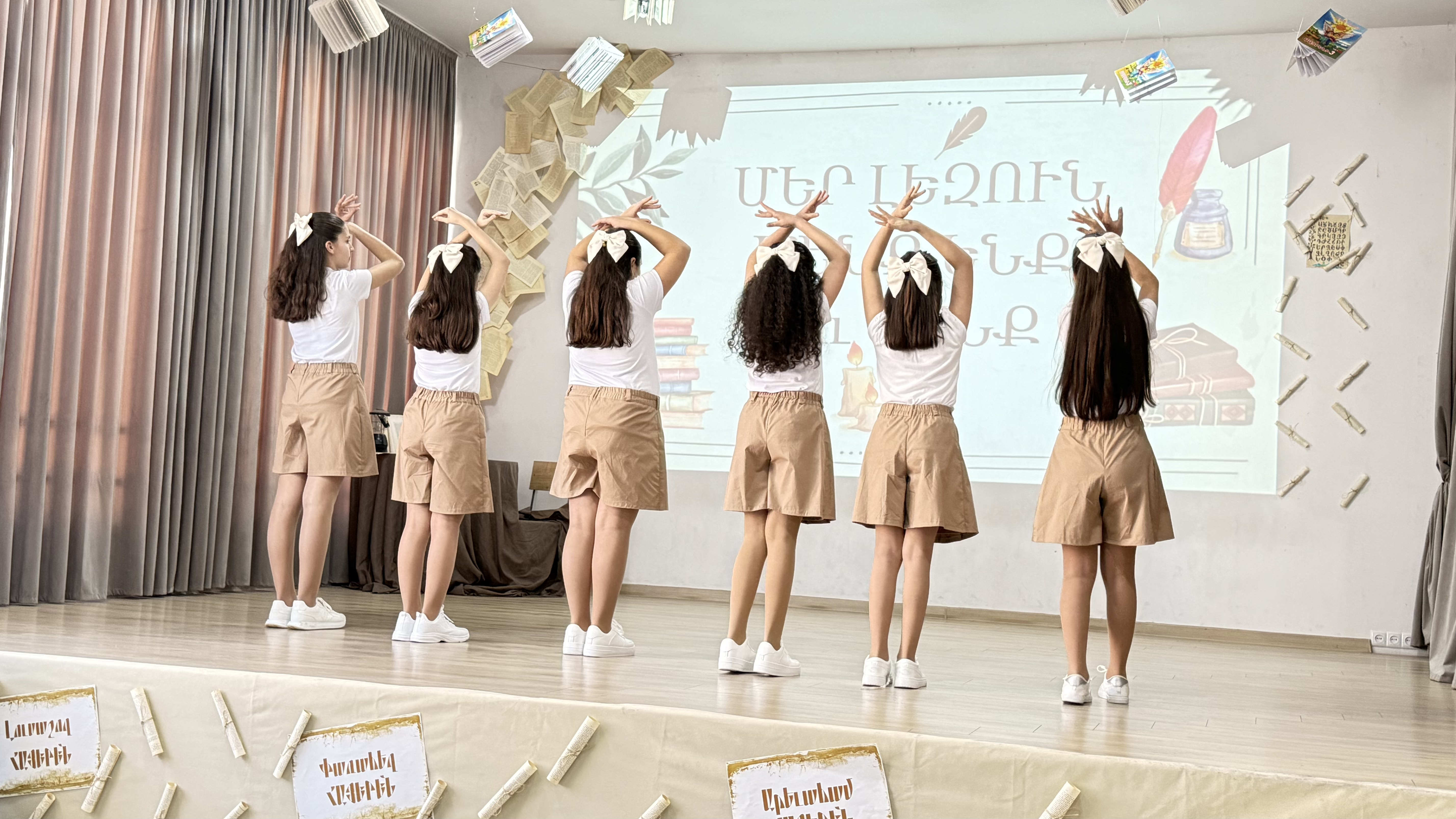
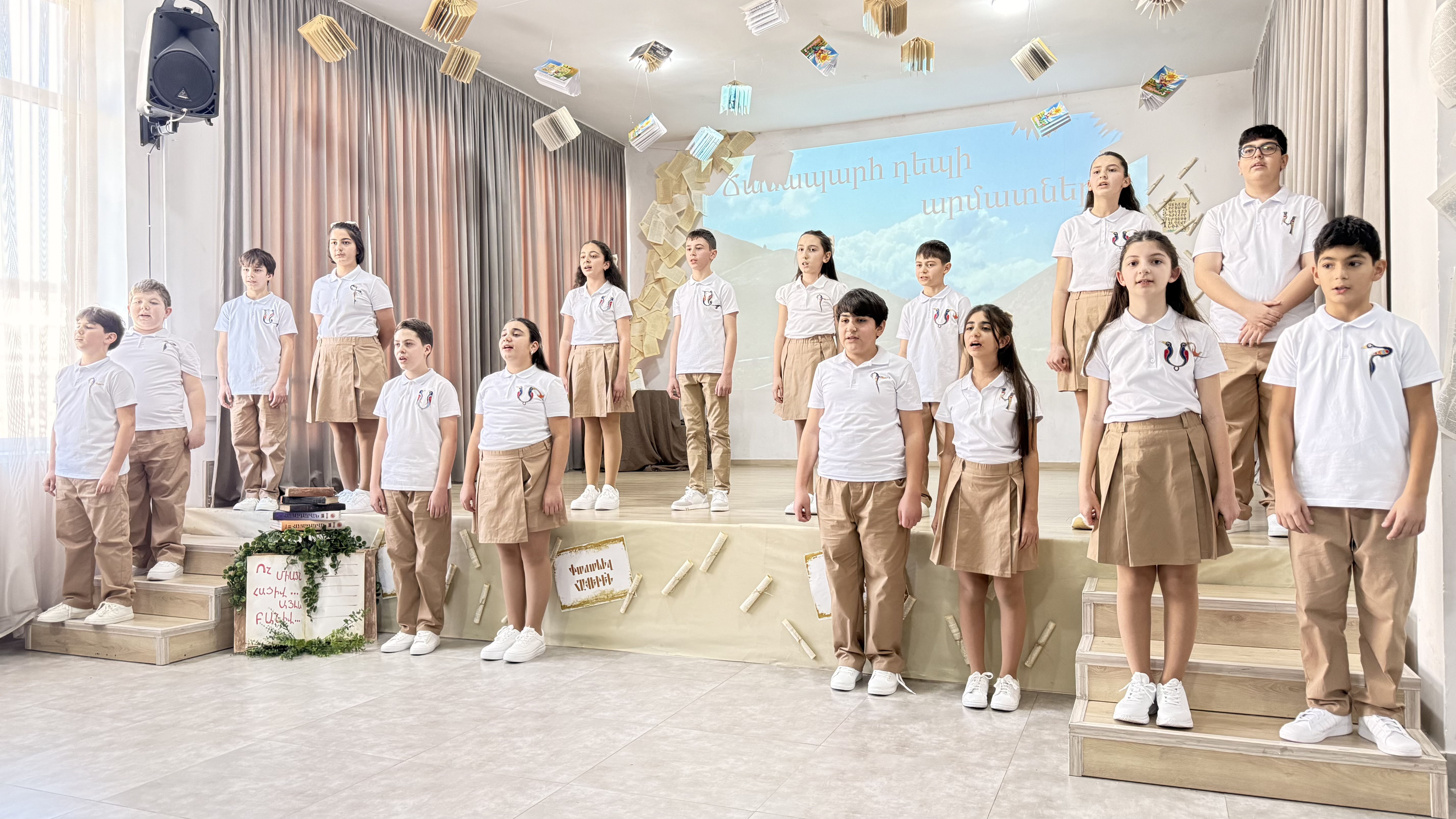
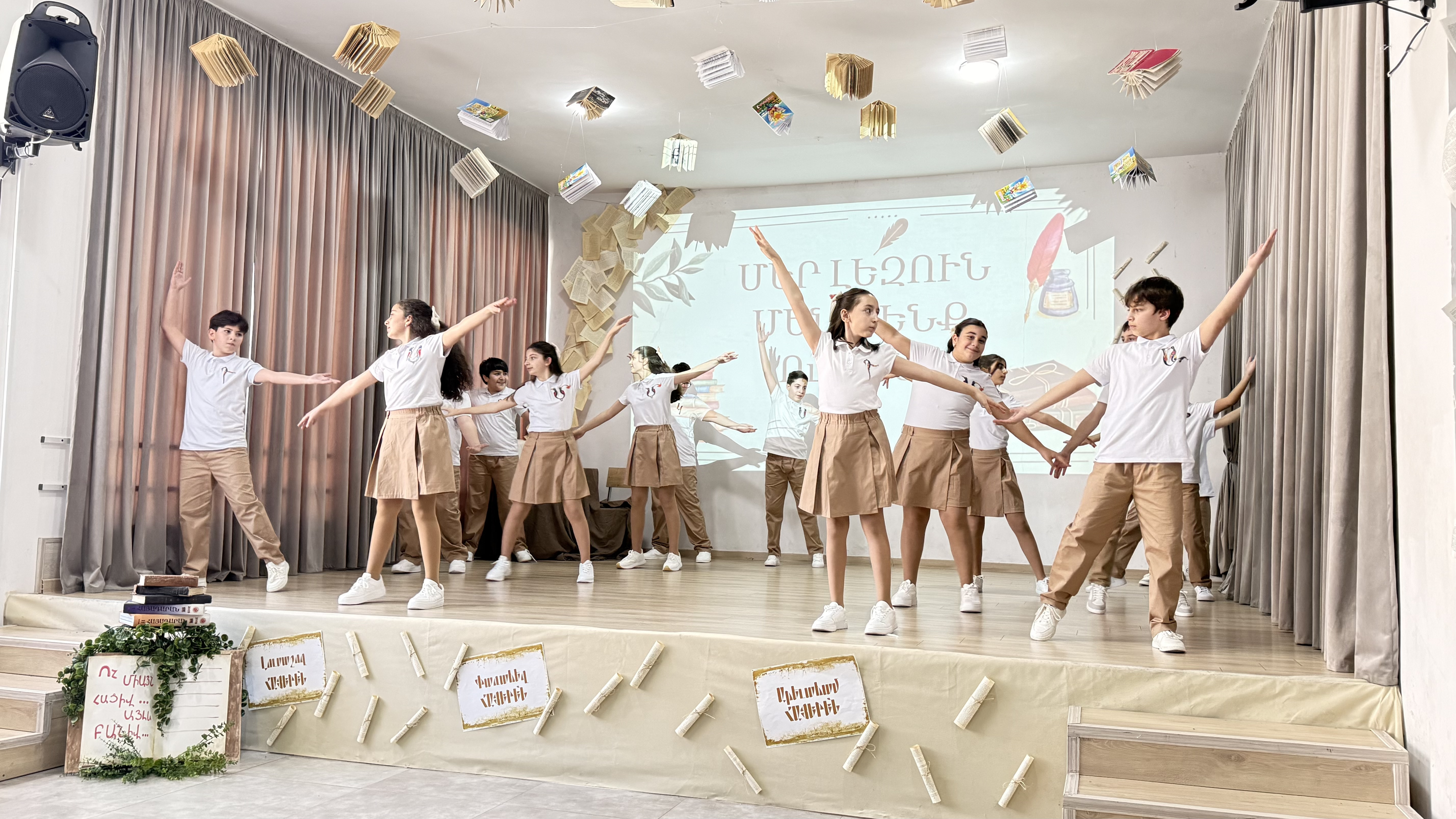
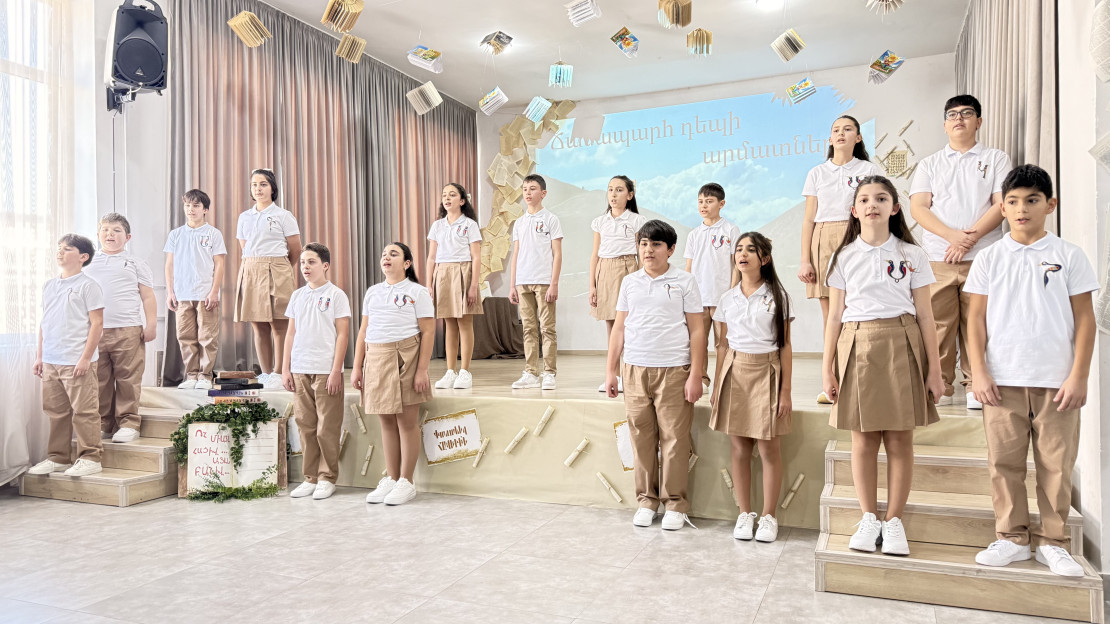
It was precisely in celebration and appreciation of that pride that sixth-grade students took the stage within the framework of Book Day and Mother Tongue Week. The performance began with the story of the Tower of Babel, which forms the basis of the religious theory of the origin of languages. It is said that people who once spoke a single language decided to build a tower to reach the heavens and God. God confused their languages, and humanity scattered across the world. Although this story has no scientific foundation, it serves as a reminder that language shapes the destiny of a people, and when language is divided, the people themselves risk division.
The students’ historical journey then turned to the ancient roots of the Armenian language. Throughout the presentation, emphasis was placed on the important idea that Armenian is one of the world’s most ancient languages with a unique historical path. It has not only survived for millennia but has also become the pillar of national identity.
One of the central parts of the event was dedicated to the creation of the Armenian alphabet. On stage, the era came alive when church services were conducted in foreign languages and the people could not understand the words of prayer. Through dialogues, the students conveyed the pain and distress experienced by the faithful.
At that tense moment, the character of Mesrop Mashtots appeared on stage with a clear message: a language that is not written is forgotten. The creation of the Armenian alphabet was presented not merely as a linguistic achievement but as an act of national preservation. Against numbers—flight; against blood—ink; against the sword—the pen. This was perhaps the most powerful idea of the performance, encapsulating its entire message.
The event was also rich in factual episodes. It presented the chronicle of the three historical stages of the Armenian language. Classical Armenian (Grabar) was introduced as the language of divine speech—sacred and solemn. Middle Armenian was portrayed as a bridge between the old and the new, when the language began to speak about the human experience, expressing emotion, love, and longing. Modern Armenian was presented in its Eastern and Western branches, embodying the living speech of today’s Armenian.
The stage echoed with some of the brightest lines of Armenian writers—from the powerful Western Armenian of Mushegh Ishkhan to the patriotic Eastern Armenian of Hamo Sahyan, whose memorable words became the motto of the event: “Our language is who we are.”
The performance also uniquely addressed dialects and their diversity, presenting them not as signs of division but as expressions of uniqueness. The students embraced the belief that dialects are not “old” or “outdated” forms, but valuable layers of national diversity worthy of preservation.
In a thought-provoking manner, the students also touched upon the unnecessary use of foreign words. Through a dialogue among modern schoolchildren, they demonstrated how often Armenian is replaced by foreign expressions in everyday speech—even when there is no need for it.
The event concluded with a heartfelt appeal to future generations: "Come, my brother, let us speak Armenian."
To not think freely is to not think at all!